Clear Creek Paintball is located in Lisbon, Iowa, about twenty to thirty minutes from Cedar Rapids, on a private farm property in Eastern Iowa.
The venue operates exclusively as a reservation-only private party facility offering three-hour events with two courses: a Speedball field for fast-paced tournament-style matches and a 1½-acre Woodsball terrain with natural obstacles, valleys, and log forts. Gellyball is also available — a sting-free alternative using blasters that shoot soft biodegradable beads, suitable for ages five and up, with unlimited ammo and karaoke included.
All necessary equipment is provided, and the staff tailors every aspect of the experience to the group’s preferences and skill level. The venue is well-suited for birthday parties, bachelor/bachelorette parties, corporate team building, family gatherings, school outings, and casual get-togethers. A break area allows for rest between matches, and online waivers are available to streamline check-in.
Paintball is a fast‑paced, team‑oriented sport in which participants fire small, gelatin‑filled spheres—known as paintballs—through pneumatic or CO₂‑powered markers. The paintballs burst on impact, leaving a vivid, easily visible mark that signals a hit. While the equipment may look reminiscent of a miniature firearm, the markers are deliberately engineered to operate at low velocities (typically 250‑300 feet per second) and to fire non‑lethal projectiles. The game can be played in a variety of settings, from dense woodland courses to compact indoor arenas, and it accommodates a range of formats that range from casual “shoot‑out” matches to elaborate, story‑driven scenarios.
General Paintball Rules
Most paintball fields adopt a core set of safety and gameplay rules that keep the sport enjoyable and secure for everyone involved. The most widely recognized standards are those published by the National Paintball League (NPL) and the International Paintball Federation (IPF). Key provisions include:
Safety Gear – Every player must wear a full‑face mask that meets ANSI Z87.1 impact standards, along with protective clothing that covers exposed skin. Many fields also require gloves, chest protectors, and elbow/knee pads.
Barrel Covers – When a marker is not actively being used, the barrel must be covered with a safety plug or a barrel sock to prevent accidental discharge.
Velocity Limits – Most venues enforce a maximum muzzle velocity (often 280 fps for standard paintballs) measured with a chronograph. Adjusting the regulator or using a different barrel can bring a marker into compliance.
Hit Confirmation – A player is considered “out” as soon as a paintball fragment is visible on the body or equipment. Some fields allow “soft‑hit” rules where a hit only counts if the paintball lands on a piece of designated gear, such as a vest.
No Physical Contact – Paintball is a non‑contact sport. Pushing, shoving, or any form of hand‑to‑hand fighting is prohibited and may result in immediate ejection from the field.
Game Boundaries – Players must stay within the marked playing area. Crossing boundary lines typically results in a penalty or disqualification.
Marker Maintenance – Markers must be kept in good working order, with regular cleaning and inspection. Fields often require a visual check before a match begins.
These rules create a consistent framework that allows players from different regions and backgrounds to compete safely. Local fields may add supplemental rules—such as “no shooting across a bunker” or “time‑limit per round”—to tailor the experience to their specific layout.
Paintball Scenarios
Beyond simple “capture the flag” or “team elimination” formats, paintball has evolved into a storytelling medium. Scenario games weave narrative elements, objectives, and role‑playing mechanics into the match, turning a two‑hour game into an immersive adventure. Common scenario types include:
Historical Reenactments – Players recreate famous battles (e.g., the Battle of Gettysburg) using period‑appropriate uniforms and objectives.
Zombie Apocalypse – One team acts as “infected” zombies with special rules for “turning” opponents, while the survivor team must reach safe zones.
Combat Mission – Teams receive briefings with multiple objectives such as disarming a mock bomb, rescuing hostages, or securing intelligence.
Fantasy Quests – Players assume roles like knights, wizards, or space marines, and must collect artifacts or defeat a “dragon” (often a stationary target that triggers a timer).
Scenario matches often last longer than standard games—sometimes spanning several hours or even an entire day—and may incorporate additional props such as smoke grenades, air‑soft rifles, or electronic scoring systems. The versatility of scenarios keeps the sport fresh and attracts players who enjoy strategic planning as much as rapid reflexes.
What Is Paintball Good For?
Paintball’s appeal extends beyond pure entertainment; the sport offers a suite of physical, mental, and social benefits:
Physical Fitness – Running, crouching, and sprinting across varied terrain provide cardiovascular exercise and improve agility, balance, and core strength.
Teamwork and Communication – Success depends on coordinated movement, clear call‑outs, and shared strategy. Players learn to trust teammates and adapt quickly when plans change.
Strategic Thinking – Scenario and objective‑based games require players to assess terrain, anticipate opponent moves, and allocate resources (e.g., air tanks, markers) efficiently.
Stress Relief – The combination of adrenaline, focused attention, and a non‑lethal outlet for aggression makes paintball an effective stress‑reduction activity.
Problem‑Solving Under Pressure – Players must make rapid decisions in high‑stakes environments, honing decision‑making skills that translate to workplace and academic settings.
Social Bonding – Regular league play fosters camaraderie; many friendships and professional networks have originated on the field.
Because the sport is relatively low‑impact compared with contact sports, it accommodates participants of various ages and fitness levels, provided that proper safety gear is used.
Who Plays Paintball?
Paintball’s participant base is remarkably diverse. Demographic surveys conducted by major field operators reveal the following trends:
Age Range – While the median age hovers around 27‑30, younger players (teenagers) and older adults (40‑50) are well represented. Many fields host “family days” that encourage parents to play with their children.
Gender Distribution – Historically male‑dominated, the sport now sees a growing proportion of female players; some leagues are women‑only or co‑ed with mixed‑team formats to promote inclusivity.
Professional Backgrounds – Participants include students, corporate employees, military veterans, law‑enforcement officers, and even healthcare professionals. The tactical and teamwork aspects attract those seeking a realistic simulation of combat dynamics.
Geographic Spread – Paintball enjoys popularity across the United States, Canada, Europe, and parts of Asia and South America. In regions where outdoor space is limited, indoor arenas have driven urban participation.
The sport’s adaptability—offering both casual “pay‑per‑play” sessions and structured league competition—makes it accessible to newcomers and seasoned veterans alike.
Scientists and Industry Experts View on Paintball
Academic researchers and industry analysts have examined paintball from several angles, ranging from biomechanics to market growth. Their findings generally support the sport’s safety profile and economic potential:
Biomechanical Studies – Analyses of impact forces show that paintball markers, when operated within regulated velocity limits, deliver kinetic energy comparable to that of a thrown baseball. The gelatin shell disperses the energy over a larger surface area, reducing the likelihood of serious injury. Proper protective equipment further mitigates risk, leading most experts to classify paintball as a low‑risk activity.
Psychological Research – Studies on “competitive recreation” indicate that paintball can enhance situational awareness, stress tolerance, and group cohesion. Participants often report heightened confidence after mastering tactical maneuvers.
Public Health Perspective – Some health officials note that paintball provides a healthier alternative to sedentary pastimes, encouraging regular physical activity among adolescents and adults.
Economic Impact – Market reports estimate that the global paintball industry generates upwards of $1.5 billion annually, with a compound annual growth rate of 7‑9 % driven by expanding indoor facilities and the popularity of themed scenario events.
Safety Regulations – Industry bodies such as the NPL have worked with legislators to codify safety standards, resulting in clearer legal frameworks that protect both players and venue operators.
Overall, the consensus among scientists and industry professionals is that paintball, when governed by established safety guidelines, offers substantial benefits without imposing significant health hazards.
Where to Play Paintball? Outdoor and Indoor Venues
The choice of venue dramatically influences the style of play, the equipment required, and the overall experience. Paintball facilities fall into two broad categories: outdoor fields and indoor arenas.
Outdoor Fields
Outdoor venues capitalize on natural terrain, offering expansive courses that mimic real‑world environments. Typical features include:
Forests and Woodlands – Dense vegetation creates natural cover, encouraging stealth and ambush tactics.
Constructed Bunkers – Wooden or inflatable structures provide strategic points for defense and offense.
Variable Elevation – Hills, trenches, and ridgelines add a vertical dimension to gameplay, demanding careful movement planning.
Because outdoor fields rely on weather conditions, they often operate seasonally in regions with harsh winters or extreme heat. Many operators supplement natural terrain with man‑made obstacles to maintain consistent playability year‑round.
Indoor Arenas
Indoor paintball facilities thrive in urban areas where space is at a premium. Their characteristics include:
Themed Layouts – Inflatable bunkers, maze‑like corridors, and modular walls enable rapid reconfiguration for different game modes.
Advanced Technology – Some arenas integrate electronic scoring systems, laser‑based “hit” detection, and automated prop triggers to enhance immersion.
While indoor arenas typically cover less square footage than outdoor fields, they compensate with faster game tempos and a focus on close‑quarters tactics. Many indoor venues also host corporate team‑building events, leveraging the confined space to foster intense collaboration.
Choosing the Right Venue
Players seeking endurance, navigation, and natural camouflage often gravitate toward outdoor fields. Those who prefer fast‑paced, high‑action matches—or who need a venue that works regardless of weather—tend to favor indoor arenas. Hybrid facilities that offer both outdoor and indoor options are increasingly popular, providing a flexible experience that can accommodate diverse player preferences and event requirements.
Conclusion
Paintball stands at the intersection of sport, strategy, and social interaction. Defined by its colorful, non‑lethal projectiles and governed by a clear set of safety rules, the game offers an accessible entry point for a wide demographic. From simple elimination matches to intricate scenario narratives, paintball can be tailored to suit the tastes of casual players and competitive teams alike. Scientific research highlights its physical and psychological advantages, while industry data confirms a robust and growing market. Whether chased through a sun‑dappled forest or ducking behind inflatable walls in a downtown arena, participants discover a unique blend of adrenaline, teamwork, and mental challenge that continues to attract new fans worldwide. As the sport evolves—with advances in marker technology, scenario design, and venue innovation—paintball remains a dynamic, engaging activity that encourages active play, strategic thinking, and community building.

 El Monte
 Log in

 Indoors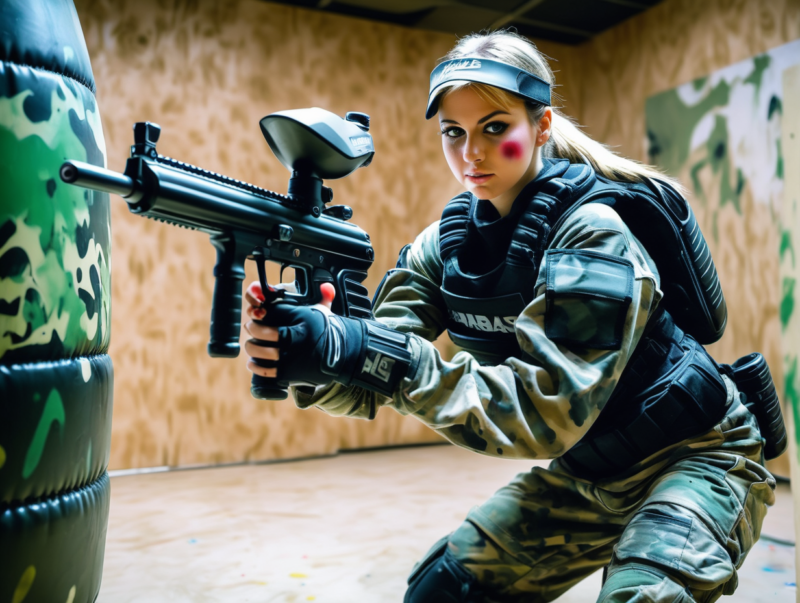



 114 145th St, Lisbon, IA 52253, United States