El Monte
 Log in
Log in
Log in

Spare Time Cedar Rapids is located on 1st Avenue SE in Cedar Rapids, Iowa, inside the former Gordman’s building.
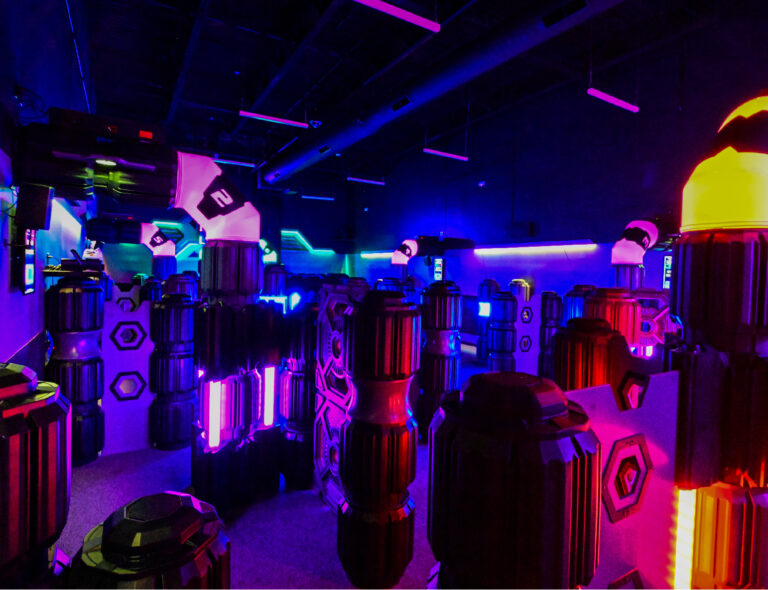
The venue offers a state-of-the-art laser tag arena with fog machines, dynamic lighting, and immersive soundscapes, alongside three themed escape rooms (Pharaoh’s Revenge, Mayday, and Zombie Research Lab), luxury bowling lanes, and a large Game Zone arcade. Birthday party packages include bowling, laser tag, or gamer options with pizza, drinks, and a dedicated party host. Group events can be customized with combinations of all activities.
The facility features multiple restaurants and bars serving chef-crafted dishes, private event spaces including the Elite Suite with capacity for up to 150 guests, semi-private bowling suites, and full-facility rentals for up to 850 guests. Catering options range from appetizer platters to plated dinners and buffets. The venue is well-suited for birthdays, corporate events, team building, field trips, fundraisers, and milestone celebrations.
 Indoors
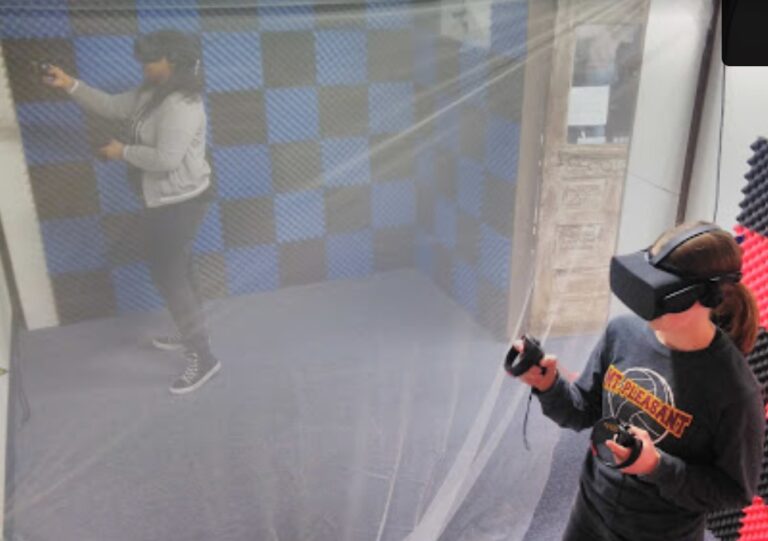
Dragon’s Lair Family Adventure Center is located in southwest Cedar Rapids, Iowa. The centerpiece is a 5,000-square-foot tactical laser tag arena using high-end Laserwar equipment, featuring over 15 different mission-based game modes like Domination, Capture the Flag, and unique in-house creations like Medic-Medic. Beyond laser tag, the venue offers four physical escape rooms, eight virtual reality escape experiences, professional Dungeons & Dragons sessions, Nerf Warz, and a weekly Family Game Night with over 120 board games.
The facility includes two private party rooms with video games and fridge space, making it a great fit for birthday parties and corporate team-building events. The venue also offers a variety of additional options including gift vouchers and pre-paid specials, with a focus on creating memorable group experiences for all ages.
Indoors
Laser tag is a fast‑paced, team‑oriented game in which participants wear lightweight sensor vests and wield hand‑held infrared “phasers.” Instead of paintballs or foam darts, each shot emits a harmless infrared beam that is detected by sensors on an opponent’s vest. When a sensor is hit, the vest registers a point loss (or gain, depending on the scoring system) and often produces a brief vibration or sound cue. Modern laser‑tag arenas are equipped with a central control system that tracks every hit, displays live scores on large screens, and can even relay real‑time statistics to players’ smartphones.
The appeal of laser tag lies in its blend of physical activity, strategy, and technology. Because the beams are invisible and the equipment is non‑projectile, the game can be played safely in confined indoor spaces, sprawling outdoor fields, or even multi‑level facilities that simulate futuristic battlegrounds. The rules are flexible: games can be timed, based on a target score, or structured as “capture the flag,” “team deathmatch,” and countless other formats that keep the experience fresh for newcomers and veterans alike.
A well‑designed laser‑tag venue offers a variety of scenarios that cater to different age groups, skill levels, and thematic preferences. Some of the most common setups include:
| Scenario | Core Objective | Typical Setting |
|---|---|---|
| Team Deathmatch | Eliminate the opposing team’s players or score a set number of hits. | Balanced arena with open corridors and cover. |
| Capture the Flag | Retrieve the enemy’s flag and bring it back to your base while defending your own. | Multi‑level layout with hidden alcoves. |
| Zombie Survival | One team starts as “zombies” that can convert players upon a successful hit; the remaining humans must survive a set time. | Darkened area with ambient sound effects. |
| Mission Quest | Players complete a series of objectives (e.g., disabling virtual “security systems”) within a time limit. | Themed environments such as space stations, ancient ruins, or sci‑fi labs. |
| Free‑For‑All | Every player competes individually for the highest score. | Small, fast‑paced arena encouraging quick movement. |
These scenarios can be customized with lighting effects, music, fog machines, and interactive props, allowing venue operators to craft immersive narratives that transform a simple game into a story‑driven adventure. Seasonal events—such as “Haunted Halloween Hunt” or “Winter Warzone”—further expand the repertoire, encouraging repeat visits.
Beyond pure entertainment, laser tag delivers a suite of physical, mental, and social benefits that make it a valuable activity for a broad audience.
Cardiovascular Exercise – Players constantly dodge, sprint, and duck, raising heart rates to moderate‑intensity levels comparable to brisk jogging. A typical 15‑minute round can burn 150–200 calories, offering an enjoyable alternative to conventional workouts.
Improved Hand‑Eye Coordination – Rapid aiming and firing demand precise timing and spatial awareness, sharpening reflexes that translate to other sports and daily tasks.
Strategic Thinking and Teamwork – Successful teams must coordinate movement, allocate roles (e.g., scout, defender, sniper), and adapt tactics on the fly. This fosters problem‑solving skills, communication, and leadership—qualities prized in academic and professional environments.
Stress Relief – The combination of physical exertion and immersive gameplay triggers endorphin release, helping participants unwind while channeling competitive energy constructively.
Inclusivity and Accessibility – Because the equipment is lightweight and non‑impact, players of different ages, body types, and abilities can compete on an equal footing. Many venues offer adaptive gear, such as adjustable vests and ergonomic phasers, to accommodate participants with mobility challenges.
Technology Literacy – Interaction with real‑time scoring dashboards and smartphone integrations familiarizes players with data visualization and basic networking concepts, subtly reinforcing digital fluency.
Collectively, these benefits explain why laser tag has transitioned from a novelty attraction to a staple in community centers, schools, and corporate wellness programs.
Researchers in kinesiology and cognitive psychology have begun to explore laser tag as a testbed for studying human performance under dynamic, competitive conditions. A number of peer‑reviewed studies highlight its utility as an experimental platform:
Physical Activity Research – Lab measurements of heart rate variability and oxygen consumption during laser‑tag sessions show patterns similar to those observed in traditional aerobic sports, supporting its inclusion in school physical‑education curricula.
Cognitive Load Analysis – Eye‑tracking experiments reveal that players constantly shift visual focus between opponents, objectives, and environmental cues, offering rich data on multitasking and attentional distribution.
Team Dynamics Modeling – Engineers developing autonomous swarm robotics have borrowed laser‑tag scoring algorithms to program cooperative behavior among drones, illustrating the game’s influence beyond entertainment.
Industry experts in the recreation sector echo these findings, noting that laser tag’s blend of low‑impact safety and high engagement yields strong return on investment for venue operators. The technology’s modular nature—upgradable sensors, software‑driven game modes, and cloud‑based analytics—allows businesses to refresh the experience without costly physical renovations, ensuring long‑term profitability.
Laser tag’s appeal cuts across generations, demographics, and cultural backgrounds. While the core audience historically skewed toward adolescents and young adults, recent trends show expanding participation:
Kids and Pre‑Teens (6–12 years) – Parents appreciate the safe, supervised environment that encourages active play while fostering teamwork. Many schools incorporate laser‑tag outings into STEM or physical‑education programs, using the game’s data collection features to teach basic statistics.
Teenagers (13–18 years) – The competitive edge and customizable scenarios align with teenagers’ desire for social interaction and skill development. High‑school clubs often organize league play, complete with rankings and seasonal tournaments.
Young Adults (19–35 years) – This group values laser tag as a social outlet and a novel date‑night option. The technology’s integration with mobile apps enables live leaderboards, achievement badges, and social sharing, enhancing the experience for digitally native users.
Adults (35+ years) – Corporate teams, fitness enthusiasts, and hobbyists increasingly turn to laser tag for team‑building, cardio workouts, and nostalgia. The non‑contact nature makes it an attractive alternative to contact sports that may carry higher injury risk.
Overall, the activity’s versatility—adjustable difficulty, varied themes, and flexible venue options—ensures that anyone from a first‑time player to a seasoned veteran can find a comfortable entry point.
When marketed to children, laser tag emphasizes safety, imagination, and skill building. Facilities catering to younger audiences often employ bright, colorful arena designs and simplified rules. Sensors are calibrated to register hits only on the torso, reducing the likelihood of accidental “headshots.” Staff members are trained to monitor gameplay, enforce age‑appropriate limits on session length, and provide brief safety briefings before each round.
Beyond pure fun, many parents report observable improvements in their children’s social confidence after regular laser‑tag sessions. The collaborative nature of team objectives encourages shy participants to communicate with peers, while the immediate feedback from the vest’s scoring system offers tangible reinforcement for effort and strategy.
Because laser tag blends competition with entertainment, it has become a go‑to venue for milestone celebrations and corporate gatherings alike.
A laser‑tag birthday party typically combines a dedicated game session with customizable décor (balloons, banners, themed music) and a post‑game celebration area for cake and gifts. Many venues offer “party packages” that include exclusive arena time, a private host, and optional accessories such as glow‑in‑the‑dark wristbands or personalized scoreboards, allowing the birthday child to feel like the star of a futuristic adventure.
High‑school and college graduates often seek memorable experiences that differ from traditional dinner parties. Laser tag delivers a dynamic environment where friends can release pent‑up energy after years of academic rigor. Organizers can tailor the event with “graduation” mission quests—such as “unlock the diploma” by completing a series of objectives—adding a symbolic layer to the celebration.
Companies leverage laser tag to break down hierarchical barriers and foster cohesion among employees. Structured team‑building sessions can incorporate debriefing periods where facilitators discuss communication patterns, decision‑making processes, and leadership styles observed during gameplay. Because the technology captures detailed performance metrics (hits, accuracy, movement patterns), managers can use anonymized data to spark conversations about teamwork and personal development without the invasiveness of formal assessments.
Laser tag’s flexibility allows it to thrive in both indoor arenas and outdoor settings, each offering distinct advantages.
Most commercial laser‑tag centers operate in climate‑controlled indoor spaces, featuring modular walls, black‑light effects, and thematic set pieces. The controlled lighting and soundscape enable precise synchronization with game software, resulting in an immersive experience that can be replicated year‑round regardless of weather. Indoor venues often provide additional amenities such as party rooms, snack bars, and retail sections selling apparel and accessories.
Outdoor laser‑tag expands the playground to natural terrain—forests, parks, abandoned warehouses, or even urban rooftops. The larger play area encourages longer runs, more varied line‑of‑sight challenges, and tactical use of natural cover. Some adventure parks integrate laser tag with zip lines, climbing walls, and obstacle courses, creating a hybrid experience that tests endurance as well as strategy. Portable laser‑tag kits, powered by rechargeable batteries and wireless networking, make it feasible for schools, summer camps, and community festivals to set up temporary arenas without permanent infrastructure.
When selecting a venue, participants should consider factors such as group size, desired theme, accessibility, and climate. Indoor venues excel at delivering consistent, high‑tech experiences, while outdoor locations offer expansive freedom and a connection to the natural environment.
Laser tag has evolved from a niche amusement into a multifaceted activity that satisfies the needs of diverse audiences. Its core mechanics—safe, infrared‑based combat combined with real‑time scoring—provide a foundation for countless scenarios, from traditional deathmatches to story‑driven missions. The physical, cognitive, and social benefits documented by scientists and industry experts underscore its value as more than just a pastime; it is a platform for exercise, teamwork, and even academic learning.
Whether children are celebrating a birthday, graduates are marking the end of an era, or corporations are seeking innovative team‑building tools, laser tag offers a dynamic, adaptable solution. With options ranging from climate‑controlled indoor arenas to sprawling outdoor fields, the game is accessible to virtually anyone willing to pick up a phaser and join the fray. As technology continues to advance—introducing augmented‑reality overlays, biometric feedback, and AI‑generated storylines—laser tag is poised to remain a vibrant, future‑ready form of entertainment for years to come.



 4601 1st Ave SE, Cedar Rapids, IA 52402, United States