El Monte
 Log in
Log in
Log in

Cabin Creek Paintball sits on 35 rolling, wooded acres in Northern Butler County, about six miles north of Hamilton, Ohio, at the end of a quiet country driveway off Eaton Road. It is a family-owned facility offering eight distinct paintball fields across the hilly terrain, with open play on weekends, private sessions with dedicated referees, and rental packages that include markers, masks, tanks, all-day CO2, and paintballs. Low-impact parties for younger kids, birthday and bachelor celebrations, church outings, and corporate team-building events are all part of the regular lineup.
Beyond paintball, the property hosts an 18-hole championship disc golf course with 22 alternate pin placements, plus a seasonal Black Walnut U-Pick. The experienced staff handles groups of nearly any size, and additional gear such as coveralls, pod packs, and longer barrels can be rented on site. With advance reservations for private parties and a welcoming, family atmosphere, Cabin Creek turns a day outdoors into a memorable group experience.
 Outdoors
Full Throttle Adrenaline Park is located in Springdale, Ohio, minutes from downtown Cincinnati and just off the I-75 and I-275 loop.
The 115,000 sq. ft. venue centers on high-speed gas go-karting with Junior and Pro karts, plus premium axe throwing with 20+ digital targets, immersive Omni Virtual Reality, and a Rage Room for guests 16 and older. Its signature Adrenaline Pass bundles three kart races with a 30-minute axe lane session into a two-hour block, with discounts on VR and paintball. The park also runs go-kart leagues and features a 20,000 sq. ft. indoor multi-level paintball field offering Paintless Paintball and GellyBall, along with the DETONATE FBI-style scenario game.
The venue is a popular spot for corporate events, team building, birthdays, bachelor and bachelorette parties, and graduations, with five private meeting rooms including the Talladega Room for up to 150 guests. Between activities, guests can relax at the Break Bar, grab snacks or a drink at the full bar, and enjoy catering from award-winning local partners. It’s a well-rounded destination that works for everything from casual racing to full-scale celebrations.
 Indoors
MK Airsoft & Axe Throwing Middletown sits along Roosevelt Boulevard in Middletown, Ohio, just north of Cincinnati. The club centers on a 36,000-square-foot indoor airsoft arena with more than 25 objective-based game modes, plus axe throwing lanes under the same roof. Players can bring their own gear or use quality rental packages, and the facility includes a fully stocked pro shop, tech services, and an official Evike.com outpost.
Beyond open play, the venue is built for groups, offering private party packages for birthdays, team building, and special occasions, with food and cakes welcome. A lounge area lets players relax between rounds, and memberships and weekly passes reward frequent visitors. With a friendly, safety-focused staff and a welcoming community for ages 12 and up, it’s a versatile destination for active indoor recreation in the Cincinnati area.
IndoorsPaintball Country Ohio is located on the grounds of the Niederman Family Farm at 5110 Lesourdsville West Chester Road in Liberty Township, Ohio, roughly midway between Cincinnati and Dayton.
The club offers ten distinct playing fields, including two-story fort fields, speedball, hyperball, and wooded courses, with full gear rentals, a pro shop, and a snack bar. Open play runs weekends year-round, referees brief every game, and themed events and tournaments add variety. Private weekend parties of ten or more get their own referee and access to a shared indoor party room.
Beyond the game, the working farm setting offers covered pavilions, a restored 1890s barn, hayrides, and farm tours. Corporate teams can book structured two-to-four-hour team-building sessions, and weekday private sessions provide exclusive access to the facility. Season passes, gift certificates, and on-site food make it a full-day destination for birthdays, reunions, and company outings.
Outdoors
The sound of a pressurized burst, the rush of a teammate dashing for cover, and the vibrant splash of neon color against a tactical vest define one of the most exhilarating recreational activities in the world. Paintball is more than just a game of high-stakes tag; it is a complex, multi-faceted sport that combines physical athleticism, strategic thinking, and technological innovation. Since its inception in the early 1980s, it has evolved from a niche pastime used by foresters into a global phenomenon with professional leagues, high-tech equipment, and dedicated arenas.
At the heart of the sport is the projectile itself: the paintball. Though the name suggests a simple globule of paint, the modern paintball is a marvel of food-grade engineering. It is a spherical capsule consisting of a gelatin-based shell, similar to a medicinal vitamin capsule, which houses a brightly colored, liquid fill. This fill is typically composed of polyethylene glycol, other water-soluble substances, and non-toxic dyes.
Crucially, modern paintballs are designed to be environmentally friendly. The materials are biodegradable, meaning they break down naturally over time without leaving a permanent footprint on the landscape. The consistency of the fill is designed to be thick enough to leave a visible mark upon impact—known as a “splat”—but thin enough to be easily washed out of clothing with water. The shell is engineered with a specific “brittleness” factor; it must be strong enough to withstand being fired at high velocities from a marker, yet fragile enough to shatter instantly upon hitting a target.
To maintain a balance between competitive intensity and safety, the sport is governed by a strict set of universal rules. The most fundamental rule is the mandatory use of safety gear, specifically a paintball-approved mask. Players must never remove their goggles while on the field or in designated “hot” zones, as the eyes are the most vulnerable parts of the body during play.
Gameplay revolves around the concept of elimination. A player is considered “out” when a paintball hits them and breaks, leaving a mark generally the size of a US quarter or larger. If a paintball bounces off a player without breaking, they are typically allowed to continue playing, a rule often referred to as “the bounce.” To ensure fair play, many venues enforce a “minimum distance” rule or a “surrender” rule, where players are encouraged to ask an opponent to surrender if they have a clear shot from a very close range, avoiding unnecessary physical discomfort.
Furthermore, every paintball marker must be “chronographed” before play begins. This process involves measuring the velocity of the projectiles using a radar device. Most commercial fields limit the speed to 280-300 feet per second (fps) to ensure that splaying occurs without causing injury.
The versatility of paintball is best displayed through its wide variety of game scenarios. The most traditional format is “Capture the Flag,” where two teams compete to retrieve a flag from the center of the field or the opponent’s base and return it to their own. This requires a balanced mix of offensive rushing and defensive positioning.
Another popular scenario is “Elimination” or “Team Deathmatch,” where the goal is simply to remove every member of the opposing team. For those seeking more complexity, “Center Flag” or “King of the Hill” tasks teams with maintaining control over a specific geographical point for a set duration.
In recent years, “Milsim” (Military Simulation) and “Big Games” have gained massive followings. These scenarios often involve elaborate storylines, designated roles such as medics or engineers, and objectives that can span hundreds of acres of land over several days. Whether it is a fast-paced “Speedball” match played on a small field with inflatable bunkers or a slow, tactical “Woodsball” game involving camouflage and snipers, the scenarios are limited only by the imagination of the organizers.
Beyond the immediate thrill of competition, paintball offers significant physical and psychological benefits. Physically, it serves as a high-intensity interval training (HIIT) workout. Players spend their time sprinting, crouching, crawling, and lunging, which builds cardiovascular endurance and lower-body strength. The weight of the equipment also provides a degree of resistance training.
Psychologically, paintball is an exceptional tool for stress relief. The intense focus required during a match forces players to stay in the present moment, effectively acting as a form of “active meditation” that clears the mind of external anxieties. It also fosters critical soft skills. Success in paintball is rarely the result of a single individual’s heroics; it requires clear communication, trust, and collective strategy. For this reason, it is frequently used by organizations as a team-building exercise to improve workplace dynamics and leadership skills.
The demographic of paintball players is surprisingly broad, shattering the stereotype that it is exclusively for adrenaline-seeking young adults. Today, the sport attracts a diverse range of participants. It is a staple for birthday parties and bachelor celebrations, introducing children (usually aged ten and up) and casual hobbyists to the excitement of tactical play.
Corporate groups are also frequent visitors to the fields, using the sport to break down hierarchical barriers between management and staff. On the other competitive end of the spectrum, there are professional athletes who play in televised leagues like the NXL (National Xball League). These players commit to rigorous training schedules and possess elite levels of reflex and coordination. Furthermore, the burgeoning “Low Impact” paintball movement, which uses smaller .50 caliber balls, has made the sport accessible to younger children and those who may be hesitant about the physical sting of a standard paintball.
From a scientific perspective, paintball is a fascinating study in ballistics and material science. Physicists often analyze the “tumble” and drag coefficients of the spherical projectiles, noting how wind resistance and humidity affect the flight path of a non-aerodynamic shape. Because paintballs are liquid-filled, they are subject to internal fluid dynamics that can cause slight inconsistencies in flight compared to solid projectiles, a challenge that industry experts continue to address through better manufacturing tolerances.
Industry experts and safety consultants frequently highlight that, statistically, paintball is one of the safest sports in existence. When proper safety protocols—primarily the use of certified masks—are followed, the injury rate in paintball is lower than that of bowling, tennis, or golf. Experts emphasize that the industry has moved toward extreme standardization, with organizations like the ASTM (American Society for Testing and Materials) setting rigorous standards for goggles and equipment to ensure player protection.
The environment in which paintball is played significantly alters the experience, and players can generally choose between outdoor and indoor venues. Outdoor venues are the traditional home of the sport. These fields can range from dense forests and rugged hillsides to artificial layouts featuring wooden forts, trenches, and abandoned vehicles. Outdoor play allows for larger-scale maneuvers, long-distance engagement, and the use of natural terrain for stealth. The primary challenge of outdoor venues is the weather; rain, wind, and extreme heat can all influence the trajectory of the ball and the stamina of the players.
Indoor venues, on the other hand, offer a controlled environment. These are typically located in converted warehouses or sports complexes. Indoor fields often use “reball” (reusable rubber balls that do not contain paint) or traditional paintballs on synthetic turf. The advantage of indoor play is the elimination of environmental variables; the lighting is consistent, the ground is flat, and the temperature is regulated. Indoor play tends to be faster, more urban-focused, and centered on “Close Quarters Battle” (CQB) tactics. This makes it an ideal choice for those living in urban centers or regions with harsh winters.
Regardless of the venue, the sport continues to thrive as a unique intersection of technology, athleticism, and raw excitement. Whether one is a weekend warrior looking for a laugh or a serious competitor seeking a tactical challenge, paintball offers an immersive experience that few other sports can replicate.


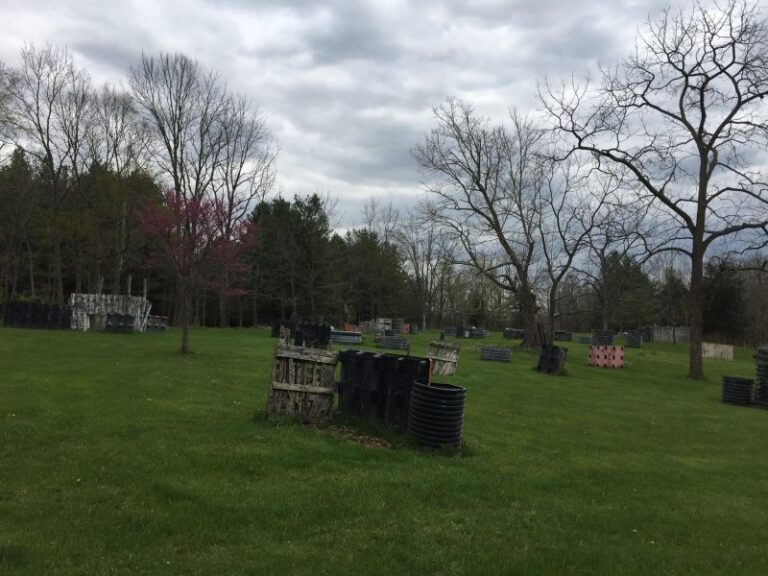
 4117 Eaton Road, Hamilton, OH 45013