El Monte
 Log in
Log in
Log in

Hogan’s Alley Paintball operates from two locations — the Super Store and Service Center at 998 North Colony Rd in Meriden, CT, and the playing fields at Hogan’s Alley @ The Ridge, located at Powder Ridge Mountain Park & Resort at 99 Powder Hill Rd in Middlefield, CT.
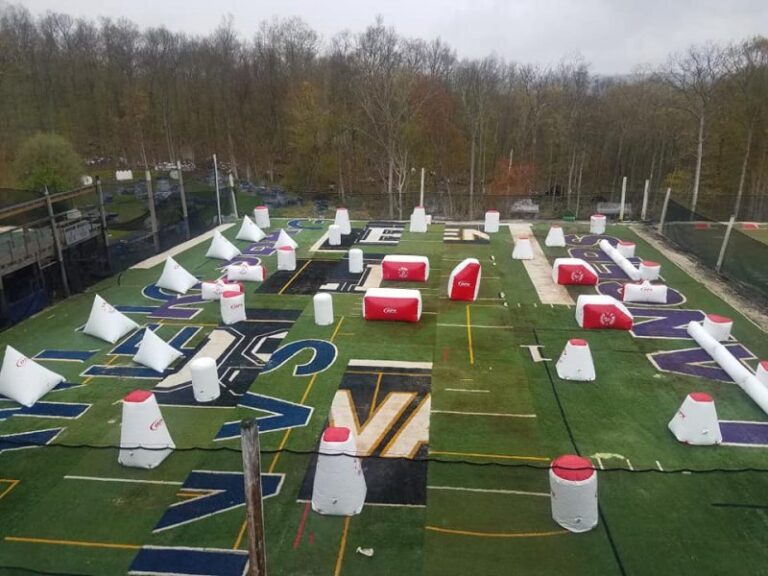
The field complex features five distinct courses including an NXL Airball field, a classic Hyperball field, the Haunted Forest woodsball map with a crashed airplane and abandoned waterpark, the Fuel Depot scenario field, and a non-contact Shooting Gallery with animatronic targets. Hogan’s Alley offers recreational low-impact paintball (.50 caliber), tournament paintball (.68 caliber), non-contact shooting gallery play, and private airsoft sessions with Tippmann HPA rentals. Birthday party packages start at $545 for 10 people and include gear, paintballs, food, and a private party room.
The facility is located within Powder Ridge Mountain Park & Resort, giving visitors access to an award-winning restaurant and tavern, camping, live music, ziplining, and other family activities. The service center is the world’s largest paintball service center with a full machine shop. With over twenty years of full-time operation, the staff provides expert instruction and equipment fitting. The venue is well-suited for birthday parties, corporate team building, bachelor parties, church groups, school events, and family outings. Private party rooms, indoor bathrooms, and a pro-shop are available on site.
 Outdoors
Matt’s Outback Paintball is located in Coventry, Connecticut, on Riley Mountain Road. The field spans 23 acres of woodland and open terrain, featuring two X-ball speedball fields, a hyperball field, a tire field, and extensive woodsball courses with a two-story castle, a meat grinder fort, and other multi-level structures. A heated inflatable dome allows for year-round play in winter. Game modes include Capture the Flag, Storm the Castle, Death Match, and scenario-based events through the Outback Paintball Series. Rental packages range from basic markers with gravity hoppers to electronic setups with extra paint, and walk-on day passes are available for players with their own gear.
The club is family-owned and known for its friendly, helpful staff and welcoming community of regular players. It hosts private group games for birthdays, bachelor parties, corporate team-building, and family outings. Basic amenities include休息 areas, portable restrooms, and parking. Paintballs are sold in basic and premium grades by the bag or box. The field operates Saturday–Sunday for open play and Monday–Friday by reservation.
Outdoors
Paintball is a thrilling sport that is becoming increasingly popular around the Hartford, CT area. Paintball is a recreational sport that mixes physical exercise with tactical strategy and can be enjoyed by people of all ages.
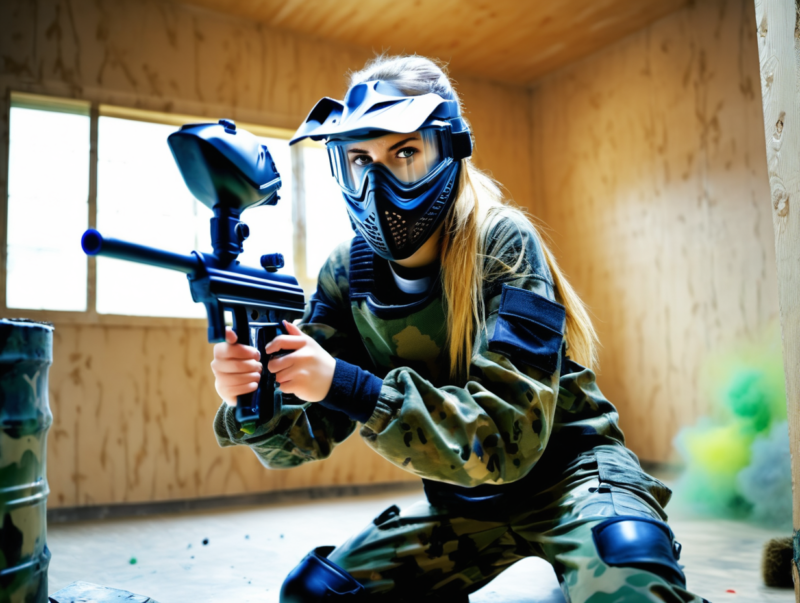
Paintball is a competitive sport that blends strategy, physical activity, and a dash of adrenaline. Players—often called “markers” or “shooters”—use pneumatic guns that fire small gelatin capsules filled with non‑toxic, water‑based paint. When a capsule strikes a participant, the paint ruptures and leaves a visible mark, indicating that the player is “out.” The game can be played in a variety of environments, from dense woodland arenas to compact indoor fields, and the equipment ranges from entry‑level kits to high‑tech, custom‑built markers. Although the premise is simple, the depth of tactics, the variety of game formats, and the social aspect make paintball a dynamic activity that appeals to a broad spectrum of enthusiasts.
Regardless of the venue or scenario, most paintball leagues and casual groups follow a core set of guidelines designed to ensure safety, fairness, and enjoyment. The fundamental rules include:
These rules create a structured environment where players can focus on strategy rather than worrying about safety hazards or unfair play.
The versatility of paintball lies in its ability to accommodate a wide array of scenarios, each with its own strategic demands. The most popular formats include:
In this classic style, teams compete to eliminate all opponents. Players are removed from the field after a single hit, making stealth and quick decision‑making crucial. The round concludes when one team remains.
Two teams each protect a flag while attempting to seize the opponent’s flag and bring it back to their base. This scenario rewards coordinated offense, defensive positioning, and efficient communication.
Players must complete specific tasks such as “defusing a bomb,” “rescuing a hostage,” or “securing a control point.” These missions often incorporate multiple phases, requiring teams to adapt tactics mid‑game.
Played on a small, flat field with inflatable bunkers, speedball emphasizes rapid movement and high‑intensity action. Matches are short, and scoring is typically based on the number of hits each player registers, making it a favorite for competitive leagues.
Large‑scale events can span several acres and last an entire day or weekend. They may recreate historical battles, zombie apocalypses, or futuristic wars, complete with storylines, role‑playing elements, and elaborate props. These events test endurance, teamwork, and creativity.
Each scenario can be fine‑tuned by adjusting variables such as player count, time limits, and the number of lives per player, allowing organizers to tailor experiences for beginners, seasoned veterans, or mixed‑ability groups.
Beyond the obvious excitement of a fast‑paced game, paintball offers several tangible benefits that extend into physical, mental, and social realms.
Running, crawling, and dodging while navigating obstacles provide a full‑body workout. Players develop cardiovascular endurance, improve agility, and strengthen core muscles. Since the activity is high‑intensity but short‑burst, it mirrors interval training and can complement traditional fitness routines.
Each match is a live problem‑solving exercise. Players must assess terrain, anticipate opponent moves, and allocate resources—such as limited ammunition and time—effectively. This fosters quick decision‑making, situational awareness, and the ability to think several steps ahead.
Success hinges on coordinated actions. Teams that communicate clearly, assign roles, and synchronize movements often outperform technically superior groups. The sport therefore sharpens leadership skills, fosters trust, and teaches conflict resolution in a low‑stakes environment.
The combination of physical exertion and focused attention provides a natural outlet for stress. The immersive nature of the game allows participants to momentarily detach from daily concerns, promoting a sense of release and improved mood.
Paintball brings together people from diverse backgrounds—students, corporate groups, military veterans, and families—creating a shared experience that can forge lasting friendships and networking opportunities.
Collectively, these advantages make paintball more than a pastime; it serves as a multifaceted tool for personal development and community building.
The paintball community is remarkably diverse, reflecting the sport’s broad appeal. Common participant groups include:
Statistical surveys from paintball associations indicate that the median age of players falls in the early thirties, with a fairly even gender distribution. The sport’s inclusive nature continues to attract newcomers worldwide, contributing to steady growth in participation rates.
Research on paintball, while not as extensive as studies on mainstream sports, has produced insights that validate many of the benefits highlighted by participants. Exercise physiologists note that the intermittent sprinting and rapid directional changes in paintball generate cardiovascular responses comparable to high‑intensity interval training. This suggests that regular play can improve aerobic capacity and muscular endurance.
Biomechanical analyses have examined the impact forces associated with paintball hits. Findings confirm that, when markers are properly regulated to stay below the industry‑standard velocity, the kinetic energy transferred to the skin is insufficient to cause lasting injury. The use of foam padding inside masks further mitigates the risk of concussion, supporting the consensus that paintball is a safe contact sport when safety protocols are observed.
Psychologists studying team sports have identified paintball as an effective platform for developing communication skills and collective problem‑solving. The fast‑paced nature of the game forces participants to convey information succinctly and adapt strategies on the fly, reinforcing cognitive flexibility.
Industry experts also highlight the economic impact of paintball. Facility operators contribute to local economies through job creation, equipment sales, and tourism. In regions where large‑scale scenario events are held, ancillary businesses such as hospitality, transportation, and retail experience measurable revenue spikes during event weekends.
Overall, the scientific and professional community acknowledges paintball as a legitimate sport that offers physical, mental, and social benefits while maintaining a strong safety record, provided that participants adhere to established guidelines.
Paintball fields can be categorized into outdoor and indoor venues, each offering distinct experiences and logistical considerations.
These locations are typically set in natural environments—forests, fields, or desert landscapes. The terrain provides a diverse array of obstacles such as trees, hills, and natural cover, fostering realistic tactical scenarios. Outdoor fields often host large‑scale events, including scenario paints and multi‑day tournaments. The open space allows for extensive layouts, sometimes spanning dozens of acres, which can accommodate hundreds of players simultaneously. However, weather conditions—rain, heat, or wind—can affect gameplay and equipment performance, so venues usually have contingency plans, such as shelters or seasonal scheduling.
Key characteristics of outdoor venues:
Indoor paintball arenas are housed within warehouses, repurposed industrial buildings, or purpose‑built facilities. The playing area is usually a flat surface lined with inflatable bunkers, wooden obstacles, and modular structures. Because the environment is climate‑controlled, matches can be scheduled year‑round without concern for weather. Indoor fields excel at speedball formats, where fast movement and rapid fire dominate. They also serve beginners and groups seeking a more controlled setting. The limited space encourages quick reflexes and precise shooting, making indoor play ideal for honing technical skills.
Key characteristics of indoor venues:
When selecting a venue, players should consider factors such as desired scenario complexity, group size, budget, and geographic proximity. Many operators offer rental packages that include markers, protective gear, and ammunition, simplifying the entry process for newcomers. Additionally, some venues provide on‑site coaching, equipment upgrades, and post‑game analysis to enhance the overall experience.
Paintball continues to evolve, blending tradition with innovation as new technologies—such as electronic markers with programmable firing modes—enter the market. Whether on a sun‑drenched forest clearing or within a high‑tech indoor arena, the sport invites participants to engage physically, think strategically, and connect socially. Its growing popularity among diverse demographics, supported by scientific validation and industry investment, ensures that paintball will remain a vibrant and accessible activity for years to come.



 998 North Colony Rd Meriden, CT 06450