El Monte
 Log in
Log in
Log in

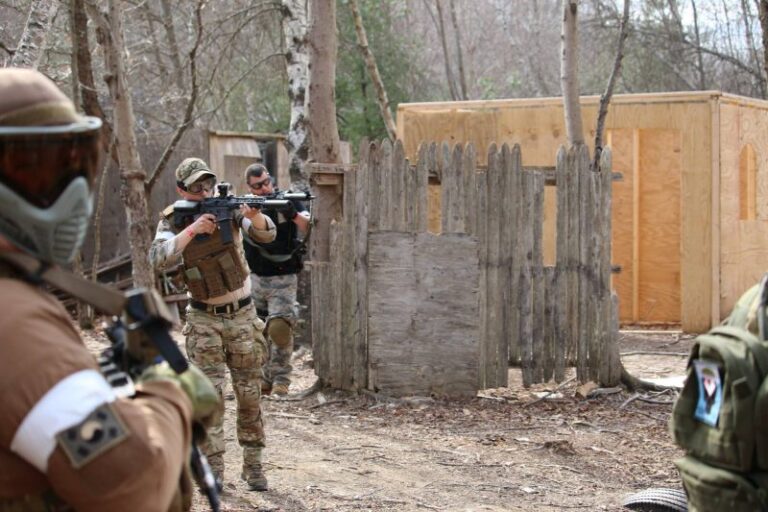
Ground Zero Airsoft USA is rooted in the Wolcott area of Connecticut, with its retail store in Waterbury and its 65-acre outdoor field in Terryville — the largest airsoft facility in the state. Founded in 2002, the field features a Vietnam-era firebase with trenches and bunkers, a two-acre village, sniper towers, a helicopter wreck, and countless man-made structures. Regular open gaming runs on weekends with walk-on fees, while special “Big OP” events like “Tears of the Sun” and “Operation Fallout” offer immersive, scenario-driven gameplay with multiple teams, medic rules, and custom patches.
Beyond the battles, Ground Zero offers rental equipment, upgrade and repair services, and birthday party packages that include pizza and drinks for groups of up to 20 players. The facility has bathrooms, parking, a recreation area, and a dressing room. The community-driven atmosphere, led by experienced staff and regular workdays where players help build new structures, makes it an excellent choice for corporate team-building, group outings, and anyone looking for an authentic airsoft experience in Connecticut.
 Outdoors
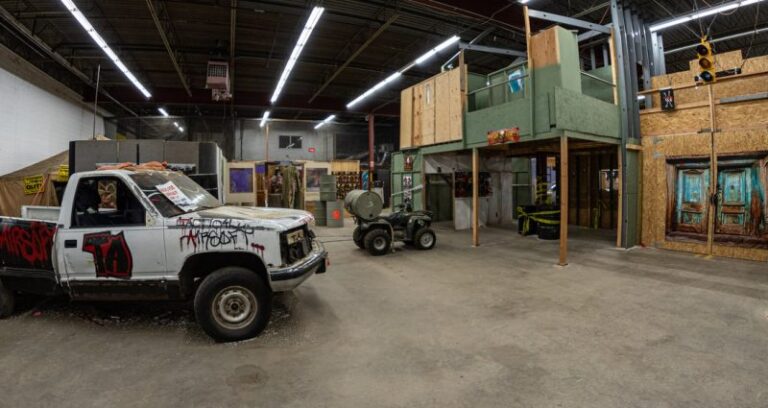
Tactical Airsoft CT is located in Windsor, Connecticut, just north of Hartford. It is the largest indoor airsoft arena in New England, featuring a 24,000-square-foot urban-themed field with a two-story building, vehicles, and numerous structures. The club offers a full-service retail shop, equipment rentals (including M4 rifles and masks with unlimited ammo), and on-site repair services. They run a variety of game modes from standard Team Deathmatch to objective-based scenarios and MilSim-lite events.
The venue is well-suited for birthday parties, corporate team-building, bachelor parties, and group outings. The experienced staff, including referees noted for fair play, helps create a welcoming atmosphere for both newcomers and seasoned players. The facility also features a pro shop and space for post-game gatherings, making it a complete destination for airsoft enthusiasts in the region.
 Indoors
Hogan’s Alley Paintball operates from two locations — the Super Store and Service Center at 998 North Colony Rd in Meriden, CT, and the playing fields at Hogan’s Alley @ The Ridge, located at Powder Ridge Mountain Park & Resort at 99 Powder Hill Rd in Middlefield, CT.
The field complex features five distinct courses including an NXL Airball field, a classic Hyperball field, the Haunted Forest woodsball map with a crashed airplane and abandoned waterpark, the Fuel Depot scenario field, and a non-contact Shooting Gallery with animatronic targets. Hogan’s Alley offers recreational low-impact paintball (.50 caliber), tournament paintball (.68 caliber), non-contact shooting gallery play, and private airsoft sessions with Tippmann HPA rentals. Birthday party packages start at $545 for 10 people and include gear, paintballs, food, and a private party room.
The facility is located within Powder Ridge Mountain Park & Resort, giving visitors access to an award-winning restaurant and tavern, camping, live music, ziplining, and other family activities. The service center is the world’s largest paintball service center with a full machine shop. With over twenty years of full-time operation, the staff provides expert instruction and equipment fitting. The venue is well-suited for birthday parties, corporate team building, bachelor parties, church groups, school events, and family outings. Private party rooms, indoor bathrooms, and a pro-shop are available on site.
Outdoors
Due to the growing popularity of airsoft in the United States, Hartford, Connecticut, has recently seen a surge in interest in the sport. Airsoft, for those just becoming aware of the game, is a simulated shooting sport similar to paintball, but with more realistic looking weapons and equipment. The game can be very exciting and is often used as a team building exercise for corporate events, special occasions, and friendly rivalries.
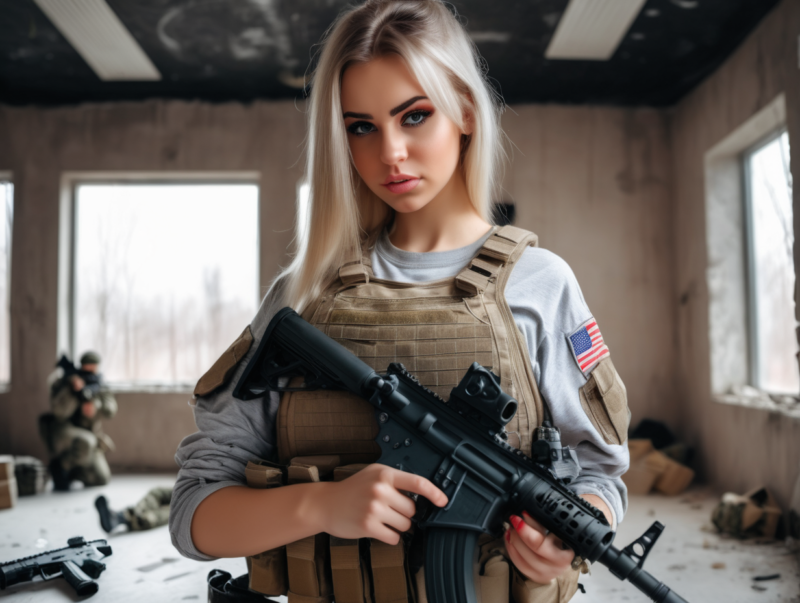
Airsoft is a fast‑growing recreational activity that blends sport, simulation, and teamwork. Participants—often called “players” or “operators”—engage in mock combat using replica firearms that fire lightweight plastic BBs at velocities low enough to be safe when proper protective gear is worn. Unlike paintball, the projectiles leave no visible mark, which encourages a greater emphasis on tactical communication, situational awareness, and realistic movement. The hobby can be enjoyed in a backyard, a purpose‑built indoor arena, or a sprawling outdoor field that mimics urban, forest, or desert terrain. Because the equipment mirrors real‑world weapons and the scenarios mirror military or law‑enforcement operations, airsoft appeals to anyone who enjoys strategic thinking, physical activity, and a sense of immersion.
The allure of airsoft often begins with its realism. Modern replicas reproduce the external dimensions, weight distribution, and mechanical operation of genuine firearms. Many players modify their gear to include realistic accessories—optics, foregrips, suppressors, and sling mounts—so that the experience feels like a genuine tactical drill. The low‑visibility nature of BB impacts means that “hits” are typically acknowledged verbally or via electronic hit‑markers, pushing players to rely on visual cues, cover, and flanking rather than the bright splatter of paintball.
Airsoft is rarely a solo pursuit. Successful missions depend on coordinated movement, clear radio or hand‑signal communication, and the ability to adapt to opponents’ tactics. Squad leaders assign roles such as point man, support, or sniper, and each member must understand how their actions affect the whole unit. The collaborative environment mirrors real‑world military or law‑enforcement teams, fostering trust and camaraderie that often extends beyond the battlefield.
Every game presents a strategic puzzle. Players must assess terrain, manage ammunition, and decide when to advance, hold position, or retreat. The variety of objective‑based game modes—capture the flag, bomb defusal, or territory control—forces participants to craft short‑term tactics while keeping an eye on the broader mission. The mental challenge of planning and executing a strategy is a core component of the sport’s lasting appeal.
Airsoft fields offer an eclectic menu of scenarios that keep the experience fresh.
The breadth of modes ensures that newcomers can start with simple rules while veterans can hunt for the deep, narrative‑driven experiences that MilSim events provide.
One of the most compelling aspects of airsoft is the ability to personalize every component of a player’s loadout. Manufacturers produce interchangeable rails, hop‑up systems, battery compartments, and internal gears, allowing shooters to fine‑tune accuracy, fire‑rate, and ergonomics. Cosmetic changes—such as paint jobs, camouflage patterns, and custom grips—let participants express personal style or match unit insignia. The aftermarket ecosystem is vibrant, with forums, shops, and YouTube channels devoted to building “the perfect rifle” or “the ultimate sniper platform.” This DIY culture not only deepens engagement but also encourages a continual learning curve that keeps hobbyists invested for years.
Airsoft thrives on its community. Local clubs organize weekly matches, host gear swaps, and conduct safety workshops. Online forums and social media groups serve as hubs for troubleshooting, trade‑ins, and sharing field reports. The honour system—players calling out their own hits—creates a culture of integrity that transcends geographic boundaries. Many participants develop lasting friendships, travel across states or countries for special events, and even collaborate on charitable fundraisers that use airsoft tournaments as a platform for giving back. The sense of belonging is a major reason why newcomers often become lifelong enthusiasts.
Starting out can feel overwhelming, but a sensible baseline set of protective equipment ensures safety and comfort.
| Gear | Why It Matters |
|---|---|
| Eye Protection | The most critical item; shatter‑proof lenses must meet ANSI Z87.1 or equivalent standards to guard against high‑velocity BBs. |
| Gloves | Protect hands from BB impacts and provide better grip on weapons, especially during high‑intensity engagements. |
| Sturdy Boots | Reinforced toe caps and ankle support prevent injuries on rough terrain, obstacles, and improvised cover. |
| Knee Pads & Elbow Pads | Cushions falls and slides, reducing bruises and sprains when players navigate low‑lying cover or crawl. |
| Helmet | Offers head protection and a mounting platform for goggles, communication devices, and lightweight armor. |
| Lower Face Protection | Full‑face masks or balaclavas with integrated visors shield the nose, mouth, and teeth from stray shots. |
Investing in quality protection from the outset not only minimizes the risk of injury but also instills confidence, allowing new players to focus on tactics rather than personal safety concerns.
All fields enforce a strict “no fire” rule until players are inside the designated safe zone. Weapons must be kept on “safe” or with the trigger guard engaged while moving between zones. BB velocities are usually capped (often 350–400 fps for rifles) to keep impacts within a tolerable range. Players must wear approved eye protection at all times—removing it results in immediate removal from the game.
Airsoft relies on an unwritten pact: when a player feels the impact of a BB, they call themselves “out” and raise a hand. Electronic hit‑marker systems automate this process, but the principle remains—self‑reporting maintains fairness and reduces disputes. Fields often employ “range officers” who monitor conduct, but the core of the system is personal accountability.
Respect for fellow participants, referees, and field staff is mandatory. Verbal abuse, intimidation, or unsafe behaviour (such as reckless running or ignoring safety zones) is penalized. Clean‑up etiquette is also part of the culture; players are expected to collect spent BBs and leave the field in better condition than they found it.
Airsoft firearms fall into three primary categories, each with distinct operating principles and maintenance needs.
Powered by rechargeable lithium‑ion or NiMH batteries, AEGs use an electric motor to drive a gear train that compresses a spring, propelling BBs. They typically fire in semi‑automatic or fully‑automatic modes and are the most popular choice for beginners due to their reliability, realistic weight, and ease of upgrade. Battery life, hop‑up adjustment, and gear wear are the main maintenance considerations.
These replicas use compressed gas—either green gas (propane‑based) or CO₂—to push a piston forward and fire a BB. Gas pistols and rifles often provide a more authentic blowback action, mimicking the recoil of real firearms. They excel in close‑quarters scenarios where rapid follow‑up shots are crucial, but performance can be temperature‑sensitive, requiring careful storage and regular lubrication.
A simple manual system: the user pulls back a spring‑loaded rod (a “cocking” action) that, when released, propels a single BB. Spring rifles (often called “sniper” or “bolt‑action” models) and pistols are inexpensive, highly reliable, and require no batteries or gas. Their fire rate is limited to one shot per cock, making them ideal for beginners learning the fundamentals of trigger discipline and aim.
Research into projectile sports consistently highlights airsoft as a low‑risk activity when proper safety protocols are followed. Ballistics experts note that the kinetic energy of a standard 0.20 g BB traveling at 350 fps is roughly 0.5 J—well below the threshold for bone fracture, though still capable of causing eye injury, underscoring the importance of certified eye protection. Occupational health specialists point out that the sport offers cardiovascular benefits comparable to moderate‑intensity aerobic exercise, especially during high‑tempo match formats.
From a technological perspective, engineers admire the precision engineering of modern AEG internals and the rapid advances in battery chemistry that have extended operational time while reducing weight. Materials scientists praise the development of biodegradable BBs, which mitigate environmental impact on outdoor fields. Overall, the consensus among academics is that airsoft, with its emphasis on safety, strategy, and physical activity, represents a constructive outlet for competitive energy and tactical interest.
The airsoft community is remarkably diverse. Young adults in their teens and twenties form the bulk of participants, drawn by the combination of sport and simulation. However, the hobby also attracts:
Gender diversity is increasing, with many co‑ed teams and female‑only squads forming across the globe. The inclusive nature of the game—where skill, communication, and tactics outweigh raw physical strength—helps broaden its appeal.
Most regions have dedicated facilities that meet safety standards set by national governing bodies. These fields feature painted structures, natural cover, and themed zones that simulate urban streets, warehouses, or forested battlefields. They provide rental gear, on‑site referees, and clearly marked safety zones, making them ideal for first‑timers and organized events.
Grassroots clubs often meet weekly at community parks, private property, or indoor arenas. Membership usually involves a modest fee, and clubs frequently host training sessions that cover fire‑arm handling, tactical movement, and field etiquette. Joining a team offers mentorship from experienced players and regular opportunities to test new gear in a supportive environment.
MilSim (Military Simulation) events are large‑scale, weekend‑long operations that can involve dozens to hundreds of participants. These “games” are meticulously planned, with detailed briefings, hierarchical command structures, and realistic mission objectives such as convoy protection, hostage rescue, or base assault. Some MilSim events collaborate with historical societies or reenactment groups to enhance authenticity, and they often culminate in an After‑Action Review where participants dissect tactics and outcomes.
Airsoft continues to evolve, driven by advances in replica technology, a growing global community, and an ever‑expanding repertoire of game scenarios. Whether a newcomer seeking a weekend adrenaline rush, a seasoned tactician looking for realistic training, or a hobbyist fascinated by gear customization, the sport offers a balanced blend of physical exertion, strategic depth, and social interaction. With proper safety gear, respect for the honour system, and an openness to learning, anyone can step onto the field and experience the unique thrill of simulated combat—where imagination meets precision, and teamwork is the ultimate weapon.


 1254 Wolcott Rd, Wolcott, CT 06716