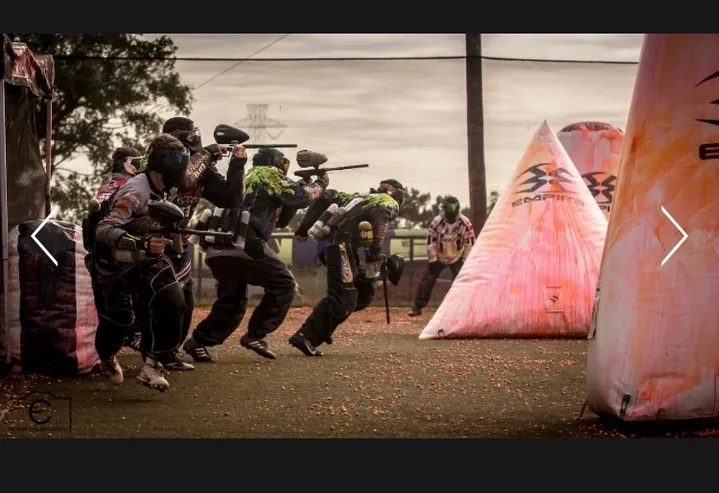
Elite Paintball in Lubbock, TX, specializes in catering to Groups & Parties.
The facility is equipped to accommodate groups ranging from 10 to 75 players simultaneously. They advertise their suitability for birthday parties, corporate outings, bachelor parties, and team building events.
Elite Paintball also welcomes Texas Tech organizations.
Paintball is a fast‑paced, team‑oriented sport in which participants fire small capsules—known as paintballs—filled with a non‑toxic, water‑based dye from pneumatic or electric markers. The markers are powered by compressed air or CO₂, and each shot propels a 0.68‑inch spherical projectile at velocities typically ranging from 250 to 300 feet per second. When a paintball strikes a player’s equipment or exposed skin, the dye bursts, leaving a visible mark that signals a hit. The game can be played in a variety of formats, from short, adrenaline‑charged matches that last a few minutes to marathon-style “scenario” events that unfold over several hours or even days.
Beyond the basic mechanics, paintball is built on a culture of safety, sportsmanship, and strategic thinking. Players wear protective gear—including helmets, goggles, chest protectors, and padded clothing—to minimize the risk of injury. The sport’s governing bodies, such as the National Paintball League (NPL) and the International Paintball Federation (IPF), maintain standardized equipment specifications and rulebooks that keep play consistent across venues worldwide.
General Paintball Rules
Although rule sets can vary by league, venue, or game type, a core set of principles governs most paintball matches:
Safety Gear Is Mandatory – All participants must wear approved eye protection at all times on the field. Additional protective equipment such as masks, gloves, and padded vests is strongly encouraged and often required for certain game formats.
Markers Must Be Within Legal Power Limits – Most fields enforce a maximum muzzle velocity, typically 300 fps, measured with a chronograph before play begins. Over‑powered markers are either adjusted or banned.
No Physical Contact – Paintball is a non‑contact sport. Intentional tackling, pushing, or any form of physical aggression results in immediate disqualification.
Elimination Is Determined by Paint Marks – A player is considered “out” when a paintball makes a visible mark on the body, clothing, or equipment. Many fields require a player to raise their hand and step out of the active area to be officially eliminated.
Respawn Rules Vary – Some games are elimination‑only, while others employ “respawn” zones where players can re‑enter after a set time or a specific objective is completed.
Boundary Awareness – The playing area is clearly marked, and stepping outside of the field typically results in a penalty or removal from the match.
Code of Conduct – Unsportsmanlike behavior, such as “cheating” with illegal modifications, using “paintball cheats” (e.g., laser sights or CO₂ bottles disguised as markers), or verbal harassment, is prohibited and can lead to suspension from the field.
These rules create a level playing field, preserve the sport’s integrity, and protect participants from preventable injuries.
Paintball Scenarios
Scenario paintball elevates the standard match by adding a narrative, objectives, and often a larger, more immersive environment. While a classic “Capture the Flag” or “Elimination” game can be completed on a modest field in a single hour, scenarios may last from a few hours to an entire weekend. Popular scenario themes include:
Zombie Apocalypse – One team plays as survivors, while the opposing side acts as infected “zombies” that can “revive” eliminated players, creating a constant ebb and flow.
Military Simulations – Players reenact historical battles or contemporary operations, complete with mission briefings, radio communications, and logistical support.
Fantasy Quests – Themes such as “Dragon’s Lair” or “Wizard’s Tournament” incorporate props, costumes, and role‑playing elements, appealing to fans of live‑action role‑playing (LARP) games.
Law Enforcement vs. Criminals – One side assumes the role of SWAT or police units, while the other acts as a criminal organization attempting to breach a secure location.
Scenario games often feature multiple objectives—such as retrieving “intel,” disabling “bombs,” or rescuing hostages—that require coordination across squads, use of “command posts,” and strategic resource management. The extended duration and layered goals demand not only shooting accuracy but also logistical planning, communication skills, and endurance.
What Is Paintball Good For?
Beyond entertainment, paintball offers a range of physical, mental, and social benefits:
Cardiovascular Fitness – Rapid sprinting, ducking, and maneuvering across uneven terrain elevate heart rate and improve aerobic capacity.
Hand‑Eye Coordination – Tracking moving targets and adjusting for distance hones fine motor skills and reaction time.
Teamwork and Leadership – Success hinges on clear communication, role assignment, and the ability to adapt to changing circumstances, fostering leadership qualities and collaborative problem‑solving.
Stress Relief – The high‑energy, adrenaline‑rich environment provides a healthy outlet for tension, while the controlled setting ensures safety.
Strategic Thinking – Players must evaluate terrain, anticipate opponents’ moves, and allocate limited resources—skills transferable to business, military, and emergency‑response contexts.
Inclusivity – Paintball accommodates a broad age range and varying fitness levels. Adaptive equipment and modified rules enable participation by individuals with physical disabilities.
These attributes have led schools, corporate training programs, and military units to incorporate paintball into their curricula for team‑building and tactical education.
Who Plays Paintball?
The sport’s participant base is remarkably diverse. Demographically, paintball attracts:
Young Adults (18‑35) – This group makes up the majority of regular players, drawn by the sport’s competitive vibe and social scene.
Teenagers (13‑17) – Many fields offer junior leagues with reduced marker power and modified rules, providing a gateway to the sport.
Corporate Teams – Companies organize paintball outings to reinforce teamwork, identify leadership potential, and break down hierarchical barriers.
Military and Law‑Enforcement Personnel – Units use paintball as a low‑cost, low‑risk method for tactical drills, urban combat simulations, and decision‑making under pressure.
Recreational Families – Family‑friendly venues with slower‑pacing games and safety‑first policies allow parents and children to share the experience.
Physical‑Therapy and Rehabilitation Groups – Some rehabilitation centers use paintball to improve balance, coordination, and confidence in patients recovering from injury.
The sport’s accessibility—thanks to relatively affordable entry‑level equipment and an expanding network of fields—continues to broaden its appeal across socioeconomic and cultural boundaries.
Scientists and Industry Experts View on Paintball
Researchers have examined paintball from multiple perspectives, ranging from ergonomics to psychology. Findings generally support the sport’s positive impact when proper safety protocols are observed:
Injury Prevention – Studies conducted by sports medicine specialists indicate that the most common injuries are minor—abrasions, bruises, and occasional sprains. Head and eye injuries are exceedingly rare when certified protective gear is worn, reinforcing the industry’s emphasis on mandatory eye protection.
Physiological Benefits – Exercise physiologists have measured significant caloric expenditure during a typical 30‑minute match, comparable to a brisk jog. Heart‑rate monitoring reveals periods of high intensity interspersed with brief recovery, offering a form of interval training.
Cognitive Load – Cognitive psychologists note that paintball imposes a high mental workload, requiring rapid information processing, situational awareness, and decision‑making. These mental demands can enhance attentional control and stress‑resilience in participants.
Social Dynamics – Sociologists studying group cohesion find that shared objectives in high‑stakes environments, such as paintball, accelerate bond formation and trust among team members.
Equipment Innovation – Industry engineers continuously refine marker designs to improve reliability, reduce recoil, and lower power consumption. Recent advances include electronically controlled firing sequences, lightweight polymer casings, and biodegradable paintball shells that address environmental concerns.
Overall, the consensus among experts is that paintball is a safe, adaptable activity that promotes physical health, mental acuity, and social connection when conducted under regulated conditions.
Where to Play Paintball? Outdoor and Indoor Venues
Paintball fields have proliferated worldwide, offering a spectrum of environments tailored to different preferences and weather conditions.
Outdoor Fields
Outdoor venues typically span several acres and incorporate natural terrain—forests, hills, streams, and abandoned structures—to create realistic battlefield conditions. These fields are ideal for large‑scale scenario games, long‑range engagements, and players who enjoy the unpredictability of weather and natural obstacles. Popular outdoor formats include:
Woodland Fields – Dense tree cover and uneven ground demand stealth and close‑quarter tactics.
Mountain Courses – Elevated positions provide strategic advantages but require physical stamina.
Urban‑Style Settings – Repurposed warehouses, abandoned factories, or purpose‑built “urban” arenas simulate city combat with multi‑level platforms, stairwells, and corridors.
Outdoor play often requires players to be prepared for temperature fluctuations, precipitation, and varying lighting conditions. Many venues provide rental gear, on‑site air compressors, and safety briefings to streamline the experience.
Indoor Fields
Indoor paintball arenas are housed within climate‑controlled facilities, allowing year‑round operation regardless of external weather. These venues usually feature a compact layout with inflatable bunkers, modular obstacles, and high‑tech lighting effects. Advantages of indoor play include:
Consistency – Controlled lighting and temperature create a predictable environment that emphasizes skill over terrain adaptation.
Accessibility – Urban locations make indoor fields convenient for corporate events, birthday parties, and quick match sessions.
Safety – The enclosed space reduces the likelihood of stray paintballs traveling beyond the playing area, simplifying safety protocols.
Indoor arenas often specialize in fast‑paced “speedball” formats, where the focus is on rapid movement, quick reflexes, and precise shooting. Some facilities also host hybrid events that blend indoor speedball with outdoor scenario elements, using portable structures that can be assembled inside or moved outdoors.
Choosing the Right Venue
When selecting a field, players should consider:
Game Format – Scenario enthusiasts gravitate toward expansive outdoor sites, while speedball fans prefer indoor arenas.
Skill Level – Beginner‑friendly fields offer flat terrain and clear sightlines, whereas advanced venues provide complex layouts that test tactical acumen.
Location and Amenities – Proximity, parking, equipment rental, on‑site food services, and accommodation options can influence the overall experience.
Safety Standards – Reputable venues adhere to national safety guidelines, conduct regular marker inspections, and provide thorough safety briefings before each session.
Regardless of the setting, the most rewarding paintball experiences arise from well‑maintained fields, knowledgeable staff, and a community of players who respect the sport’s core values.
Paintball has evolved from a niche pastime into a globally recognized sport that blends physical exertion, strategic depth, and social interaction. Its fundamental equipment—a simple marker and colorful projectiles—belies the sophisticated rules, diverse scenarios, and scientific insights that shape modern play. Whether participants are seeking a high‑octane workout, a platform for team building, or an immersive narrative adventure, paintball offers a flexible canvas that accommodates a wide array of goals.
The sport’s inclusive demographic, coupled with ongoing research supporting its health and cognitive benefits, suggests continued growth. As technology advances—introducing lighter markers, biodegradable paintballs, and enhanced safety gear—the paintball community is poised to expand further, delivering safe, exhilarating experiences across both outdoor landscapes and indoor arenas. For anyone curious about a dynamic activity that challenges the mind as much as the body, stepping onto a paintball field promises an unforgettable blend of strategy, camaraderie, and pure, unfiltered fun.

 El Monte
 Log in

 Outdoors


 10325 County Rd 6700, Lubbock, TX 79407, United States