Log in
Main Event Indoor Laser Tag arena is located in Frisco, TX.
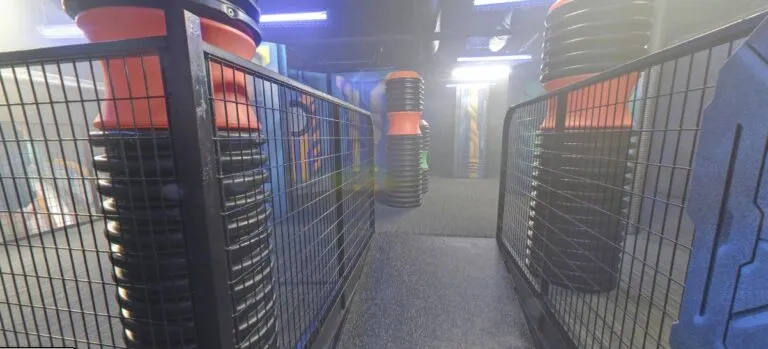
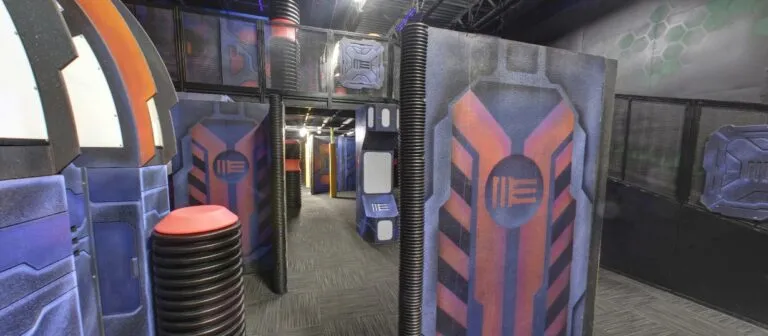
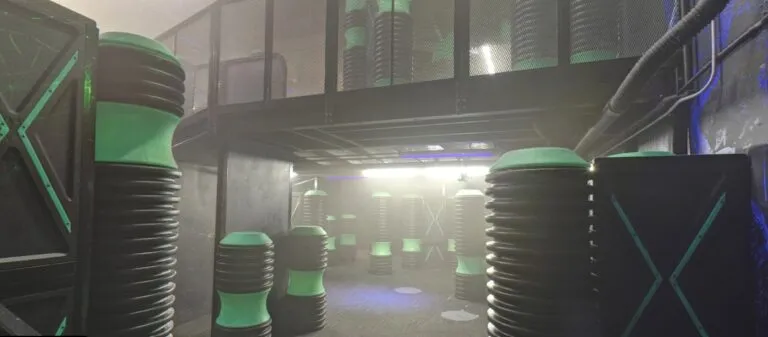
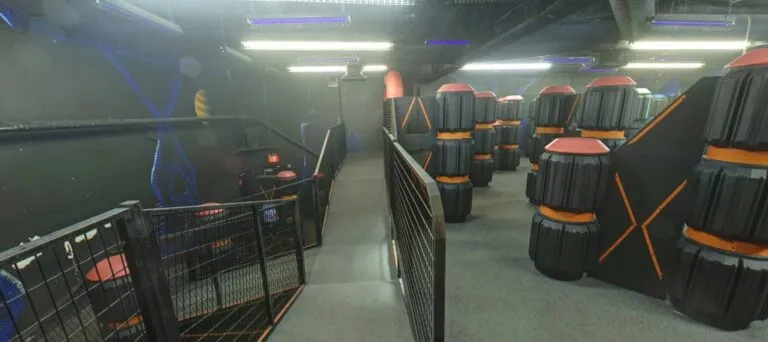
Main Event is a huge entertainment hub where you can spend your weekend or throw a birthday party. These laser-tag battles take place in a multi-story arena with fantasy-like decorations, neon lights, and laborious obstacles. Climb up the towers and rain fire on unsuspecting enemies.
There is also a large recreation area with snacks and drinks to chill after the game. There’s also bowling, pool, VR, mini-golf, a story room, and a ropes course – all available at one single place!
IndoorsMain Event Indoor Laser Tag arena is located in Grapevine, TX.
Main Event is a huge entertainment hub where you can spend your weekend or throw a birthday party. These laser-tag battles take place in a multi-story arena with fantasy-like decorations, neon lights, and laborious obstacles. Climb up the towers and rain fire on unsuspecting enemies.
There is also a large recreation area with snacks and drinks to chill after the game. There’s also bowling, pool, VR, mini-golf, a story room, and a ropes course – all available at one single place!
IndoorsMonster Mini Golf Frisco Indoor Center is located in Frisco, TX.
The Monster Mini Golf Frisco Indoor Center is situated in Frisco, Texas. It provides visitors with an indoor setting to play mini-golf and enjoy other attractions. The center features an expansive course designed with fluorescent colors and monster-themed decorations. Other features include laser tag and an arcade. The facility is family and group-friendly and offers birthday party packages. Overall, the Monster Mini Golf Frisco Indoor Center provides an enjoyable and exciting atmosphere for anyone looking for indoor entertainment in the Frisco area.
IndoorsXS VR | Let’s Play Indoor Arcade is located in Frisco, TX.
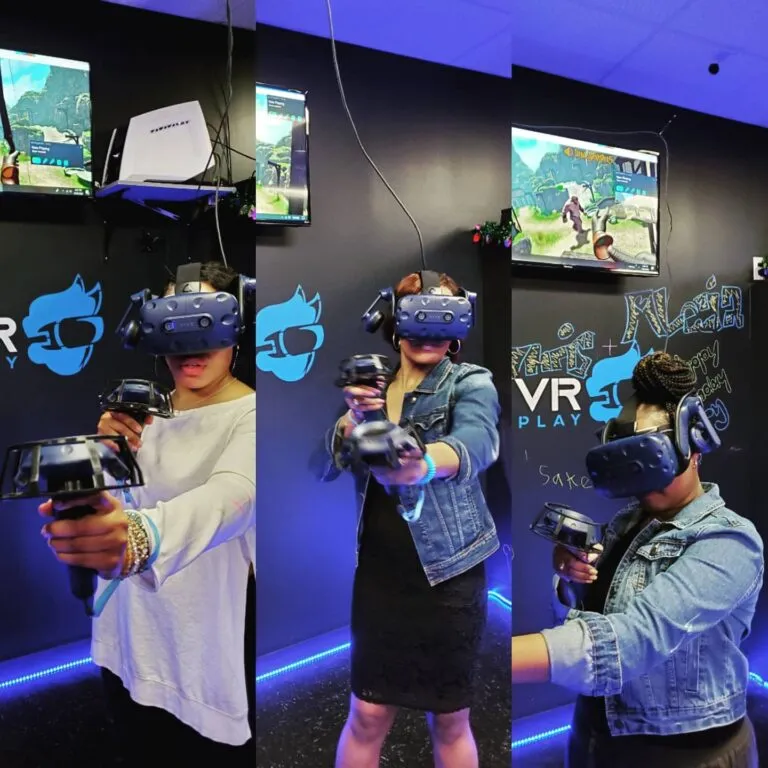
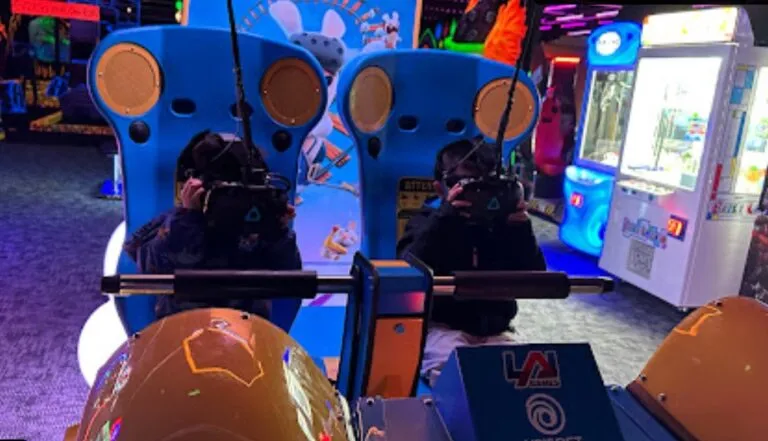
XS VR in Frisco, TX is a virtual reality gaming center that provides an immersive and interactive gaming experience. It offers a wide range of virtual reality games and experiences, including multiplayer games, racing simulators, shooting games, and adventure games. The facility is equipped with state-of-the-art VR equipment and technology to provide high-quality graphics and realistic gameplay. XS VR also offers party packages and group events for birthdays, corporate events, and team building activities. Whether you’re a hardcore gamer or new to virtual reality, XS VR is the perfect place to enjoy a thrilling and unique gaming experience.
IndoorsZero Latency DFW Indoor Center is located in Dallas, TX.
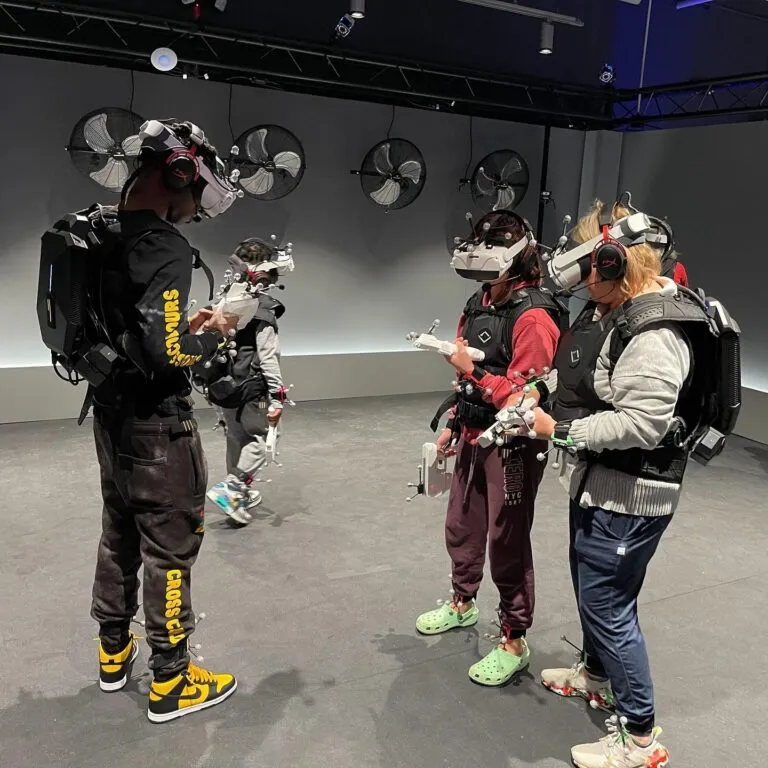
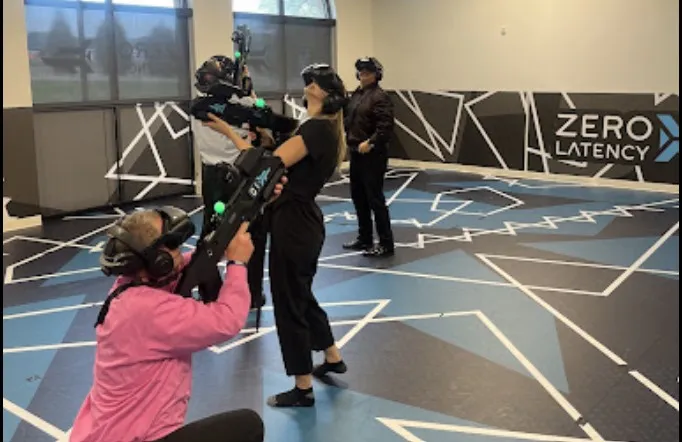
Zero Latency DFW offers a cutting-edge virtual reality gaming experience in Dallas, TX. Visitors can enjoy an immersive environment with state-of-the-art technology, including wireless VR headsets and motion capture sensors. The facility offers a range of games and experiences, from thrilling zombie shootouts to challenging puzzle-solving adventures. With a team of trained staff members, visitors can feel confident in their safety and enjoy a unique gaming experience like no other. Zero Latency DFW is a must-visit destination for any VR enthusiast or anyone seeking a thrilling, unforgettable activity in Dallas.
IndoorsAndretti Indoor Karting & Games is located in The Colon, TX.
The Andretti Indoor Karting & Games in The Colony, TX offers a range of exciting family-friendly activities. Race your friends on one of the two indoor karting tracks, compete in a laser tag battle, or try your hand at arcade games and virtual reality experiences. The facility also houses a ropes course and zip line, as well as a bar and grill for some post-activity relaxation. Private event spaces are available for birthday parties, corporate events, or team-building outings. Andretti Indoor Karting & Games offers something for everyone, making it the perfect destination for a fun-filled day out.
IndoorsZero Latency JAX Indoor Center is located in Frisco, TX.
Zero Latency JAX is a virtual reality gaming venue located in Frisco, TX. It offers a fully immersive gaming experience with cutting-edge technology that allows players to move freely in a warehouse-sized space while wearing wireless headsets and backpacks, and wielding futuristic weapons. The games include zombie survival and space-themed adventures, and can accommodate up to eight players at a time. Reservations are required and prices start at $49 per person for a 30-minute session. The venue is open Monday through Friday from 2pm to 10pm, and Saturday and Sunday from 11am to 10pm.
IndoorsUrban Air Trampoline and Adventure Indoor Park is located in Waxahachie, TX.
The Urban Air Trampoline and Adventure Park in Waxahachie, TX is a must-visit destination for thrill-seekers of all ages. This massive indoor playground is loaded with exciting activities, including trampolines, a ropes course, a ninja warrior course, a climbing wall, and more. Guests can soar through the air on a zipline, test their skills on the warrior obstacle course, or challenge themselves on the towering climbing wall. With a variety of attractions to choose from, the Urban Air Trampoline and Adventure Park offers endless fun and excitement for the whole family.
IndoorsMain Event Indoor Laser Tag arena is located in Lewisville, TX.
Main Event is a huge entertainment hub where you can spend your weekend or throw a birthday party. These laser-tag battles take place in a multi-story arena with fantasy-like decorations, neon lights, and laborious obstacles. Climb up the towers and rain fire on unsuspecting enemies.
There is also a large recreation area with snacks and drinks to chill after the game. There’s also bowling, pool, VR, mini-golf, a story room, and a ropes course – all available at one single place!
IndoorsMain Event Indoor Laser Tag arena is located in Plano, TX.
Main Event is a huge entertainment hub where you can spend your weekend or throw a birthday party. These laser-tag battles take place in a multi-story arena with fantasy-like decorations, neon lights, and laborious obstacles. Climb up the towers and rain fire on unsuspecting enemies.
There is also a large recreation area with snacks and drinks to chill after the game. There’s also bowling, pool, VR, mini-golf, a story room, and a ropes course – all available at one single place!
IndoorsCtrl V: Indoor Virtual Reality Arcade is located in Plano, TX.
Ctrl V is a virtual reality arcade located in Plano, TX that offers a variety of VR experiences for all ages. Customers can choose from a selection of games and simulations such as shooting games, escape rooms, and roller coasters. The facility is equipped with state-of-the-art technology and gaming equipment, including high-quality VR headsets and motion controllers. Groups of friends or coworkers can also reserve private rooms for birthday parties, team building events, or other special occasions. Ctrl V is a unique and exciting way to experience the world of virtual reality.
IndoorsSandbox VR Indoor Center is located in Dallas, TX.
Sandbox VR in Dallas, TX offers an immersive and exhilarating virtual reality (VR) experience that transports players to different worlds and scenarios. With state-of-the-art VR technology and sensory feedback systems, players can move, touch, and interact with their virtual environments as if they were real. From thrilling adventures and challenges to team-building exercises and social gatherings, Sandbox VR offers a wide range of immersive experiences for all ages and interests. With multiple locations worldwide, Sandbox VR is quickly becoming a leading provider of cutting-edge VR entertainment and gaming.
Indoors
The landscape of entertainment has undergone a dramatic shift over the last decade. As technology moves away from static screens and constrained living room setups, a new category of immersive experience has emerged: the free-roam VR arena. This innovation represents the pinnacle of virtual reality, stripping away the cables, movement restrictions, and solitary nature of traditional gaming to offer a truly expansive, untethered, and collaborative environment.
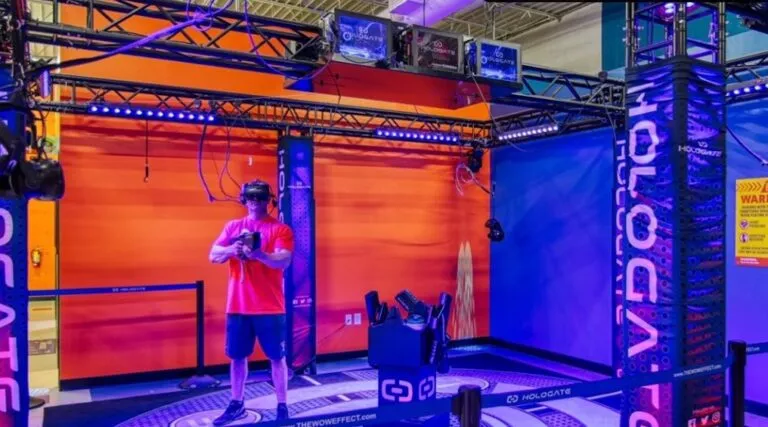
A free-roam VR arena is a large-scale, dedicated physical space designed to allow users to walk, run, and interact naturally within a virtual environment. Unlike home VR setups, which often rely on stationary play or small “room-scale” boundaries, free-roam arenas utilize sophisticated motion-tracking technology, often involving ceiling-mounted sensors or advanced optical cameras, to map a user’s movements across a warehouse-sized floor.
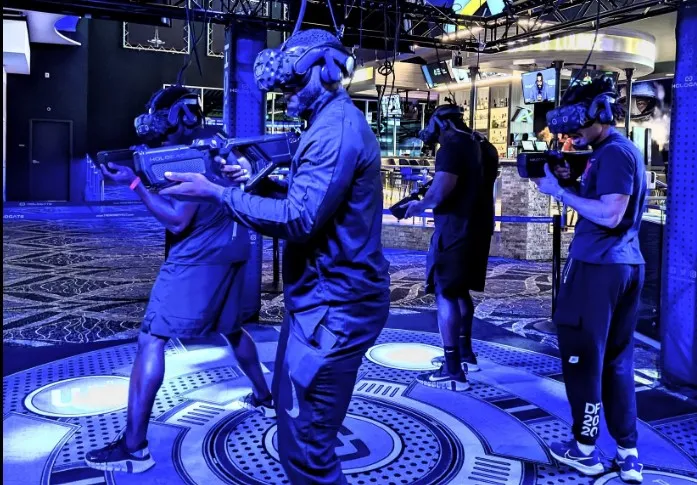
The key to the “free-roam” experience is the backpack computer or high-bandwidth wireless streaming technology. By liberating the player from tethered cables, the system allows for an uninhibited range of motion. Players are outfitted with a lightweight head-mounted display (HMD) and tracked controllers, sometimes accompanied by haptic vests that simulate physical sensations like a gust of wind or the impact of a digital object. In these arenas, the physical world and the digital world exist in parallel; when a player walks forward ten feet in the arena, they walk forward ten feet in the game, creating a seamless sense of presence that stationary systems simply cannot replicate.
The versatility of the free-roam medium allows for a vast array of scenarios that transport players into worlds that feel tangibly real. Because the virtual environment can be mapped onto the physical arena’s dimensions, developers can create intricate levels that trick the human brain into perceiving vast distances in a relatively small space.
Many of these arenas offer high-octane zombie survival games, where players must coordinate with their team to hold off waves of the undead. Others focus on narrative-driven puzzle adventures that lean into the sensation of scale, having players navigate narrow mountain ledges or pilot futuristic starships. Because these spaces allow for multi-player participation, the scenarios are fundamentally social. Players are not just viewing a game; they are inhabiting a shared space where they can see their friends’ avatars, communicate in real-time, and physically pass items back and forth. This layer of social feedback is what pushes these scenarios from being mere “gaming” to becoming “shared reality experiences.”
The demographic reach of free-roam VR is surprisingly broad, bridging the gap between professional gamers and casual adventurers. Because the interface relies on natural human movement—walking, ducking, and reaching—it is far more intuitive than learning a complex controller layout. This accessibility has made VR arenas a popular destination for families.
When it comes to VR for kids, free-roam arenas offer a controlled and safe environment for exploration. Many arcades curate specific age-appropriate content that emphasizes wonder and discovery over combat. For children, the ability to walk through a digital forest or interact with virtual sea life provides a level of engagement that is unmatched by traditional toys or tablets. Parents often find that VR arenas provide a unique opportunity for “active screen time,” where physical movement is a requirement for progress, making it a more kinetic and engaging pastime than passive media consumption.
The rise of the “experience economy” has positioned free-roam VR as a premier choice for event hosting. As people move away from traditional entertainment, these arenas have become the go-to venues for milestone celebrations.
For a birthday party, free-roam VR offers a “hero moment” for the guest of honor. It transforms a typical gathering into a quest, providing a memorable, narrative-driven experience that guests will discuss for months. Similarly, for graduation parties, it provides an energetic, high-tech outlet for students to celebrate their achievements in a way that feels distinctly modern.
Perhaps the most significant shift is in the corporate sector. Companies are increasingly turning to free-roam VR as a tool for team building and corporate retreats. Unlike traditional corporate outings that may feel forced or mundane, VR arenas provide a level playing field. Whether it is a CEO or an intern, everyone is equally subject to the rules of the virtual environment. Success in these arenas requires communication, delegation, and clear strategy, making them an excellent proxy for real-world workplace collaboration. By forcing a team to navigate a crisis or complete a complex mission in a virtual space, companies find that their employees develop stronger interpersonal bonds and communication skills that translate directly back to the office.
The academic and professional interest in free-roam VR goes far beyond entertainment. Scientists studying human-computer interaction (HCI) are fascinated by the concept of “presence”—the psychological state where a user feels they are physically located in a virtual space. Free-roam environments are considered the current gold standard for inducing high levels of presence because they involve the vestibular system, or the body’s sense of balance and motion. When the brain receives visual feedback that matches the physical movement of the body, the sense of immersion is exponential compared to stationary viewing.
Industry experts anticipate that this technology is only in its infancy. With the advent of lighter, higher-resolution HMDs and more refined haptic feedback, the line between the physical and virtual is expected to blur further. Some experts suggest that these arenas will eventually serve as training grounds for high-stakes professions. Surgeons, emergency responders, and pilots are already looking to scalable, free-roam systems to practice complex procedures in a risk-free environment that mimics the physical strain and tactile requirements of their actual jobs.
Furthermore, urban planners and architects have noted the potential of these arenas for “digital prototyping.” By building a full-scale virtual model of an unbuilt space, designers can walk through a structure before a single brick is laid, testing sightlines, space allocation, and even accessibility for individuals with mobility challenges.
In conclusion, the free-roam VR arena is more than just a modern arcade; it is a fundamental shift in how human beings interact with digital data and one another. By grounding the virtual experience in the physical body, these spaces offer a sense of agency and shared discovery that is fundamentally human. As the technology continues to evolve, these arenas will likely become central hubs for social gatherings, professional training, and the exploration of new, synthetic worlds that were previously relegated to the realm of imagination.