
 El Monte
 Log in
Log in
Log in

Sorry. We don’t know any vr locations in this city yet
Virtual Reality (VR) is an exciting new technology that is taking the world by storm. For those in and around Elizabethtown, Kentucky, there are now multiple VR arenas that allow users to experience the latest in cutting-edge immersive entertainment.
At VR arenas in Elizabethtown, players can experience a variety of games including first-person shooter, puzzle, and racing titles. With state-of-the-art virtual reality equipment and motion-tracking systems, gamers are given the chance to explore compelling and engaging virtual worlds.
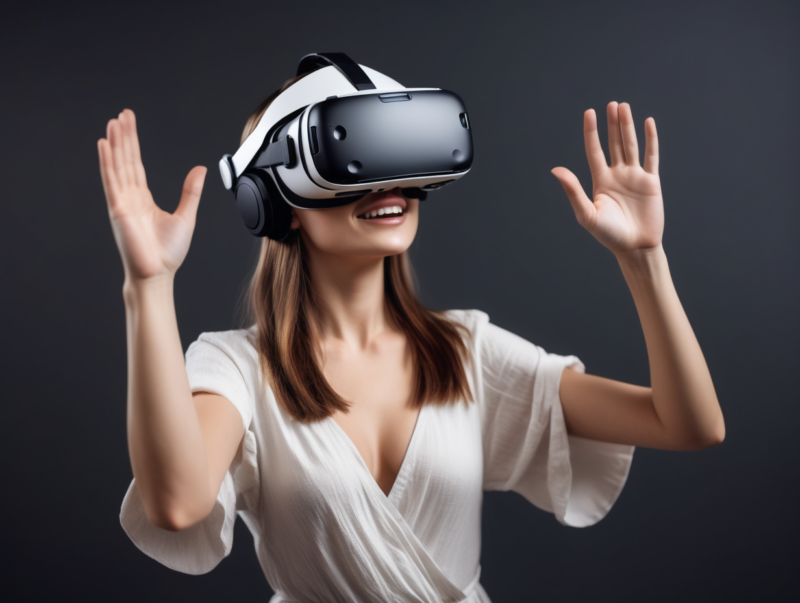
A free‑roam virtual‑reality arena is a purpose‑built physical space that blends the immersive power of VR headsets with unrestricted movement in the real world. Unlike seated or tabletop VR, where users remain in a fixed spot, free‑roam venues are equipped with motion‑capture cameras, lidar sensors, or infrared beacons that continuously track a participant’s position, orientation, and gestures as they walk, run, duck, and interact with the environment. The tracked data is fed in real time to a computer‑generated world projected inside the headset, creating the illusion that the user is physically navigating a three‑dimensional landscape.
These arenas are typically lined with soft flooring, padded walls, and safety nets to protect players from collisions. The space may be as compact as a large living‑room conversion or as expansive as a warehouse‑size facility, depending on the complexity of the experiences offered. The key characteristic that defines a free‑roam arena is the removal of physical constraints: participants can move freely within the designated zone, allowing game designers to craft scenarios that demand full‑body engagement, teamwork, and spatial reasoning.
The flexibility of unrestricted movement opens a wide spectrum of possible scenarios, ranging from lighthearted adventures to intense tactical simulations. Some of the most popular experiences include:
Adventure Quests – Players embark on treasure‑hunting expeditions through ancient ruins, alien planets, or mythic forests. The ability to walk around obstacles, climb virtual ladders, or peer over ledges adds a tactile realism that static VR cannot emulate.
Combat Simulations – Military‑style training modules and futuristic shooter games thrust participants into battlefields where they must dodge cover, aim with motion‑tracked weapons, and coordinate with teammates in real time. The physicality of ducking behind barriers or sprinting across open ground heightens the adrenaline rush.
Puzzle Rooms – Escape‑room‑style challenges leverage the arena’s three‑dimensional canvas, requiring players to manipulate virtual objects with their hands, solve spatial riddles, and work together to unlock doors that respond to real‑world gestures.
Sports and Fitness – Virtual adaptations of soccer, fencing, or rhythm‑based workouts let users engage in cardio‑intensive sessions while still feeling present in a fantastical arena. The kinetic feedback encourages healthier gaming habits.
Narrative Experiences – Story‑driven journeys blend cinematic storytelling with interactive set pieces, allowing participants to step inside a narrative and influence its outcome through physical actions.
Because the arena tracks the whole body, designers can incorporate haptic feedback devices, such as vibration vests or handheld controllers that simulate weapon recoil, further blurring the line between the digital and the tangible.
The audience for free‑roam VR spans a surprisingly broad demographic. Early adopters were primarily tech enthusiasts and gamers seeking the next level of immersion, but the market has quickly diversified:
Young Adults and Gamers – College students and hobbyist gamers gravitate toward high‑octane combat and competitive multiplayer experiences. The social component—playing side by side with friends—adds a communal layer absent from solitary VR setups.
Families – Parents view free‑roam venues as safe, supervised environments where children can explore futuristic worlds without the risk of tripping over cords or colliding with furniture. Family‑oriented packages often bundle multiple short scenarios to keep all age groups engaged.
Corporate Teams – Companies use the arenas for team‑building exercises, leadership training, and problem‑solving workshops. The physical collaboration required to succeed in many scenarios reinforces communication skills and trust among coworkers.
Educational Groups – Schools and museums partner with free‑roam providers to deliver STEM‑focused experiences, such as virtual field trips to the International Space Station or interactive chemistry labs where students manipulate molecular structures with their hands.
Senior Citizens – Some facilities tailor low‑impact experiences that encourage gentle movement and cognitive stimulation, offering a novel way for seniors to stay active and socially connected.
The common thread among these groups is a desire for an experience that feels both physically engaging and socially interactive—something that traditional screen‑based entertainment cannot fully satisfy.
Designing free‑roam experiences for children requires special attention to safety, accessibility, and age‑appropriate content. Most venues adopt the following practices:
Scaled‑Down Play Zones – Dedicated areas with reduced dimensions, lower ceiling heights, and softer padding ensure that younger participants can move safely without the risk of hitting walls or equipment.
Simplified Controls – Controllers are often oversized, with intuitive button layouts and visual cues that accommodate smaller hands. Some experiences even forgo hand‑held devices, opting for gestural interaction tracked directly by the arena’s cameras.
Content Curation – Scenarios feature bright, whimsical aesthetics and narratives focused on exploration, problem solving, and cooperative play rather than combat or horror themes. Levels are typically shorter to match children’s attention spans.
Parental Supervision – Staff members monitor the play area, and parents can observe via live video feeds or designated viewing lounges. This oversight reassures caregivers while allowing kids to enjoy independent immersion.
Educational Integration – Many kids’ scenarios embed learning objectives, such as recognizing animal species in a virtual jungle, understanding basic physics through building structures, or practicing basic coding concepts via interactive puzzles.
These kid‑friendly adaptations make free‑roam VR a valuable tool for fostering curiosity, encouraging physical activity, and providing a safe gateway to emerging technologies.
Free‑roam VR’s versatility has turned it into a popular venue for celebrations and corporate gatherings. Organizers can tailor the experience to suit the tone and purpose of the event:
Birthday Parties – Packages often include a mix of short, high‑energy games that let a group of friends compete or cooperate in a single session. The venue may provide themed decorations, custom avatars, and photo‑capture stations that record participants in their virtual gear, delivering memorable souvenirs.
Graduations – Celebratory experiences can be designed to reflect the milestone, such as a virtual “journey through time” that showcases key moments from the graduates’ academic lives, or a collaborative challenge where the cohort works together to achieve a grand objective, symbolizing teamwork in the next chapter.
Corporate Parties and Team‑Building – Companies can book the arena for product launches, brand activations, or experiential marketing events. Tailored scenarios might incorporate company logos, mission statements, or industry‑specific challenges, turning entertainment into a subtle reinforcement of corporate identity. Post‑session debriefs enable facilitators to extract insights about teamwork dynamics and leadership behaviors displayed during gameplay.
Because the arena can accommodate multiple groups simultaneously and offers rapid turnover between sessions, it scales well for events ranging from intimate gatherings of ten people to larger functions of several hundred guests.
Researchers across multiple disciplines have taken note of free‑roam VR’s potential beyond entertainment. Their analyses focus on three primary dimensions: cognitive impact, physical health, and technological advancement.
Cognitive Benefits – Studies suggest that immersive navigation tasks improve spatial memory and problem‑solving abilities. The real‑world locomotion required in free‑roam setups activates brain regions associated with proprioception and spatial reasoning more robustly than seated VR, leading to deeper learning retention in educational contexts.
Physical Activity – Compared with traditional gaming, free‑roam VR encourages moderate‑intensity movement, burning calories comparable to light aerobic exercise. Researchers have explored its use as a rehabilitation tool for patients recovering from injuries, noting that the controlled virtual environment allows for safe progression of movement complexity while providing immediate visual feedback.
Human‑Computer Interaction – Industry experts highlight the arena’s sensor fusion—combining optical tracking, inertial measurement units, and depth cameras—as a benchmark for next‑generation interaction design. The data streams generated by multiple participants simultaneously navigating a shared virtual space provide valuable benchmarks for scalability, latency reduction, and multi‑user synchronization.
Psychological Safety – The immersive nature of free‑roam VR raises concerns about motion sickness and disorientation. Scientists emphasize the importance of calibrated field‑of‑view settings, gradual exposure protocols, and real‑time monitoring of physiological markers to mitigate adverse effects.
Overall, the consensus among scholars and technologists is that free‑roam VR represents a convergence point where entertainment, education, health, and research intersect. Continued refinement of tracking accuracy, haptic feedback, and content diversity is expected to expand its applicability across sectors.
As hardware costs decline and sensor technology becomes more compact, free‑roam VR arenas are poised to proliferate beyond urban entertainment districts into suburban malls, university campuses, and even corporate headquarters. Emerging trends that will shape the next wave of experiences include:
Hybrid Reality – Combining physical set pieces—such as props, wind machines, or scent emitters—with virtual elements to deepen immersion and stimulate multiple senses.
AI‑Driven Narrative – Leveraging artificial intelligence to adapt storylines in real time based on players’ physical actions, emotional states, and teamwork patterns, creating truly personalized adventures.
Cross‑Venue Connectivity – Enabling multiple arenas to host shared sessions, allowing participants in different cities to collaborate or compete in the same virtual environment while moving freely in their local spaces.
Accessibility Innovations – Developing adaptive controls for users with limited mobility, ensuring that free‑roam experiences are inclusive for people of all abilities.
In sum, free‑roam VR arenas have evolved from niche attractions into multifaceted platforms that cater to entertainment, education, corporate development, and scientific inquiry. By marrying unrestricted physical movement with responsive digital worlds, they offer a uniquely engaging way for individuals and groups to explore, learn, and connect—ushering in a new era of immersive experiences that transcend the boundaries of traditional gaming and virtual reality.


