Log in
ExitusVR Indoor Center is located in Houston, TX.
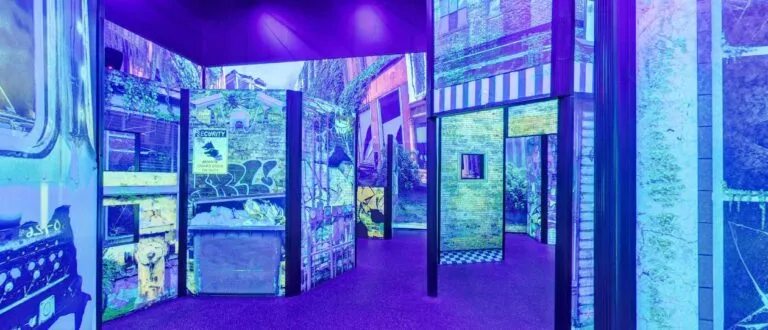
Located in Houston, Texas, ExitusVR is a cutting-edge virtual reality gaming facility that caters to players of all ages. With its immersive and interactive gaming experiences, the facility offers a wide selection of virtual reality games, including thrilling simulations, action-packed adventures, and multiplayer challenges. From shooting games to puzzle-solving and exploration, players can choose from various genres to suit their preferences. Equipped with state-of-the-art VR equipment and technology, ExitusVR ensures a realistic and captivating gaming experience. Whether you’re an experienced gamer or new to virtual reality, this facility provides a fun and exciting environment to dive into the virtual world and indulge in hours of entertainment.
IndoorsMain Event Indoor Laser Tag arena is located in Tomball, TX.
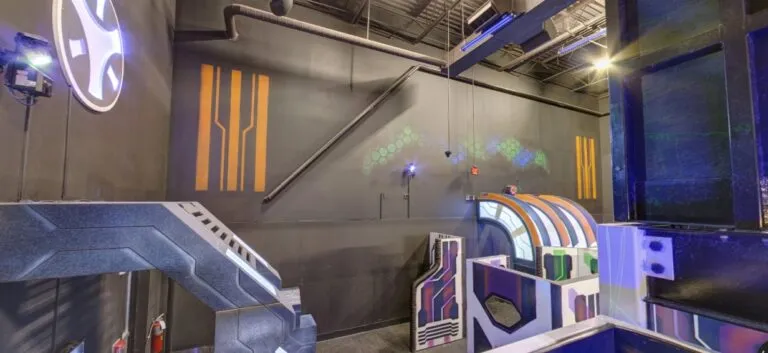
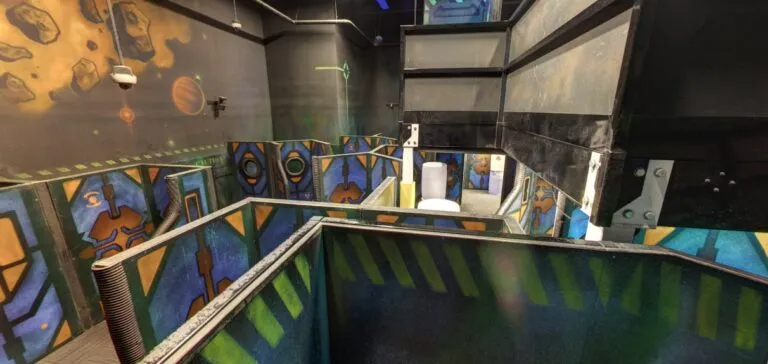
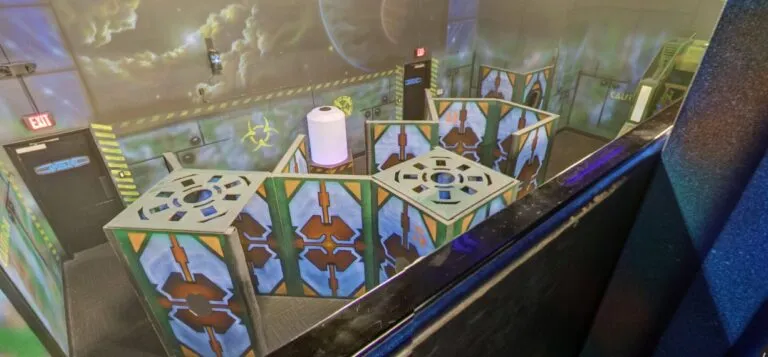
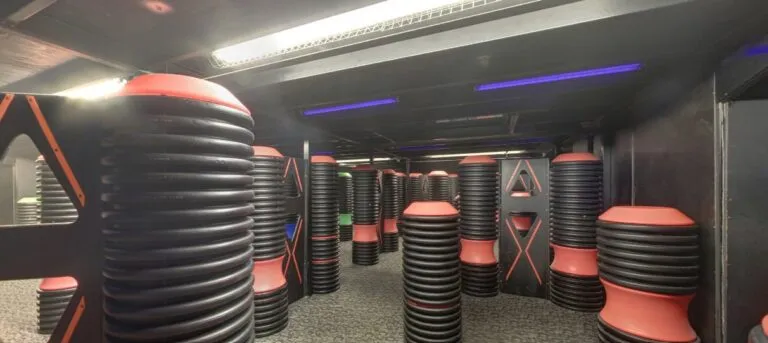
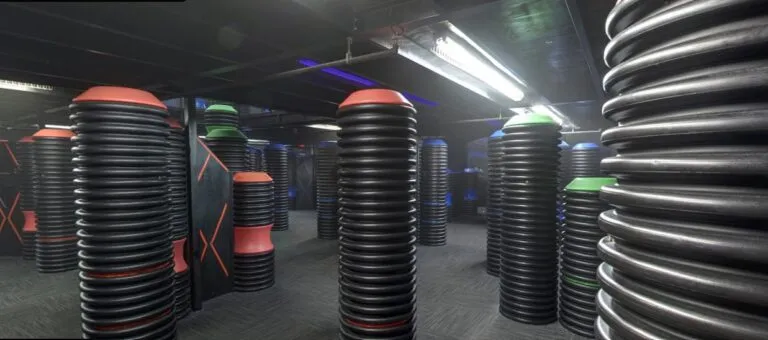
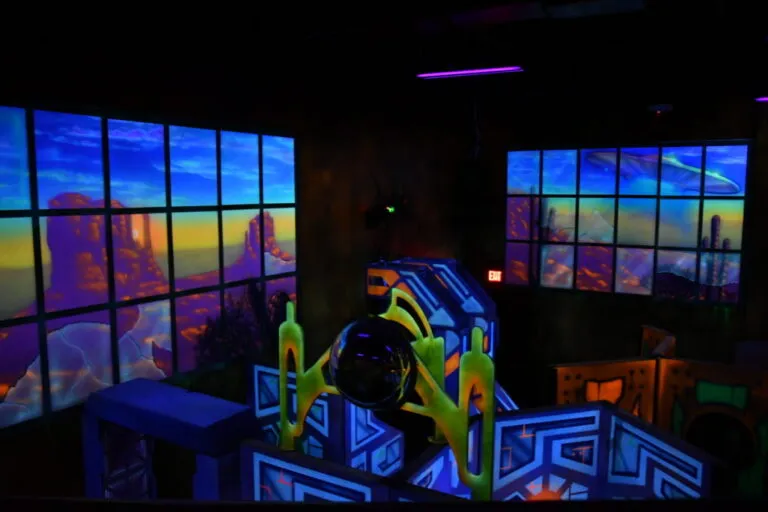
Main Event is a huge entertainment hub where you can spend your weekend or throw a birthday party. These laser-tag battles take place in a multi-story arena with fantasy-like decorations, neon lights, and laborious obstacles. Climb up the towers and rain fire on unsuspecting enemies.
There is also a large recreation area with snacks and drinks to chill after the game. There’s also bowling, pool, VR, mini-golf, a story room, and a ropes course – all available at one single place!
IndoorsZero Latency Houston, Woodlands Indoor Center is located in Houston, TX.
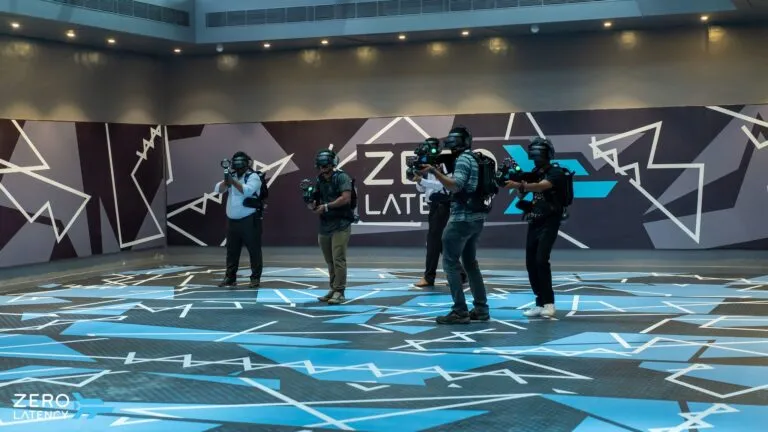
Zero Latency Houston is a thrilling virtual reality gaming experience located in the Woodlands area of Houston, TX. Using state-of-the-art technology, players are transported to a fully immersive virtual world where they work as a team to complete various missions and challenges. With up to six players per game, it’s a great way to spend time with friends and family. And with a variety of games to choose from, including zombie survival and sci-fi adventures, there’s something for everyone. Book your spot at Zero Latency Houston for an unforgettable VR experience.
IndoorsMain Event Indoor Laser Tag arena is located in Humble, TX.
Main Event is a huge entertainment hub where you can spend your weekend or throw a birthday party. These laser-tag battles take place in a multi-story arena with fantasy-like decorations, neon lights, and laborious obstacles. Climb up the towers and rain fire on unsuspecting enemies.
There is also a large recreation area with snacks and drinks to chill after the game. There’s also bowling, pool, VR, mini-golf, a story room, and a ropes course – all available at one single place!
IndoorsFlip N’ Fun Indoor Trampoline Park is located in Houston, TX.
If you’re on the hunt for a one-stop destination for family fun, look no further than the Flip N’ Fun Trampoline Park in Houston, TX. This premier facility is a haven for families seeking an engaging, exciting, and safe environment to create unforgettable memories together. With a variety of attractions and activities under one roof, Flip N’ Fun is the ultimate choice for family entertainment, memorable birthday parties, and impressive group or corporate events.
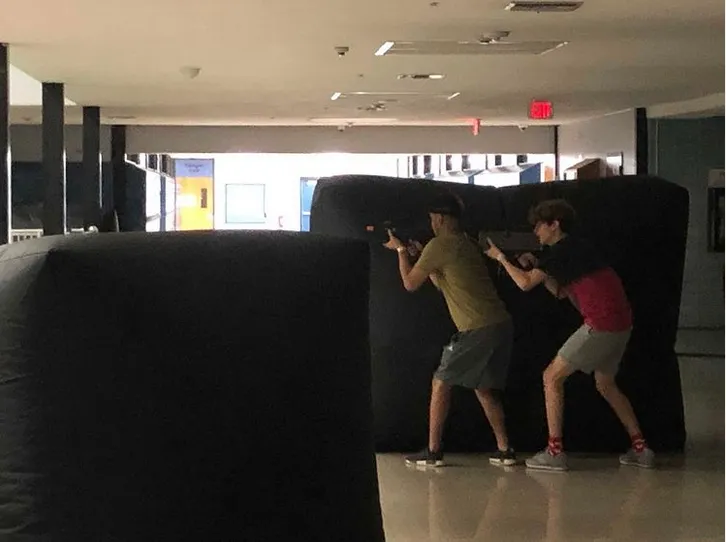
For those looking for an adrenaline-pumping adventure, the Laser Tag arena at Flip N’ Fun is a must-try. Step into an eerie setting filled with fog and illuminated by flashing black lights that set the stage for challenging gameplay. The environment is designed to transport participants into another world, where strategic thinking and quick reflexes are key. The arena has a height restriction of a minimum of 40 inches, ensuring that all players have a fair and enjoyable experience. Laser Tag at Flip N’ Fun is an immersive adventure that will leave you wanting more.
Flip N’ Fun Trampoline Park is the ideal venue for all kinds of events. Planning a birthday party? The facility offers customizable party packages that cater to your needs, ensuring a memorable birthday for your child and their guests. For corporate events, the center provides a unique setting where teams can bond over fun activities, enhancing teamwork and morale. Schools and groups looking for a great outing will find Flip N’ Fun to be the perfect place for students and members to blow off steam and have a blast.
IndoorsMain Event Indoor Laser Tag arena is located in Katy, TX.
Main Event is a huge entertainment hub where you can spend your weekend or throw a birthday party. These laser-tag battles take place in a multi-story arena with fantasy-like decorations, neon lights, and laborious obstacles. Climb up the towers and rain fire on unsuspecting enemies.
There is also a large recreation area with snacks and drinks to chill after the game. There’s also bowling, pool, VR, mini-golf, a story room, and a ropes course – all available at one single place!
IndoorsMain Event Indoor Laser Tag arena is located in Shenandoah, TX.
Main Event is a huge entertainment hub where you can spend your weekend or throw a birthday party. These laser-tag battles take place in a multi-story arena with fantasy-like decorations, neon lights, and laborious obstacles. Climb up the towers and rain fire on unsuspecting enemies.
There is also a large recreation area with snacks and drinks to chill after the game. There’s also bowling, pool, VR, mini-golf, a story room, and a ropes course – all available at one single place!
IndoorsMain Event Indoor Laser Tag arena is located in Stafford, TX.
Main Event is a huge entertainment hub where you can spend your weekend or throw a birthday party. These laser-tag battles take place in a multi-story arena with fantasy-like decorations, neon lights, and laborious obstacles. Climb up the towers and rain fire on unsuspecting enemies.
There is also a large recreation area with snacks and drinks to chill after the game. There’s also bowling, pool, VR, mini-golf, a story room, and a ropes course – all available at one single place!
IndoorsMain Event Indoor Laser Tag arena is located in Webster, TX.
Main Event is a huge entertainment hub where you can spend your weekend or throw a birthday party. These laser-tag battles take place in a multi-story arena with fantasy-like decorations, neon lights, and laborious obstacles. Climb up the towers and rain fire on unsuspecting enemies.
There is also a large recreation area with snacks and drinks to chill after the game. There’s also bowling, pool, VR, mini-golf, a story room, and a ropes course – all available at one single place!
IndoorsZero Latency Houston, Katy Indoor Center is located in Houston, TX.
Zero Latency has brought its virtual reality gaming experience to Houston, with a location in Katy. Equipped with state-of-the-art technology, players can explore immersive digital worlds with their friends in a completely wireless environment. The gaming experience includes multiplayer games, such as zombie survival and sci-fi shooter games. Participants wear a headset and carry a backpack computer, enabling them to move around freely. The facility can accommodate up to eight players at a time, making it a great place for parties, team building events or just a fun night out.
IndoorsAndretti Indoor Karting & Games is located in Katy, TX.
Andretti Indoor Karting & Games in Katy, TX offers a thrilling indoor entertainment experience for all ages. The facility features high-speed electric karts, arcade games, laser tag, bowling, and a ropes course. With over 100,000 square feet of space, Andretti Indoor Karting & Games provides a fun and safe environment for individuals, families, and groups. The facility also offers private meeting and event spaces for corporate events, birthday parties, and more. With a variety of activities and attractions, Andretti Indoor Karting & Games is the perfect destination for a day of adventure and excitement.
Indoors
Free‑roam virtual‑reality (VR) arenas are purpose‑built spaces where participants can move unrestricted while wearing an untethered headset. Unlike seated or room‑scale setups that confine motion to a limited play area, a free‑roam arena spans a sizable indoor field—often ranging from 300 sq m to over 1,000 sq m—and is equipped with a network of sensors, motion‑capture cameras, or infrared beacons that constantly track each headset’s exact position. The result is a seamless blend of the digital world and physical space: users can sprint, duck, climb, and interact with virtual objects as if they were truly present in the environment.
The architecture of a free‑roam arena typically includes:
Because the hardware and space are managed centrally, visitors do not need to own a VR system or possess technical expertise. All that is required is a willingness to step inside the arena, put on a headset, and follow a brief safety briefing. This accessibility is a key factor behind the rapid rise of free‑roam VR as a mainstream entertainment and training platform.
The flexibility of an open arena invites a broad spectrum of immersive scenarios. Designers can craft experiences that range from high‑octane action to subtle, narrative‑driven explorations. Below are some of the most popular genres that have found a natural home in free‑roam environments.
| Scenario Type | Core Gameplay Elements | Typical Session Length |
|---|---|---|
| Space Combat | Piloting a virtual starfighter, dogfighting with AI or other players, dodging asteroids. | 10–15 minutes |
| Fantasy Quest | Sword‑wielding, spell casting, cooperative puzzle solving in a mythical realm. | 20–30 minutes |
| Horror Survival | Navigating a haunted mansion or abandoned laboratory, evading supernatural threats. | 8–12 minutes |
| Sports Simulations | Futuristic soccer, zero‑gravity basketball, or laser tag with realistic physics. | 5–10 minutes per match |
| Educational Expeditions | Guided tours of historic sites, interactive biology labs, or planetary exploration. | 15–25 minutes |
| Corporate Team‑Building | Collaborative challenges that require communication, role assignment, and strategic planning. | 30–45 minutes |
Because each headset tracks the user’s full body, developers can incorporate full‑body haptics (vibration vests, handheld controllers with force feedback) and environmental effects (wind fans, temperature changes, scent emitters) to deepen immersion. The result is a sensory experience that goes far beyond what a conventional screen can deliver.
Free‑roam VR has attracted a surprisingly diverse audience, breaking down many of the stereotypes that once confined VR to a niche geek community. The following user groups regularly populate these spaces:
The common denominator across these groups is the desire for embodied interaction—the feeling that one’s body is truly part of the virtual narrative. This embodied experience is what makes free‑roam VR compelling for both seasoned gamers and newcomers alike.
When it comes to younger audiences, free‑roam VR arenas have a distinct set of considerations that shape the design of kid‑friendly experiences.
All arenas enforce age‑appropriate height and weight limits for headset use, and staff members are trained to monitor participants continuously. Soft, non‑slippery flooring and low‑height barriers keep children within the safe zone. Many venues also provide lightweight, adjustable headsets that accommodate smaller heads without compromising visual clarity.
A growing segment of kid‑oriented content blends entertainment with learning objectives. For example, a dinosaur excavation scenario can teach paleontology basics, while a space‑station repair mission introduces concepts of physics and engineering. The hands‑on nature of free‑roam VR turns abstract ideas into tangible actions, which research shows improves retention in children aged 7‑12.
Unlike home VR setups that often isolate the user, arena experiences foster real‑world socialization. Children can see each other’s avatars, coordinate strategies, and celebrate shared victories. This cooperative play helps develop teamwork skills and reduces the screen‑time stigma that sometimes surrounds solo gaming.
Operators can adjust difficulty levels on the fly, ensuring that a 6‑year‑old and a 12‑year‑old can both enjoy the same scenario without feeling overwhelmed or bored. Adaptive algorithms monitor a player’s performance and subtly modify enemy behavior, puzzle complexity, or time limits to keep the experience in the “flow” zone.
In short, free‑roam VR provides a controlled, immersive playground where kids can explore, learn, and interact in ways that traditional media simply cannot replicate.
Because the arena can be re‑themed within hours, it has become a go‑to venue for milestone celebrations. Here’s how organizers typically structure these events:
A birthday package usually includes a private session for the celebrant’s group, a themed adventure (e.g., “Pirates of the Lost Island” or “Superhero Academy”), and a post‑play celebration area with cake and refreshments. The immersive storyline can be personalized with the birthday child’s name, making the experience feel tailor‑made. Parents appreciate the all‑inclusive nature: the venue handles setup, safety briefings, and cleanup, allowing them to focus on the fun.
Graduates are often looking for a memorable way to mark the transition to the next life stage. Some venues offer “Future‑Vision” experiences where participants explore a simulated career landscape—walking through a futuristic lab for science majors or navigating a bustling cityscape for business graduates. The shared experience, combined with photo‑capture stations that overlay avatars with graduation caps, creates lasting digital mementos that can be shared on social media.
For corporate gatherings, free‑roam VR can serve both as an entertainment hub and a learning laboratory. Companies might select a high‑stakes scenario that mirrors real business challenges—such as managing a virtual supply chain under time pressure—or a purely recreational escape‑room‑style game that encourages lateral thinking. Post‑session debriefs facilitated by arena staff help translate in‑game insights into actionable workplace strategies.
Across all event types, the key advantage is the scalability of the experience. Whether the gathering includes 10 participants or 100, the arena’s modular design can accommodate multiple concurrent sessions, ensuring that each guest receives a high‑quality, immersive encounter without long wait times.
The emergence of free‑roam VR has sparked interest far beyond the entertainment sector. Researchers in psychology, ergonomics, and human‑computer interaction, as well as industry leaders in simulation training, have begun to assess its broader implications.
Studies conducted at several universities indicate that the full‑body engagement required by free‑roam VR can improve spatial cognition, reaction time, and proprioceptive awareness. Because participants must constantly navigate a three‑dimensional environment, they develop a more acute sense of distance and orientation than in seated VR setups. Moreover, the physical activity—walking, reaching, ducking—offers a modest cardiovascular workout, positioning free‑roam VR as a potential adjunct to traditional exercise programs.
Industry experts in aviation, defense, and medicine point to free‑roam VR as a cost‑effective bridge between tabletop simulations and real‑world field training. For instance, surgeons can rehearse a complex procedure in a virtual operating theater where instruments are tracked precisely, while pilots can practice emergency maneuvers in a life‑size cockpit replica without the expense of fuel or aircraft wear. Early data suggest that skill retention from free‑roam VR training is comparable to that of high‑fidelity physical simulators, especially when the virtual scenario mirrors the physical constraints of the real task.
The immersive nature of free‑roam VR also raises questions about motion sickness, psychological effects, and data privacy. Researchers emphasize the importance of gradual exposure for first‑time users, as sudden locomotion can provoke vestibular discomfort. Ethical guidelines are being drafted to ensure that biometric data—such as heart rate or eye tracking—collected during sessions are stored securely and used responsibly.
Analysts forecast that the global free‑roam VR market will surpass USD 5 billion by 2030, driven by advances in wireless headset technology, decreasing hardware costs, and the diversification of use cases—from entertainment to education and professional training. The consensus among industry veterans is that the next wave of growth will come from hybrid experiences that blend physical props, mixed reality overlays, and AI‑driven adaptive narratives.
Free‑roam VR arenas represent a pivotal evolution in how immersive technology is delivered to the public. By removing the tethered constraints of traditional VR, they enable users to walk, run, and interact within richly detailed digital worlds that can be reshaped to fit any narrative or purpose. From exhilarating combat simulations and whimsical fantasy quests to educational expeditions and corporate team‑building exercises, the spectrum of scenarios is limited only by imagination.
The appeal of these arenas cuts across age groups and interests. Kids benefit from safe, educational adventures; families enjoy shared experiences that foster connection; professionals leverage realistic simulations for training and collaboration; and event organizers find a versatile venue that can be tailored to birthdays, graduations, or corporate celebrations.
Scientific research and industry expertise are increasingly validating the cognitive, physical, and training advantages of free‑roam VR, while also highlighting the need for responsible design and data stewardship. As hardware continues to become lighter, battery life extends, and tracking precision improves, free‑roam VR is poised to become a staple of both leisure and learning.
In the years ahead, the line between the virtual and the physical will blur further, and free‑roam arenas will stand at the forefront of that transformation—offering a space where imagination can literally run free.