
 El Monte
 Log in
Log in
Log in

Crossfire Paintball Sioux Falls is located in Sioux Falls SD.
Crossfire Paintball Sioux Falls: A Premier Destination for Action-Adventure Enthusiasts. Beyond traditional paintball, Crossfire caters to a wider audience with airsoft, low-impact rounds, and gel blaster options, ensuring an inclusive and dynamic experience for every visitor.
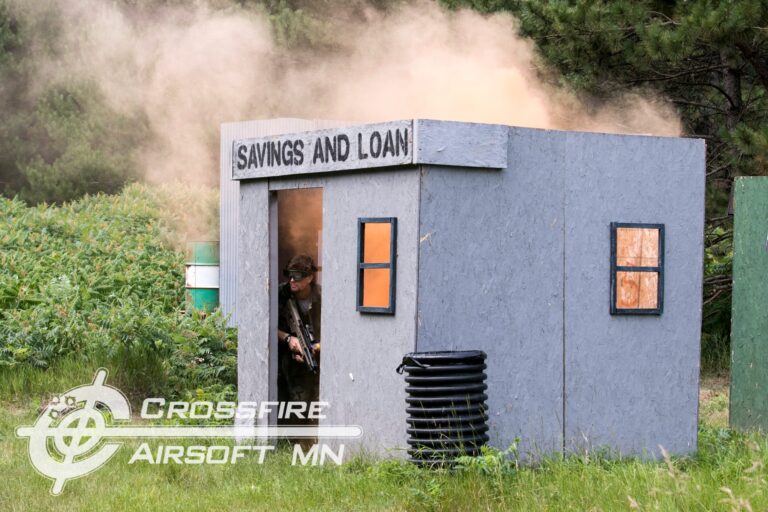
At Crossfire Paintball Sioux Falls, the action unfolds across meticulously designed fields that mimic urban environments, natural terrains, and tactical scenarios. Traditional paintball remains a standout draw, with players engaging in fast-paced matches using high-performance markers.
For those seeking alternatives, airsoft provides a similar tactical experience using biodegradable plastic pellets, often preferred for its realism in simulation-style play. Crossfire also introduces “low-impact” rounds—a family-friendly paintball variant designed with softer projectiles and lower firing velocities. This option is ideal for younger players, casual participants, or those prioritizing comfort without sacrificing fun. Meanwhile, gel blasters—Japanese-style water-based shooters—add an eco-friendly twist, using non-toxic gel beads that dissolve on contact.
 Outdoors
Gelly Ball is a fast‑growing, kinetic sport that blends elements of dodgeball, volleyball, and ultimate Frisbee, but it distinguishes itself by using a soft, gelatinous sphere as the primary piece of equipment. The “gelly” component refers to the ball’s pliable, jelly‑like outer shell, which is typically made from a high‑grade, non‑toxic polymer that mimics the bounce and tactile feel of a traditional rubber ball while remaining safe for players of all ages. The ball usually measures between 8 cm and 10 cm in diameter and weighs roughly 150 g, making it light enough for quick aerial maneuvers yet heavy enough to travel a respectable distance when thrown.
Originating in the early 2020s as an after‑school activity in Scandinavia, Gelly Ball quickly migrated to community centers, summer camps, and eventually professional leagues across Europe and North America. Its inclusive design—soft material, moderate size, and adjustable rules—has helped it appeal to a broad demographic, from elementary‑school children to corporate wellness programs. The sport’s official governing body, the International Gelly Ball Association (IGBA), has codified a set of basic regulations, but many local clubs adapt the game to suit the available space, player numbers, and desired intensity.
At its core, Gelly Ball is a team‑based, non‑contact sport played on a rectangular field that can be as small as a gymnasium floor or as large as a standard outdoor soccer pitch. A typical match pits two teams of six to eight players against each other. The objective is to score points by landing the gelly ball in the opponent’s “goal zone,” a designated rectangular area located at each end of the field, while simultaneously preventing the other team from doing the same.
Kick‑off – The game starts with a “drop‑ball” in the center of the court. Two players—one from each team—stand opposite each other, and the referee releases the gelly ball from a small height of about 30 cm. The first player to gain possession initiates the offensive drive.
Movement – Players may run, pivot, or shuffle within the boundaries, but they must maintain a minimum distance of 1.5 m from the opponent who has the ball, ensuring a non‑contact environment. This “zone rule” encourages quick passing and strategic positioning.
Passing and Dribbling – The ball can be passed directly by hand or bounced (dribbled) on the ground. Because the gelly ball’s surface is slightly sticky, it grips the floor, allowing controlled dribbles that resemble basketball’s. Teams often employ rapid “one‑touch” passes to outmaneuver the defense.
Shooting – A player may attempt a shot when positioned within a semi‑circular “shooting arc” extending 4 m from the goal line. Shots can be executed via an underhand toss, a straight arm throw, or a “lob” that arcs over defenders. The ball’s soft nature means that even a mis‑aimed shot poses little risk of injury.
Scoring – A point is registered when the ball lands and remains in the opponent’s goal zone for at least two seconds. If the ball bounces out within that window, the point is nullified, and play resumes with a “reset” at the center.
Turnovers – The ball can change possession through interceptions, forced errors (e.g., a ball hitting the ground outside the designated play area), or by the defending team catching a pass. A turnover results in an immediate “quick‑reset” where the defending team starts the next play from the spot of the turnover.
The flexibility of the rule set means that Gelly Ball can be adapted to almost any indoor or outdoor environment, making it a versatile option for schools, fitness centers, and event organizers.
The popularity of Gelly Ball is not merely a product of its novelty; the sport offers a range of measurable physical, cognitive, and social benefits.
Collectively, these benefits have attracted the attention of educators, health professionals, and corporate wellness coordinators seeking an engaging activity that simultaneously promotes physical fitness and mental acuity.
From a scientific perspective, Gelly Ball has sparked interest across several disciplines, ranging from materials engineering to sports physiology.
Researchers at the Institute of Polymers in Oslo have examined the gelly ball’s composition, noting that its hybrid polymer matrix—combining thermoplastic elastomers with a microscale gelatinous filler—offers a unique combination of elasticity, durability, and tactile softness. The material’s impact absorption properties have been benchmarked against traditional rubber balls, revealing a 35 % reduction in peak impact force, which directly translates into lower injury risk for players.
A 2023 study published in the Journal of Applied Sports Science tracked a cohort of 120 participants across three months of regular Gelly Ball play. Results indicated a 12 % increase in VO₂ max and a 9 % improvement in anaerobic threshold, comparable to the gains observed in high‑intensity interval training (HIIT). Researchers highlighted the sport’s capacity to provide both aerobic and anaerobic stimulus within a single session, a rarity among recreational activities.
Occupational health specialists have praised Gelly Ball as a low‑risk, high‑engagement tool for workplace wellness programs. A pilot program conducted by a multinational tech firm demonstrated that employees who participated in bi‑weekly Gelly Ball sessions reported a 27 % reduction in perceived stress levels and a 15 % increase in team cohesion scores, as measured by the validated Team Climate Inventory.
Overall, the consensus among scientists and industry experts is that Gelly Ball represents a well‑balanced, evidence‑based activity that delivers measurable health outcomes while remaining safe and enjoyable for diverse populations.
One of Gelly Ball’s defining strengths is its universal accessibility. The sport is explicitly designed to accommodate a wide spectrum of participants.
Because the sport does not require specialized footwear, protective gear, or extensive prior experience, virtually anyone can step onto the court, make a throw, and begin contributing to the game within minutes.
When it comes to celebrations, Gelly Ball has carved out a niche as a go‑to activity for birthdays, school fairs, and community festivals. Its blend of excitement, simplicity, and safety makes it a crowd‑pleaser for both participants and spectators.
By integrating Gelly Ball into the party agenda, hosts can transform a standard gathering into a dynamic, movement‑focused celebration that leaves guests exhilarated and exhausted—in the best possible way.
The modular nature of Gelly Ball means it can be accommodated in an impressive variety of settings, each offering its own atmosphere and logistical considerations.
When selecting a venue, organizers should consider surface firmness (a slightly resilient surface reduces ball wear), weather conditions for outdoor play, and accessibility for participants with mobility needs. Regardless of the setting, a basic set of boundary markers, a few gelly balls, and a minimal score‑keeping system are sufficient to launch a successful game.
Gelly Ball stands at the intersection of fun, fitness, and inclusivity. Its soft, gelatinous sphere, combined with straightforward yet adaptable rules, makes it a sport that can be easily introduced to schools, workplaces, community centers, and parties. Scientific research underscores its physical and cognitive benefits, while industry experts highlight its utility as a low‑risk, high‑engagement activity. Whether played on a polished gym floor or a sun‑drenched park lawn, Gelly Ball invites participants of all ages and abilities to move, cooperate, and compete in a safe environment. As the sport continues to spread worldwide, it promises to enrich the recreational landscape with a vibrant, accessible option that turns ordinary spaces into arenas of energetic joy.


 201 N. Harlem Ave. Sioux Falls SD 57104