
 El Monte
 Log in
Log in
Log in

Crossfire Paintball Sioux Falls is located in Sioux Falls SD.
Crossfire Paintball Sioux Falls: A Premier Destination for Action-Adventure Enthusiasts. Beyond traditional paintball, Crossfire caters to a wider audience with airsoft, low-impact rounds, and gel blaster options, ensuring an inclusive and dynamic experience for every visitor.
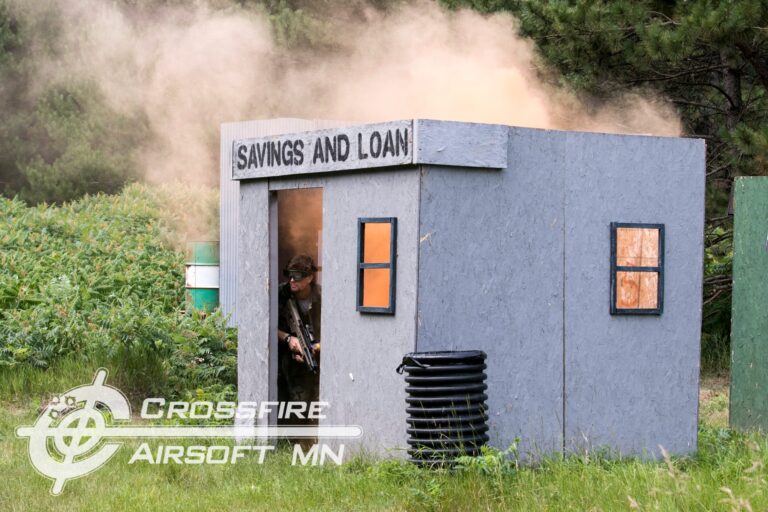
At Crossfire Paintball Sioux Falls, the action unfolds across meticulously designed fields that mimic urban environments, natural terrains, and tactical scenarios. Traditional paintball remains a standout draw, with players engaging in fast-paced matches using high-performance markers.
For those seeking alternatives, airsoft provides a similar tactical experience using biodegradable plastic pellets, often preferred for its realism in simulation-style play. Crossfire also introduces “low-impact” rounds—a family-friendly paintball variant designed with softer projectiles and lower firing velocities. This option is ideal for younger players, casual participants, or those prioritizing comfort without sacrificing fun. Meanwhile, gel blasters—Japanese-style water-based shooters—add an eco-friendly twist, using non-toxic gel beads that dissolve on contact.
 Outdoors
Paintball is a fast‑paced, team‑oriented sport in which participants use specially designed markers—commonly called paintball guns—to fire gelatin capsules filled with non‑toxic, water‑based paint. The capsules, known as paintballs, burst on impact, leaving a visible mark that signals a hit. The game can be played in a wide variety of environments, from dense forests to purpose‑built arenas, and can be adapted to suit casual recreation, competitive leagues, or even military‑style training exercises. At its core, paintball blends strategy, athleticism, and a dash of adrenaline, offering players a safe yet exhilarating way to test reflexes, teamwork, and tactical thinking.
While specific rule sets can vary between leagues and venues, a core group of guidelines governs most paintball matches:
Safety Gear is Mandatory – Every player must wear an approved mask or goggles that fully cover the eyes and face. Protective clothing, such as padded vests or chest protectors, is strongly recommended and may be required in higher‑intensity formats.
Paintball Hits Are Final – When a paintball breaks on a player’s gear or skin, the player is considered “out” and must leave the playing field immediately. In some formats, a “respawn” zone is provided, allowing eliminated players to re‑enter after a short cooldown period.
Markers Must Be Within Legal Limits – Most fields enforce a maximum muzzle velocity, typically around 300 feet per second (fps), to keep impacts within a safe energy range. Markers are usually inspected before the start of a game.
No Physical Contact – Paintball is a non‑contact sport. Pushing, shoving, or tackling opponents is prohibited and can result in disqualification.
Respect the Boundaries – Players must stay within the designated playing area. Crossing outside lines, climbing out of bounds, or using prohibited routes is considered a violation.
Game Objectives Define Victory – Whether the goal is to eliminate the opposing team, capture a flag, or hold a strategic point, the winning condition is defined before the match begins and must be adhered to until the final whistle.
These rules are reinforced by field referees or volunteer marshals, who oversee safety, enforce fair play, and intervene when a breach occurs.
Paintball’s versatility shines through its myriad scenarios, each designed to test different skill sets and strategic approaches.
Capture the Flag – Two teams compete to retrieve the opponent’s flag and return it to their own base while defending their own flag. This classic mode emphasizes speed, stealth, and coordinated assaults.
Elimination (or “Last Man Standing”) – Players are eliminated on each hit until only one participant remains. Solo elimination games foster aggressive play and precise shooting.
Objective‑Based “MilSim” (Military Simulation) – Teams are assigned specific missions such as “hostage rescue,” “bomb defusal,” or “area denial.” These scenarios often incorporate role‑playing elements, command structures, and realistic equipment, creating an immersive experience that mirrors tactical training.
King of the Hill – A central zone is contested, and teams must hold the area for a predetermined amount of time. Control of the hill grants points and can shift the momentum of the match.
Zombie Survival – A small group of “survivors” faces a larger wave of “zombies.” The survivors win by outlasting the zombies or completing a secondary objective, such as reaching a safe zone.
Scenario Paintball Events – Large‑scale, multi‑hour affairs that blend several objectives, often with elaborate storylines, props, and costumes. Participants may spend an entire weekend on a single immersive battlefield, moving through evolving missions.
Each scenario encourages different tactics, from aggressive rushing to methodical, methodical positioning, making paintball a sport that rewards adaptability as much as raw skill.
Beyond the obvious enjoyment of a high‑octane game, paintball offers several tangible benefits:
Physical Fitness – Running, ducking, and maneuvering through obstacles provide a full‑body workout that improves cardiovascular health, agility, and muscular endurance.
Teamwork and Communication – Success relies on clear, concise communication and coordinated actions. Players learn to assign roles, share information, and trust teammates under pressure.
Strategic Thinking – Every match requires planning, situational awareness, and rapid decision‑making. Players develop the ability to assess threats, allocate resources, and adapt tactics in real time.
Stress Relief – The controlled chaos of paintball delivers a safe outlet for adrenaline, allowing participants to release tension and experience a natural “runner’s high” from intense physical activity.
Confidence Building – Overcoming fear of being hit, mastering equipment, and achieving objectives fosters self‑esteem and a sense of accomplishment.
Problem‑Solving Skills – Scenario‑based games often present puzzles—such as bypassing obstacles or coordinating multi‑step objectives—that sharpen analytical abilities.
Collectively, these benefits make paintball an appealing activity for schools, corporate team‑building programs, and individuals seeking a dynamic, socially engaging sport.
Paintball attracts a broad demographic, reflecting its adaptable nature:
Youth and Teens – Many high schools and youth clubs run intramural leagues, offering a structured environment for younger players to develop sportsmanship and teamwork.
College Students – Campus clubs and intramural programs provide a cost‑effective outlet for competitive play and social interaction.
Corporate Teams – Companies frequently organize paintball outings as team‑building exercises, leveraging the sport’s collaborative demands to improve workplace dynamics.
Military and Law‑Enforcement Personnel – Paintball serves as a low‑risk training tool for tactical decision‑making, small‑unit maneuvering, and stress inoculation.
Competitive Athletes – Professional paintball leagues, with sponsorships and prize pools, attract dedicated players who train rigorously and travel worldwide to compete.
Recreational Families – Many families enjoy weekend “paintball days” at family‑friendly venues that emphasize safety and lighter rules, making the sport accessible to all ages.
The sport’s inclusivity stems from its ability to scale intensity, cost, and skill requirements, allowing newcomers and seasoned veterans alike to find a comfortable entry point.
Scientific research and industry analysis have examined paintball from both health and market perspectives. Studies on participant safety consistently report low injury rates when proper protective equipment and field regulations are enforced. The most common injuries are minor bruises or eye irritations, the latter largely preventable through the use of certified masks. Researchers also note that the sport stimulates high levels of aerobic activity, comparable to moderate‑intensity interval training, which can contribute positively to cardiovascular health.
From an ergonomic standpoint, experts highlight the importance of marker design and recoil management. Modern markers incorporate low‑recoil mechanisms and adjustable air reservoirs, reducing fatigue during extended matches. The development of biodegradable paintballs has attracted environmental scrutiny; industry specialists point out that newer formulations break down within weeks, mitigating the ecological impact that earlier petroleum‑based shells posed.
Economically, the paintball industry generates billions of dollars annually worldwide, driven by equipment sales, venue operations, and tournament sponsorships. Market analysts predict continued growth, bolstered by innovations such as electronic markers, integrated GPS tracking for live statistical feedback, and augmented‑reality overlays that enhance scenario immersion. The convergence of technology and sport positions paintball as a leading example of “tech‑enhanced recreation.”
Paintball fields span a spectrum of environments, each offering distinct tactical challenges and atmospheres.
Forest and Woods Courses – Natural terrain provides varied elevation, dense foliage, and unpredictable sightlines. Players must navigate roots, streams, and uneven ground, mirroring realistic combat settings.
Open‑Field “Speedball” Arenas – These fields feature inflatable bunkers arranged in symmetrical patterns, optimized for fast‑paced, high‑intensity matches. The standardized layout facilitates competitive leagues and tournament play.
Adventure Parks – Some outdoor adventure facilities integrate paintball into larger outdoor activity packages, pairing it with zip‑lining, obstacle courses, and climbing walls for a multi‑disciplinary experience.
Rural “Scenario” Sites – Large acreage, often spanning dozens of acres, can be transformed into immersive battlegrounds with thematic constructions—abandoned warehouses, fortified bases, or derelict towns—supporting multi‑hour scenario events.
Dedicated Paintball Complexes – Climate‑controlled facilities house multiple arenas, allowing year‑round play regardless of weather. Inflatable bunkers, modular walls, and lighting effects create versatile environments.
Urban “Street Paintball” Labs – Compact indoor layouts mimic city streets with narrow corridors, stairwells, and simulated vehicular cover, emphasizing close‑quarters tactics.
Corporate Training Centers – Some companies have built in‑house paintball gyms equipped with laser‑based tracking systems that record hits digitally, enabling detailed after‑action reviews and performance analytics.
Hybrid Facilities – Certain venues blend indoor arenas with adjacent outdoor fields, offering a seamless transition between controlled and natural settings. This flexibility caters to both tournament organizers and casual groups seeking varied gameplay.
When selecting a venue, players should consider factors such as safety standards, marker maintenance policies, availability of rental equipment, and the variety of game modes offered. Many fields also provide coaching sessions, equipment rentals, and organized leagues, making it easier for newcomers to integrate into the community.
Paintball stands at the intersection of sport, recreation, and tactical simulation, delivering a dynamic experience that challenges both the body and the mind. Its core mechanics—simple yet thrilling—are bounded by a robust set of safety rules that keep the action secure while preserving its competitive edge. From classic capture‑the‑flag duels to elaborate multi‑day scenario events, the sport’s diverse formats accommodate an equally diverse player base, ranging from teenagers and corporate teams to seasoned professionals and military trainees.
Scientific assessment confirms paintball’s low injury profile and its capacity to provide meaningful physical exercise, while industry leaders continue to push technological boundaries that enhance realism and environmental sustainability. Whether played under a canopy of trees, within a high‑tech indoor arena, or on a sprawling scenario battlefield, paintball offers participants a blend of fitness, teamwork, strategic depth, and pure excitement.
As the paintball community expands and innovations proliferate, the sport is poised to remain a vibrant outlet for adrenaline seekers, strategic thinkers, and anyone eager to combine fun with personal development. The next time a marker clicks, a burst of color flies, and a new tactical story unfolds—paintball proves once again why it has captured the imaginations of millions worldwide.


 201 N. Harlem Ave. Sioux Falls SD 57104