
 El Monte
 Log in
Log in
Log in

Crossfire Paintball Sioux Falls is located in Sioux Falls SD.
Crossfire Paintball Sioux Falls: A Premier Destination for Action-Adventure Enthusiasts. Beyond traditional paintball, Crossfire caters to a wider audience with airsoft, low-impact rounds, and gel blaster options, ensuring an inclusive and dynamic experience for every visitor.
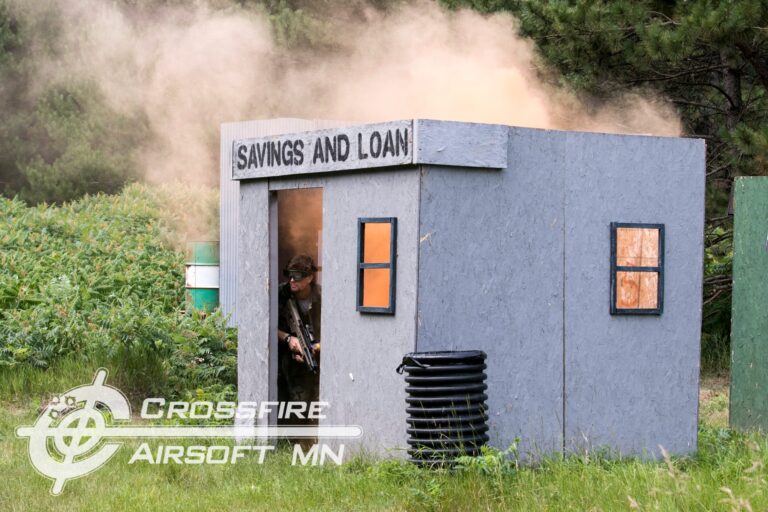
At Crossfire Paintball Sioux Falls, the action unfolds across meticulously designed fields that mimic urban environments, natural terrains, and tactical scenarios. Traditional paintball remains a standout draw, with players engaging in fast-paced matches using high-performance markers.
For those seeking alternatives, airsoft provides a similar tactical experience using biodegradable plastic pellets, often preferred for its realism in simulation-style play. Crossfire also introduces “low-impact” rounds—a family-friendly paintball variant designed with softer projectiles and lower firing velocities. This option is ideal for younger players, casual participants, or those prioritizing comfort without sacrificing fun. Meanwhile, gel blasters—Japanese-style water-based shooters—add an eco-friendly twist, using non-toxic gel beads that dissolve on contact.
 Outdoors
Airsoft is a recreational activity that uses highly detailed replica firearms to fire non‑lethal, 6 mm plastic BBs at velocities typically ranging from 200 to 400 feet per second. Unlike paintball, the projectiles leave no visible mark, which encourages players to focus on tactical awareness, communication, and realistic combat scenarios. The sport can be played indoors or outdoors, in specially designed fields that mimic urban streets, dense forests, abandoned warehouses, or even historic battlefields. Its appeal lies not only in the adrenaline of “shoot‑outs” but also in the collaborative storytelling that unfolds when a group of strangers works together toward a common objective.
One of the strongest draws of airsoft is its emphasis on realism. Players often dress in authentic‑looking camouflage or military‑style uniforms, carry gear that mirrors real‑world load‑outs, and follow mission briefs that outline objectives such as “capture the flag,” “hostage rescue,” or “defend the objective.” This realistic framework pushes participants to think like actual soldiers or law‑enforcement operatives, considering cover, concealment, and line‑of‑sight.
Teamwork is essential. Successful squads coordinate movements, share information, and allocate roles—designated riflemen, support gunners, medics, and recon scouts. The emphasis on communication fosters trust among teammates and teaches conflict‑resolution skills that are transferable outside the field. Strategy evolves throughout a match; teams may adopt aggressive rushes, methodical clearing patterns, or stealthy flanking maneuvers. The dynamic nature of each round forces players to adapt on the fly, making every game a fresh tactical puzzle.
Airsoft fields offer a broad spectrum of game modes that cater to different skill levels and interests. Classic “Capture the Flag” pits two teams against each other to infiltrate the opponent’s base and retrieve a flag without being eliminated. “Team Deathmatch” focuses on pure firepower, where the side with the most eliminations wins. “MilSim” (military simulation) events stretch over several hours or even days, integrating complex narratives, logistics, and role‑playing elements that emulate real military operations. “Zombie Survival” adds a horror twist, with a small group of “survivors” fending off waves of “infected” players. This variety ensures that newcomers can start with straightforward objectives while veterans can seek out the depth of multi‑hour simulations.
The airsoft marketplace is a thriving ecosystem of aftermarket parts and accessories. Players can modify their guns with upgraded hop‑up units for better range, custom trigger groups for faster firing, or precision barrels for improved accuracy. Externally, weapons can be painted, engraved, or fitted with rails for lights, lasers, and grips. Beyond the firearms, players personalize their load‑outs with modular vests, chest rigs, and pouches that hold magazines, medical supplies, and communications gear. This freedom to tailor equipment allows participants to express individuality while optimizing performance for specific game scenarios.
Airsoft has cultivated a global community that extends well beyond the battlefield. Online forums, social media groups, and local clubs serve as hubs for knowledge exchange, trade, and event organization. Beginners often find mentorship from seasoned players who share tips on gun maintenance, field etiquette, and tactical fundamentals. Many fields host regular tournaments, charity matches, and family‑friendly days that welcome participants of all ages. The sense of belonging and shared passion creates lasting friendships and a supportive network that keeps the sport vibrant and inclusive.
The most critical piece of equipment for any airsoft participant is reliable eye protection. Certified polycarbonate goggles or full‑face masks that meet the ANSI Z87.1 standard block the high‑velocity BBs that can cause serious eye injuries. Many players opt for masks with interchangeable lenses to adapt to varying light conditions, but regardless of style, a snug fit that eliminates any gaps is non‑negotiable.
Gloves protect hands from BB impacts, rough terrain, and the occasional snag on barbed wire or sharp objects. Tactical gloves featuring reinforced knuckles, padded palms, and breathable fabrics provide both protection and dexterity, allowing players to reload quickly and handle their weapons confidently.
Footwear must combine durability, ankle support, and traction. Military‑style combat boots or specialized airsoft boots with reinforced soles guard against punctures, mud, and uneven ground. Proper fit minimizes the risk of blisters during long matches, and waterproof options keep feet dry in wet environments.
Knees and elbows are vulnerable during prone movement, crawling, and sudden drops. Soft‑shell pads with impact‑absorbing foam cushion joints while maintaining flexibility. Many pads incorporate reinforced caps on the front to guard against direct BB hits.
A sturdy helmet shields the head from stray BBs, falling debris, and occasional collisions. Lightweight tactical helmets with modular rail systems enable players to mount lights, cameras, or communication devices, enhancing both safety and situational awareness.
While full‑face masks often incorporate a lower‑face guard, players who prefer goggles may add a ballistic‑grade lower face shield. This piece protects the mouth, chin, and teeth from direct impacts, which can otherwise cause dental injury or facial bruising.
Every sanctioned airsoft venue enforces a strict safety protocol. Players must keep their firearms on “safe” mode when not actively engaged in a game, maintain a minimum engagement distance (commonly 30 feet indoors, 50 feet outdoors), and never point a gun at a non‑player. Protective gear must be worn at all times, and any violation typically results in immediate removal from the field.
Airsoft relies heavily on the honour system. Since hits are often invisible, players are expected to call themselves “out” when struck by a BB that meets the field’s velocity limits. Some fields employ “hit‑detector” accessories, but the fundamental trust that participants will self‑report remains central to the sport’s integrity.
Respect for opponents, referees, and property underpins a positive airsoft experience. Aggressive language, unsportsmanlike conduct, or intentional damage to equipment and facilities is prohibited. Maintaining a respectful attitude encourages a welcoming atmosphere and reduces the risk of accidents.
AEGs are the most prevalent type of airsoft firearm. Powered by rechargeable lithium‑ion or NiMH batteries, they use an electric motor to drive a gearbox that compresses a spring, propelling BBs at rapid rates. AEGs emulate the semi‑automatic and fully‑automatic fire modes of their real‑world counterparts, making them versatile for both aggressive and defensive play. Their reliability, ease of maintenance, and wide availability make them the go‑to choice for beginners and seasoned players alike.
Gas‑powered guns use compressed gas—either green gas (propane mixed with silicone oil) or CO₂—to cycle the bolt and fire BBs. They tend to feel more realistic because the blowback action mimics the recoil of authentic firearms. Gas pistols and rifles are popular for milsim scenarios where authenticity is prized. However, performance can be temperature‑dependent; colder environments may reduce gas pressure and impact reliability.
Spring guns are the simplest mechanically, relying on a manually compressed spring to launch a BB each time the trigger is pulled. While they lack the rapid fire capability of AEGs and gas guns, spring rifles and pistols are inexpensive, require no batteries or gas, and are excellent for beginners who want to learn basic handling and safety. High‑end spring sniper rifles can achieve impressive accuracy at long ranges, offering a distinct tactical niche.
Researchers in ballistics and material science recognize airsoft as a low‑risk projectile sport. Studies have shown that when proper protective equipment is used, the probability of serious injury remains minimal. Experts highlight the benefits of airsoft in developing hand‑eye coordination, strategic thinking, and teamwork—skills that are transferable to fields such as emergency response, military training, and corporate team‑building. Industry analysts note that the hobby’s growth is propelled by advances in polymer technology, which have produced lighter, stronger BBs and more realistic replica firearms. Moreover, the increasing availability of modular accessories and the rise of digital tracking systems (e.g., RFID‑enabled hit counters) are expanding the sport’s appeal to tech‑savvy participants.
Airsoft attracts a remarkably diverse demographic. Teenagers and young adults often join for the excitement and camaraderie, while older enthusiasts appreciate the tactical depth and historical reenactment aspects. Military veterans and law‑enforcement personnel find the sport a low‑cost avenue to practice movement, communication, and situational awareness. Corporate teams use organized airsoft events for leadership development and stress‑relief. Even families with children participate in youth‑friendly matches that emphasize safety and cooperative play. This broad appeal underscores airsoft’s capacity to serve as both a recreational outlet and a practical training tool.
Commercially operated fields provide the most controlled environment for play. These venues are inspected for safety compliance, feature clearly marked boundaries, and often supply rental gear for newcomers. Many fields offer themed layouts—urban ruins, forested ambush zones, or indoor close‑quarters arenas—allowing players to experience a variety of tactical settings without the need for personal transportation of equipment.
Grassroots clubs and local teams meet regularly at parks, private properties, or rented spaces. Membership typically involves a modest fee that covers field use and collective maintenance of shared gear. Clubs often organize regular training sessions, tactical workshops, and friendly scrimmages, fostering a sense of community and continuous skill development.
MilSim (military simulation) events are large‑scale, often multi‑day affairs that blend realistic combat scenarios with role‑playing elements. Participants may be assigned ranks, objectives, and supply lines, and the event may incorporate live‑action role‑players acting as civilians or enemy combatants. These events usually require advance registration, a detailed gear checklist, and adherence to stricter safety and conduct guidelines. MilSim offers an immersive experience for those seeking depth beyond standard match formats.
Airsoft stands at the intersection of sport, hobby, and tactical training. Its blend of realistic equipment, strategic gameplay, and a vibrant global community makes it an attractive pursuit for anyone eager to test their teamwork, hone their tactical acumen, and enjoy the camaraderie of shared challenges. By respecting safety protocols, investing in proper protective gear, and engaging with the broader community, newcomers can embark on a rewarding journey that combines fun, fitness, and personal growth.


 201 N. Harlem Ave. Sioux Falls SD 57104