El Monte
 Log in
Log in
Log in

Dynamic Paintball & Airsoft is located in Aurora, Colorado, just east of E-470 near Murphy Creek Golf Course and minutes from Denver International Airport.
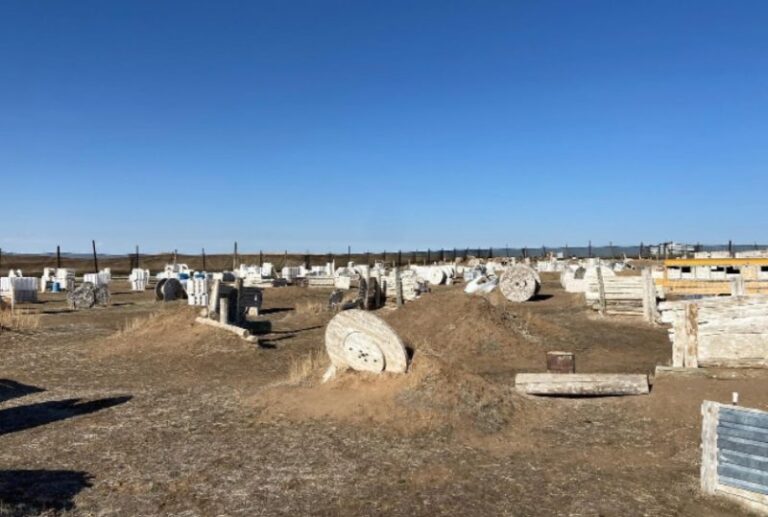
The facility features a 5.5-acre recball field with natural and man-made obstacles, two turfed NXL-format speedball fields, a hyperball field, and monthly airsoft days. They offer public walk-on paintball, private parties for groups of 10 or more, and low-impact options for kids including Gotcha paintball (ages 6+), .50 cal semi-auto (ages 8+), Gellyball (ages 6+), and Bazooka Ball (ages 5+). The staff is known for being friendly and safety-focused, with referees who actively balance teams and rotate game modes.
Beyond the games, the facility provides a large staging area with picnic tables and shade, propane grill rentals for $5, and a concession stand. Private parties include a dedicated referee and exclusive field access. Memberships are available for frequent players, offering free entry, discounted paint, and other perks. The venue is well-suited for birthdays, corporate team-building, bachelor/bachelorette parties, and youth group outings.
 Outdoors
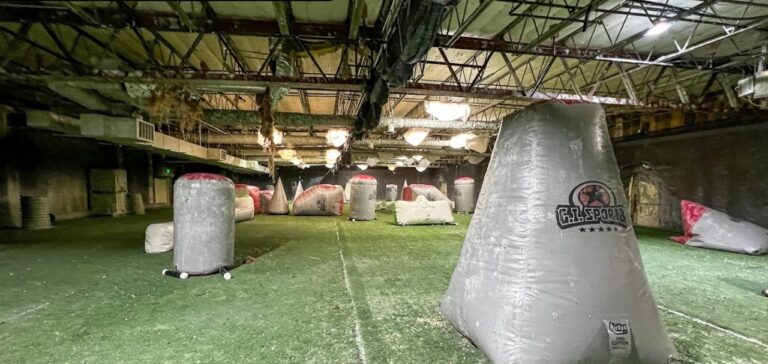
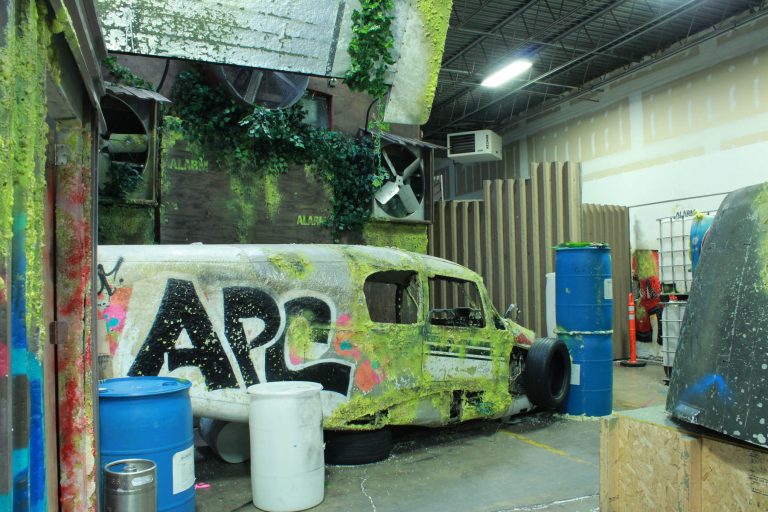
American Paintball Coliseum is located in the eastern part of Colorado Springs, near the intersection of Powers Boulevard and Airport Road. This indoor facility offers four activities — paintball, airsoft, laser tag, and axe throwing — all under one roof. The main attraction is the 10,000-square-foot Scenario Paintball Field filled with salvaged airplane parts, boats, and wooden bunkers, alongside a speedball arena with inflatable obstacles. The venue hosts tournaments, special scenario games like the Battle of Chernobyl, and offers private after-hours events.
The facility is well-suited for birthday parties, corporate team building, bachelor parties, military group outings, and holiday celebrations, with “Eat & Play” combo packages available for groups of 6 or more. An on-site pro shop carries major brands and offers equipment repair and air fills. Each group gets a lounge section for food and celebration, and spectators can watch from designated viewing areas. The staff is frequently praised for being attentive and patient with first-time players.
 Indoors
American Paintball Coliseum operates in the Denver area with outdoor fields in Aurora and an indoor facility in Denver. The venue offers paintball, airsoft, laser tag, axe throwing, and virtual reality across seven themed outdoor fields and a 26,000-square-foot indoor arena. Fields feature real vehicles, bunkers, and structures for immersive gameplay, with options for both casual walk-in play and competitive tournament-style matches through the Rocky Mountain Paintball League.
Birthday parties, corporate team-building events, bachelor parties, and graduation celebrations are all regularly hosted, with dedicated “Eat & Play” packages that include equipment, ammunition, and food. The staff is known for being patient and attentive, especially with first-time and younger players. Between games, guests can relax in covered picnic seating, grab snacks from the concession stand, or visit the on-site pro shop for gear, repairs, and air refills. Private group play is available, and the facility is open seven days a week.
IndoorsBlitz Paintball and Airsoft is located in Dacono, Colorado, just north of Denver off I-25 near Erie.
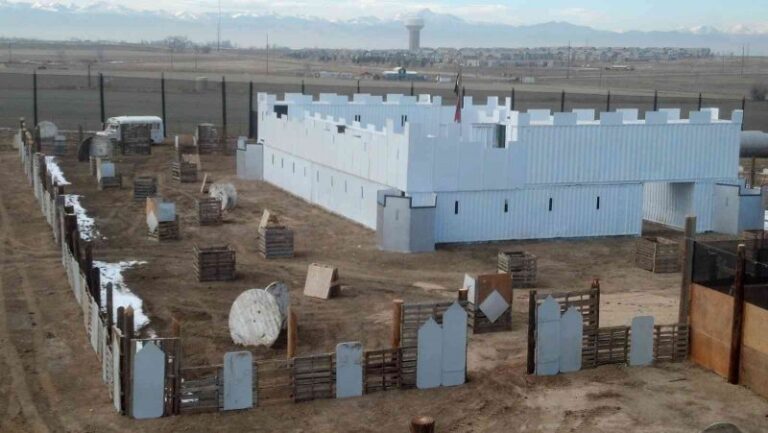
The facility offers five outdoor recreational paintball fields — a two-story castle, an urban combat zone with semi-trailer structures, a military base with a helicopter and missile silos, a large Hyperball field, and a smaller Hyper-Spool field. Airsoft is also available on separate AstroTurf fields using only biodegradable BBs. Walk-on play runs on weekends with continuous games throughout the day, and private games can be arranged for groups of any size. The staff provides thorough safety orientations and stays on the field as referees during play.
Birthday parties, bachelor and bachelorette parties, and corporate team-building events are regularly hosted, with group discounts available for parties of five or more. The facility includes a covered picnic area, a seasonal concession stand, and a small pro shop offering gear, paint, and air refills. Players are welcome to bring their own food and drinks. Blitz is open year-round on weekends (weather permitting) and by reservation during the week for groups of five or more.
OutdoorsPaintball is a fast‑paced, team‑oriented sport that pits players against one another with pneumatic markers that launch small, gelatin‑encased capsules of non‑toxic dye. When a capsule bursts on impact, a vivid splash of color marks the hit player, who must then leave the field or follow a pre‑agreed “respawn” rule. Though the equipment may look like a stylized toy gun, the game’s roots lie in military training exercises and tactical simulations, and its modern incarnation blends strategy, athleticism, and a healthy dose of adrenaline. The appeal of paintball is its accessibility: anyone who can walk, run, or crawl can join, and the only real prerequisite is a willingness to be splattered.
While the exact rule set can vary from one field to another, most organized paintball matches adhere to a common core of guidelines that keep the game safe, fair, and enjoyable for all participants.
Safety Gear is Mandatory – Every player must wear a DOT‑approved mask that fully covers the eyes, nose, and mouth. Protective clothing such as padded vests, long sleeves, and gloves is strongly encouraged, especially on high‑impact fields.
Marker Specifications – Paintball markers (the “guns”) are limited to a maximum muzzle velocity, usually 300 feet per second (≈ 91 m/s) for most civilian fields. This cap reduces the risk of serious injury while preserving a realistic feel.
Load Limits – Players typically carry a finite number of paintballs, often 200–300, unless a “reloader” or “infinite ammo” system is part of the scenario. The limit encourages tactical conservation of ammunition.
Hit Confirmation – A player is considered “out” when a paintball fragment visibly contacts the body or equipment, or when the marker makes a clean hit on the mask. Some fields use “no‑hit” rulings for glancing blows that do not leave a discernible mark.
Respawn Rules – In elimination formats, a player who is hit must leave the field and may re‑enter after a set time (typically 30 seconds to two minutes). In “last‑man‑standing” games, elimination is final.
Boundaries and Safe Zones – The playing area is clearly marked, and stepping outside the boundary results in an automatic out. Safe zones—often a base or a respawn area—are designated where players may not fire weapons.
Sportsmanship – Unsportsmanlike conduct, such as shooting at a player’s face through a mask, intentional breaking of safety equipment, or verbal harassment, leads to immediate removal from the game and possible bans from the venue.
These rules provide a framework that balances competitive intensity with the responsibility to protect participants. Most fields require players to sign a waiver acknowledging they understand and will abide by the safety and conduct policies.
The versatility of paintball lies in its ability to accommodate a wide variety of gameplay styles. Organizers craft scenarios that can be as simple as “Capture the Flag” or as elaborate as full‑scale “MilSim” (military simulation) missions. Below are some of the most popular formats:
Two teams defend a flag placed in their home base while attempting to seize the opponent’s flag and return it to their own territory. Success depends on coordinated attacks, feints, and disciplined defense.
All players start with a set number of lives—often just one. The objective is to eliminate every opponent. This format emphasizes individual skill, stealth, and aggressive positioning.
Each team has a limited pool of lives (e.g., 30 per side). Players respawn after being hit, and the match ends when one team exhausts its lives. The strategy revolves around balancing offensive pushes with careful preservation of teammates.
A central “hill” or control point is marked on the field. Teams fight for possession, earning points for every minute they control the area. The hill may move or rotate, forcing teams to adapt on the fly.
These immersive scenarios can last several hours and involve mission objectives such as hostage rescue, artillery strike coordination, or convoy protection. Players often dress in military‑style gear, follow a briefing, and abide by realistic rules of engagement, including radio communication and hierarchical command structures.
A small group of “survivors” must fend off waves of “zombies” (players who revive immediately after being hit). The goal is to survive as long as possible, fostering a mix of defensive fortification and aggressive counter‑attack.
Played on a compact, inflatable field with highly visible bunkers, Speedball emphasizes rapid movement and quick decision‑making. The layout is designed for televised competition and professional leagues, where matches are short and intensely tactical.
These scenarios can be modified with special rules (e.g., limited ammunition, “sniper zones,” or timed objectives) to keep repeat play fresh and encourage strategic thinking.
Beyond being an exhilarating pastime, paintball offers several tangible benefits that extend into everyday life.
Physical Fitness – A typical match involves sprinting, crawling, ducking, and quickly changing direction. Players can burn 500–800 calories in a single hour, improve cardiovascular endurance, and develop muscular strength in the core, legs, and upper body.
Strategic Thinking – Success hinges on planning, situational awareness, and rapid problem‑solving. Participants must evaluate terrain, anticipate opponent moves, and adjust tactics in real time, honing decision‑making skills transferable to business, military, and emergency‑response contexts.
Teamwork and Communication – Most scenarios require coordinated action. Players learn to delegate roles (e.g., attacker, defender, scout), share information succinctly, and trust one another’s judgment—essential competencies for any collaborative environment.
Stress Relief – The combination of physical exertion, focused attention, and the satisfying “pop” of a hit creates a cathartic outlet for built‑up tension. The adrenaline surge followed by the endorphin release leaves many participants feeling refreshed and mentally clearer.
Social Connection – Paintball brings together friends, coworkers, and strangers in a shared adventure. The camaraderie forged on the field often extends off it, creating lasting relationships and a sense of community.
Skill Transfer – For law‑enforcement officers, military personnel, and security professionals, paintball serves as a low‑risk platform to practice tactical movement, cover usage, and communication under pressure, without the logistical burden of live‑fire exercises.
The paintball demographic is remarkably diverse, reflecting the sport’s universal appeal.
Youth and Teenagers – Many players discover paintball in high school clubs or summer camps. The sport provides a structured outlet for energy and a chance to develop leadership abilities.
Young Adults – College students and recent graduates often use paintball as a social activity, bonding with peers or joining organized leagues that compete regionally.
Corporate Teams – Companies host “team‑building” paintball events to foster collaboration, improve morale, and break down hierarchical barriers in a fun setting.
Military and Law‑Enforcement Personnel – Tactical training modules frequently employ paintball to simulate combat scenarios, emphasizing movement, communication, and decision making without lethal risk.
Recreational Hobbyists – A sizable segment consists of adults who play casually on weekends, joining local leagues or attending “paintball nights” at nearby fields.
Competitive Athletes – Professional and semi‑professional players train rigorously, often specializing in specific formats like Speedball or MilSim. They compete in national and international tournaments, with sponsorships and prize pools that rival other niche sports.
Families – Many venues offer family‑friendly packages, allowing parents and children to experience the sport together in a controlled, safe environment.
In short, paintball transcends age, occupation, and skill level, providing a platform where anyone—from a first‑time freshman to a seasoned veteran—can find a role that fits their interests and abilities.
Paintball fields come in two broad categories, each offering distinct experiences shaped by terrain, size, and infrastructure.
Natural Terrain Parks – Sprawling acres of forest, hills, and natural obstacles create a realistic battlefield. Players navigate through tree lines, streams, and rugged ground, ideal for MilSim and large‑scale skirmishes. These venues often incorporate “urban” structures such as abandoned cabins or hay bales to diversify cover.
Speedball Arenas (Outdoor) – Though speedball is commonly associated with inflatable bunkers, some outdoor complexes feature permanent bunkers arranged in a tight, symmetrical layout. The open‑air setting adds wind considerations and sunlight, making the game feel slightly slower but more tactical.
Adventure Parks – Some paintball sites are co‑located with zip‑line courses, climbing walls, or obstacle courses. The combination of physical challenges with paintball adds a layer of excitement, appealing to thrill‑seekers and corporate groups alike.
Regional “Battle Grounds” – Large, multi‑field facilities spread across several hundred acres host massive events with hundreds of participants. These sites may simulate entire towns, industrial complexes, or historical battlefields, providing a canvas for elaborate story‑driven missions.
Outdoor venues excel at delivering realism, immersion, and the satisfaction of traversing natural obstacles. Weather, however, can be a limiting factor; many fields offer seasonal operating hours and may require players to adapt to rain, heat, or cold.
Inflatable Bunker Complexes – The most common indoor environment consists of a series of soft, brightly colored inflatable structures placed on a flat, rubberized floor. The layout is compact, allowing for rapid matches and easy spectator viewing. This format is popular among beginners, youth groups, and competitive speedball leagues.
Warehouse‑Style “Urban” Arenas – Repurposed industrial spaces are transformed into gritty, city‑scape environments with concrete walls, stacked pallets, and mock storefronts. The low ceiling and tight corridors force close‑quarters combat, emphasizing reflexes and precision.
Themed Indoor Zones – Some venues design rooms around specific motifs—sci‑fi corridors, medieval castles, or post‑apocalyptic wastelands. While these are still indoors, the elaborate set pieces provide a storytelling element often found only in outdoor MilSim.
Virtual‑Hybrid Labs – Cutting‑edge facilities pair traditional paintball markers with digital scoring systems and augmented reality overlays. Players wear headsets that display objectives, health bars, or virtual hazards, merging physical gameplay with video‑game aesthetics.
Indoor fields offer year‑round accessibility, climate control, and a more predictable playing surface. They are particularly suited for short, high‑intensity matches and for groups that need a convenient, urban location.
Paintball stands at the intersection of sport, simulation, and social activity. Its fundamental premise—splattering opponents with brightly colored capsules—belies a deep strategic framework supported by robust safety rules. From the basic “Capture the Flag” duel to multi‑hour MilSim operations, the game’s scenario diversity ensures that players can constantly explore new tactics and narratives.
Beyond the thrill of competition, paintball contributes to physical health, sharpens mental acuity, and nurtures teamwork. The sport’s inclusive appeal draws a wide spectrum of participants—students, professionals, families, and tactical professionals—all seeking an outlet for adrenaline, camaraderie, or skill development.
Whether traversing a wooded battlefield under a canopy of trees, darting between inflatable bunkers in a climate‑controlled arena, or immersing oneself in a richly themed indoor set, the venue choice shapes the flavor of each encounter. Outdoor fields provide the raw, immersive feel of real terrain, while indoor complexes deliver fast‑paced, accessible action.
In an age where digital entertainment dominates leisure time, paintball reminds players that the most memorable victories still come from sweat, strategy, and a splash of red, blue, or yellow on the uniform. The sport continues to evolve—new marker technologies, hybrid virtual‑reality experiences, and ever‑more elaborate scenarios—yet its core remains unchanged: a simple, exhilarating contest of skill, wits, and the willingness to get a little messy for the love of the game.


 29701 E Jewell Ave, Aurora, CO 80018