
 El Monte
 Log in
Log in
Log in

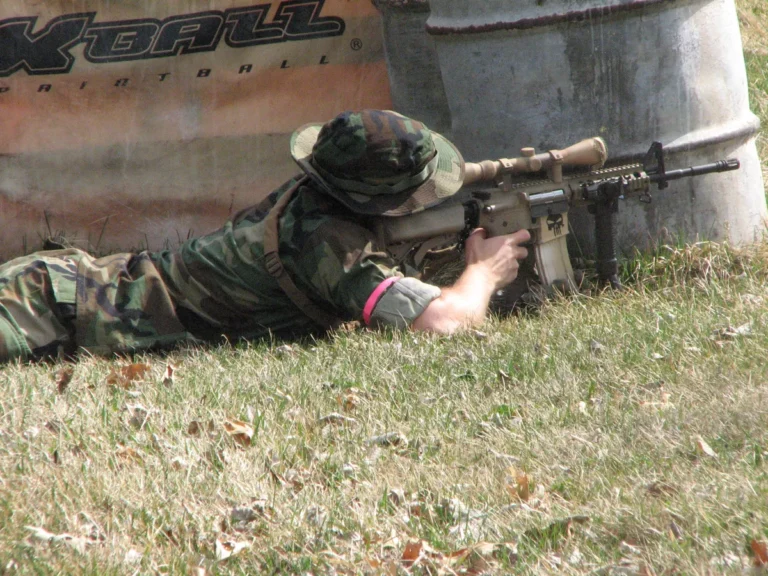
Located on Quail Ridge Avenue in Saint Charles, Iowa — a short drive southwest of Des Moines — DOA Paintball and Airsoft Field offers two large, well-maintained fields packed with creative obstacles like buses, two-story towers, forts, and bunkers. Players can enjoy a rotating selection of game modes including capture the flag, domination, and attack and defend, with both paintball and airsoft available. Rental equipment is provided on-site at reasonable prices, and the staff is known for being professional, safety-conscious, and welcoming to newcomers.
The field is a popular destination for birthday parties, corporate team-building events, bachelor parties, school groups, and family reunions. The minimum age for standard paintball is 10, with a parent waiver required for players under 18. With a 4.9 Google rating and a perfect 5.0 on Facebook, DOA has built a loyal community of regulars who appreciate the spacious fields, short walking distances between play areas, and the friendly, down-to-earth atmosphere.
 Outdoors
Airsoft has blossomed from a niche hobby into a worldwide phenomenon that blends the tactical feel of military simulation with the camaraderie of sport. At its core, the game revolves around participants—often called “players” or “airsofters”—who load replica firearms with 6 mm plastic BBs and engage one another in mock battles. The allure lies not in the projectile’s power but in the immersive experience: the clang of a metal receiver, the sight of a muzzle flash generated by a small LED, the buzz of a rapid‑fire burst, and the shared rush of out‑maneuvering an opponent. Airsoft therefore serves as a canvas for three interlocking pillars—realism, teamwork, and strategy—that shape every match.
Unlike paintball, which relies on large, brightly coloured pellets, airsoft’s BBs are barely visible in flight and leave only a faint impact mark. This subtlety allows players to simulate authentic combat scenarios while minimizing the chance of injury. Replicas are crafted to mirror the weight, balance, and external features of real firearms, from the textured grip of an AK‑47 to the adjustable stock of an M4. Many fields even permit “MilSim” (military simulation) events, where participants adopt a specific unit’s discipline, wear period‑accurate uniforms, and follow mission‑type objectives such as hostage rescue or base capture.
The realism extends beyond the gun itself. Players often employ tactical gear—plate carriers, tactical vests, and radio‑style headsets—to reinforce the sense of being part of an organized unit. This equipment is usually non‑functional, but its presence encourages disciplined movement, proper cover usage, and a heightened awareness of one’s surroundings. The result is a game where the line between sport and simulation blurs, offering a low‑risk outlet for enthusiasts who appreciate the precision and ritual of military operations.
Airsoft is rarely a solo endeavor. Whether a small fireteam of three or a full‑scale “company” of twenty‑plus players, success hinges on coordinated effort. Communication—often facilitated by hand signals, walkie‑talkies, or pre‑agreed call signs—allows squads to execute flanking maneuvers, suppressive fire, and synchronized assaults. The need to maintain line of sight, protect teammates, and manage ammunition fosters an environment where individual skill is amplified by collective planning.
Strategic depth emerges from the variety of objectives offered by fields and event organizers. A “capture the flag” scenario may seem straightforward, yet the defending team must decide between a static defense or a mobile patrol strategy. A “team deathmatch” can evolve into a cat‑and‑mouse chase where resource management (e.g., conserving BBs or battery life) becomes as critical as marksmanship. “Objective‑based” games, such as “bomb defusal” or “king of the hill,” require players to allocate roles—breachers, medics, spotters—and to adapt on the fly as the situation shifts. Each decision influences the flow of the match, rewarding groups that think ahead and react cohesively.
Airsoft fields worldwide curate an array of game modes to cater to different skill levels and interests. Common formats include:
Each mode demands a different tactical approach, ensuring that seasoned players remain challenged and newcomers can find a comfortable entry point.
One of airsoft’s most compelling aspects is the ability to tailor equipment to personal preferences and tactics. Modern AEGs (automatic electric guns) often feature interchangeable barrels, hop‑up units (which control BB trajectory), and adjustable stocks. Gas guns can be fitted with brass or stainless‑steel internals to improve reliability, while spring‑powered rifles allow the user to select spring tension for desired velocity.
Beyond the weapon itself, players invest in accessories that enhance performance or comfort. Tactical lights, laser sights, and foregrips improve target acquisition. Slings, chest rigs, and mag‑pouches streamline reloading and load‑out efficiency. Even cosmetic upgrades—custom paint jobs, camo patterns, and personalized markings—allow airsofters to express identity while maintaining a cohesive team aesthetic.
Airsoft’s rapid growth owes much to its vibrant, inclusive community. Local clubs host regular skirmishes, training sessions, and gear swaps, fostering mentorship between veterans and novices. Online forums and social media groups serve as hubs for exchanging advice on gun builds, field reviews, and event announcements. Many players speak of lasting friendships forged in the heat of battle, and the sport’s emphasis on respect and sportsmanship reinforces a culture where the “honour system” thrives—players call themselves out when hit, even without external verification.
The community also drives the evolution of safety standards, rule sets, and field etiquette, ensuring that the sport remains accessible and responsible.
Entering the world of airsoft can feel overwhelming, but a solid foundational kit ensures safety, comfort, and confidence on the field. Below is a checklist of the most important items for beginners:
Eye Protection
The absolute non‑negotiable. Airsoft BBs travel at velocities ranging from 250 fps (feet per second) to over 400 fps, capable of causing serious eye injury. Players should choose full‑coverage goggles or safety glasses that meet ANSI Z87.1 standards, with polycarbonate lenses to resist impact. Many players also wear a secondary pair of sunglasses underneath for added comfort.
Gloves
Durable tactical gloves protect hands from BB impacts, rough terrain, and the occasional snag on barbed wire. Look for gloves with reinforced knuckles and a snug fit to preserve dexterity while handling magazines and triggers.
Sturdy Boots
Footwear must provide ankle support, traction, and protection against mud, foliage, and debris. Military‑style combat boots or high‑cut trail shoes with reinforced toe caps are ideal. Break them in before a long day on the field to avoid blisters.
Knee and Elbow Pads
Crouching, crawling, and taking cover often place joints under stress. Foam‑filled pads with adjustable straps reduce bruising and keep players mobile in low‑lying positions.
Helmet
While not mandatory at every field, a lightweight tactical helmet offers head protection from accidental impacts and can serve as a mounting platform for lights or optics.
Lower Face Protection
Some fields require players to wear a full face mask or a “lower face guard” that shields the chin and mouth, especially during high‑velocity games. Even when optional, a mask can prevent painful BB hits to the sensitive lower face.
Clothing
Camouflage or neutral‑colored, breathable fabrics keep players cool and provide concealment. Layered clothing is advisable for varied weather conditions.
First‑Aid Kit
A compact kit with antiseptic wipes, band‑aids, gauze, and a small roll of medical tape prepares players for minor scrapes and BB bruises.
With this baseline gear in place, beginners can focus on mastering the fundamentals of shooting, movement, and communication without compromising safety.
Airsoft fields adopt a core set of guidelines that prioritize participant welfare while preserving the game’s spirit. Even though rules may vary slightly between venues, three overarching principles are universally observed.
Airsoft relies heavily on trust. Since hits cannot be automatically detected (unlike paintball’s visible splatters), players are expected to call themselves out when struck. Honesty maintains fairness and prevents disputes. Many fields employ “hit markers”—small, brightly coloured stickers placed on a player’s gear—to visually confirm that a hit has been acknowledged.
Respect permeates interactions both on and off the battlefield. This includes:
When these three tenets are upheld, airsoft remains an enjoyable, inclusive sport for all participants.
Airsoft firearms fall into three primary categories, each offering distinct advantages and considerations for newcomers and veterans alike.
AEGs dominate the market and are the most common first‑purchase for beginners. Powered by a rechargeable battery, an AEG’s motor drives a gearbox that cycles the bolt, feeding BBs from a magazine and delivering semi‑automatic or fully‑automatic fire.
Pros:
Cons:
Gas guns use compressed gas—either green gas (propane‑based) or CO₂—to propel BBs. They are prized for realistic blowback action, especially in pistols and rifles that mimic the recoil of real firearms.
Pros:
Cons:
Spring guns are manually cocked before each shot, storing energy in a compressed spring that releases a single BB on trigger pull. They are the simplest and most affordable option, frequently used for sniper rifles and low‑budget entry‑level pistols.
Pros:
Cons:
When selecting a gun, beginners should evaluate their budget, preferred play style, and the typical environment (indoor vs. outdoor, temperature considerations). Many start with an AEG for its versatility, then experiment with a gas pistol for realism or a spring sniper for long‑range precision.
Airsoft transcends age, profession, and background. Participants range from teenagers discovering teamwork for the first time to retirees seeking an active hobby. Military veterans often gravitate toward the sport because it offers a structured, low‑risk outlet that mirrors aspects of their training. Law‑enforcement officers use airsoft for tactical drills and scenario planning. Students and young adults appreciate the strategic depth and social bonding, while hobbyists relish the engineering side—building and customizing guns. The shared love of tactical gameplay and the welcoming nature of local clubs make airsoft a melting pot of enthusiasts.
Most regions host purpose‑built fields that provide safety infrastructure, clear rules, and a variety of terrain—urban mock‑city streets, woodland trails, or abandoned industrial sites. Fields typically charge a day‑pass fee and may offer rental equipment, making them ideal for newcomers who haven’t yet invested in personal gear.
Joining a local team or club deepens the experience. Clubs often schedule regular scrimmages, host training days to hone movement and shooting fundamentals, and organize “buy‑in” events where members pool resources to acquire high‑quality gear. The camaraderie built through consistent practice translates into tighter coordination during larger matches.
MilSim (military simulation) events can span multiple days, sometimes lasting a weekend or even a week. These large‑scale operations involve dozens to hundreds of participants and feature elaborate storylines, realistic mission objectives, and logistical challenges such as supply drops, casualty evacuation, and command hierarchies. Players may be assigned ranks, roles (e.g., squad leader, medic, reconnaissance), and specific equipment kits. MilSim events attract enthusiasts who crave an immersive, near‑realistic combat experience while still adhering to strict safety protocols.
Airsoft stands at the intersection of sport, simulation, and community. Its emphasis on realism offers a tangible connection to the mechanics of firearms without the inherent dangers of live weapons. The reliance on teamwork and strategic planning transforms each scenario into a mental chess game played out on a physical battlefield. With a plethora of game modes, deep customization possibilities, and an inclusive global community, the hobby welcomes newcomers and seasoned players alike.
Equipping oneself with proper safety gear—eye protection, gloves, sturdy boots, protective pads, and optional helmets—lays the foundation for a secure and enjoyable experience. Understanding the core rules—safety first, honour system, and respect—ensures that every match proceeds smoothly. Selecting the appropriate airsoft gun—whether an AEG, gas‑powered, or spring‑driven platform—depends on personal preference, budget, and the intended style of play.
From local sanctioned fields to sprawling MilSim events, airsoft provides avenues for tactical growth, social interaction, and personal expression. Whether a teenager learning the value of cooperation, a veteran seeking a structured outlet, or a hobbyist excited by mechanical tinkering, the airsoft world offers a vibrant arena where realism, strategy, and camaraderie converge in every shot fired.


 2444 Quail Ridge Ave, St Charles, IA 50240, United States