El Monte
 Log in
Log in
Log in

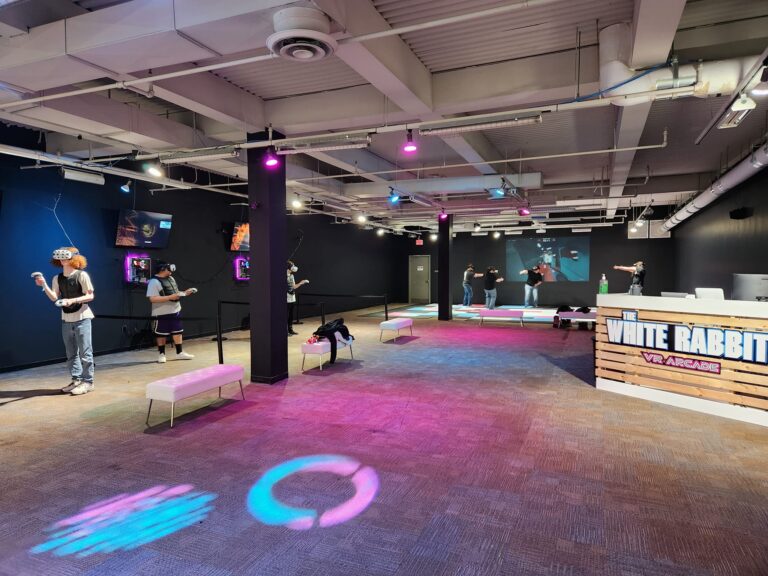
The White Rabbit VR Arcade is located inside Merle Hay Mall in Des Moines, Iowa, near Flix Brewhouse.
The venue offers four main VR experiences: a free-roam multiplayer VR Arena where up to four players move and battle in real time, a VR Arcade with over 30 games ranging from action shooters to creative puzzles, team-based VR Escape Rooms with themes like Chernobyl and Cyberpunk, and immersive VR Haunted Houses for thrill-seekers. A $5 VR Teaser is available for first-timers. The VIP Exclusive Experience allows private rental for up to eight players with unlimited game access and a dedicated Game Master.
The space is particularly well-suited for birthday parties, family gatherings, and corporate team-building events. The owner and staff are frequently praised for their patience and attentiveness, especially with first-time VR users and children. Walk-ins are welcome, but advance booking is recommended for weekends and holidays. The mall location provides easy access to additional dining and entertainment options.
 Indoors
Omniverse Virtual Reality is located within Pole Position Raceway Des Moines, just off the I-80/35 and Highway 141 interchange on the edge of the metro area in Grimes, Iowa.
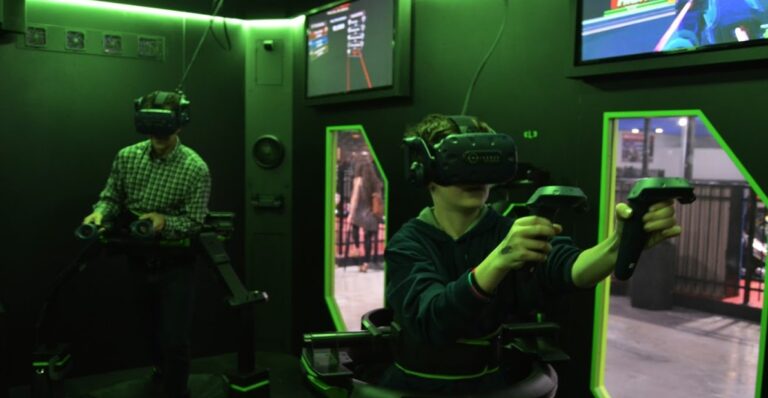
The Omni Arena by Virtuix offers free-roam virtual reality where players can actually walk and run inside the game. Four game modes are available: Dead Zone Zombies (cooperative zombie survival), Elite Force Deathmatch (competitive arena shooter), Core Defense Robot Shooter (team-based robot defense), and Blackbeard Pirate Adventure (family-friendly treasure hunting). Each session runs approximately 10 minutes, and the VR experience can be combined with indoor go-kart racing at the same facility.
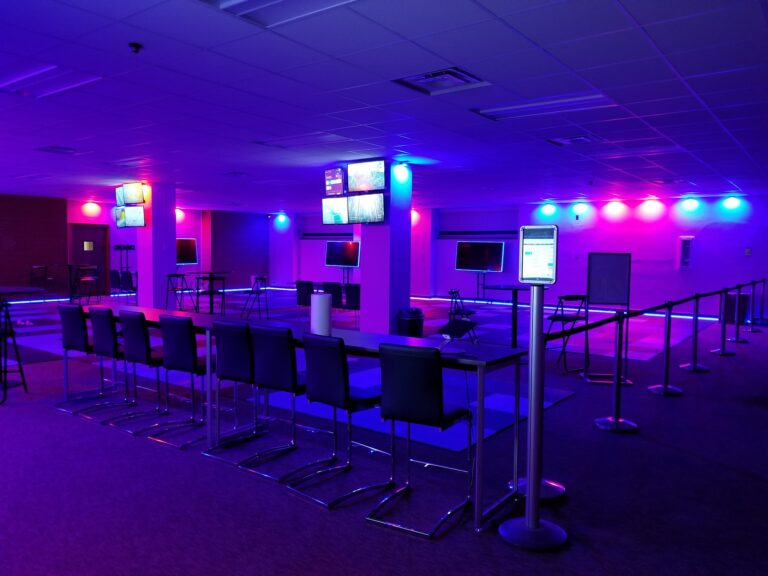
Beyond VR and karting, the venue offers iRacing simulators, a snack bar with refreshments, catering for private events, and a conference room for gatherings. The facility hosts birthday parties, corporate events, and team building activities, with full facility rentals available for larger groups. Weekly and monthly Omniverse ESPORTS competitions with cash prizes add a competitive edge, and spectator monitors allow non-players to watch the action in real time.
IndoorsRezBlue VR Arena is located in Des Moines, Iowa, near the Grand Avenue area.
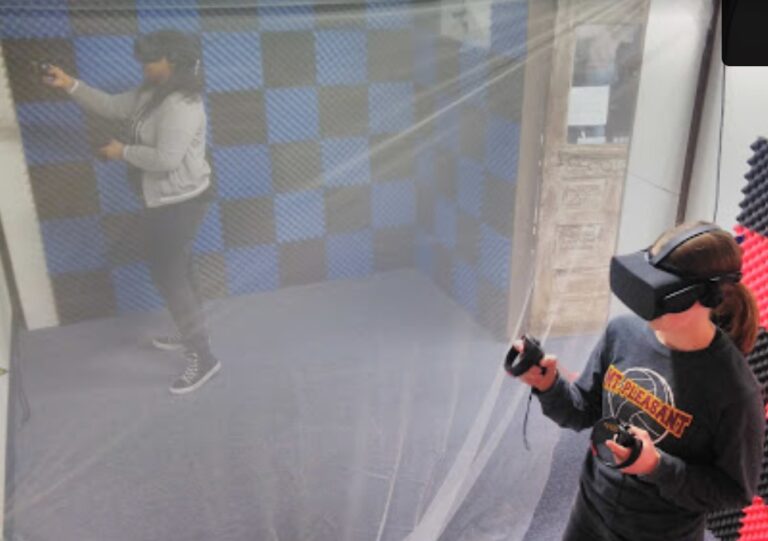
The venue specializes in room-scale, untethered virtual reality experiences including multiplayer VR Laser Tag, VR Escape Rooms, and VR Arcade adventures. With up to 20 headsets operating simultaneously, groups of all sizes can battle, solve puzzles, and explore immersive digital worlds together. The arena features safety foam flooring, spectator viewing screens, and a game library designed for both casual players and competitive enthusiasts.
Beyond gaming, RezBlue offers private party areas for celebrations, a LAN center for video game parties, and pop-up mobile VR services that bring the experience to offsite events. The venue welcomes outside food and decorations for parties, sells pizza and refreshments on-site, and provides prepaid play credit packages for returning guests. The friendly, knowledgeable staff consistently earns praise for making first-time VR users feel at ease, making this a welcoming destination for birthdays, corporate team-building, family outings, and community gatherings.
IndoorsDragon’s Lair Family Adventure Center is located in southwest Cedar Rapids, Iowa. The centerpiece is a 5,000-square-foot tactical laser tag arena using high-end Laserwar equipment, featuring over 15 different mission-based game modes like Domination, Capture the Flag, and unique in-house creations like Medic-Medic. Beyond laser tag, the venue offers four physical escape rooms, eight virtual reality escape experiences, professional Dungeons & Dragons sessions, Nerf Warz, and a weekly Family Game Night with over 120 board games.
The facility includes two private party rooms with video games and fridge space, making it a great fit for birthday parties and corporate team-building events. The venue also offers a variety of additional options including gift vouchers and pre-paid specials, with a focus on creating memorable group experiences for all ages.
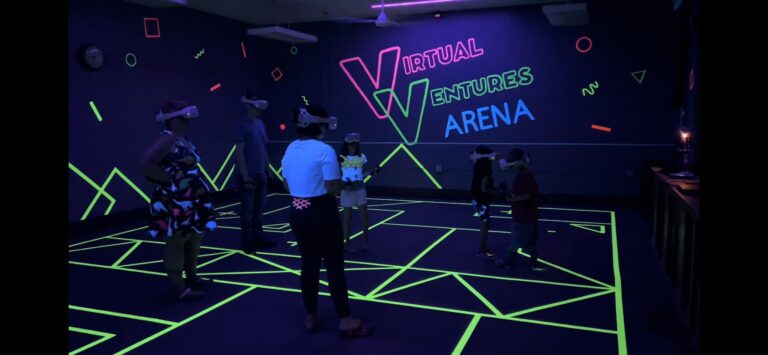
IndoorsVirtual Ventures is located in West Davenport, Iowa, on the third floor of The Wellness Center on Locust Street. This free-roam virtual reality game center offers a wide range of multiplayer experiences including zombie survival shooters, VR laser tag, archery defense games, and immersive escape rooms — all designed for 2 to 6 players who physically navigate the digital worlds with their own bodies. The facility features a single large arena with full-body tracking and haptic vests, with games powered by platforms like HeroZone and VEX Play.
Beyond the games, Virtual Ventures provides private party packages for birthdays, corporate team-building events, and adults-only after-hours sessions, all with the option to bring your own food and drinks. The center includes a VIP lounge with air hockey and foosball, a banquet table for catering, and a dedicated staff focused on creating a memorable experience from the moment guests arrive. The club was founded by Michael Elliott in 2022 and continues to partner with software developers to offer fresh, engaging VR content.
IndoorsThe Fun Station Quad Cities is located at 400 S 14th Ave in Eldridge, Iowa, just north of Davenport.
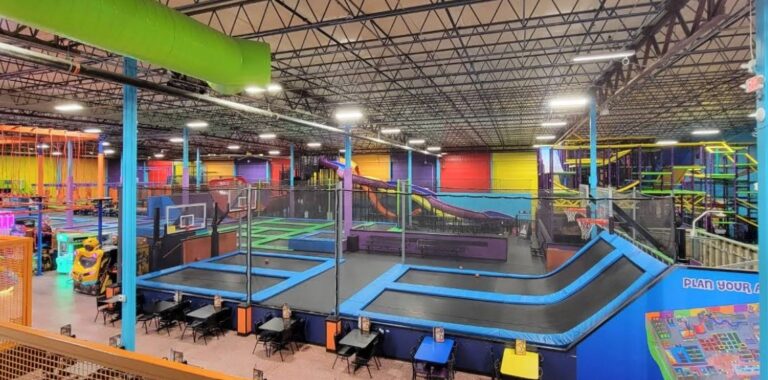
Spanning 40,000 square feet, this indoor adventure park is packed with wall-to-wall trampolines, a multi-level play maze, slick slides, Spin Zone bumper cars, a ropes course, climbing walls, Lazer Frenzy laser tag, and an arcade. Younger children have their own dedicated Kid’s Zone. The park offers all-day admission with no time limits, allowing guests to come and go as they please. Birthday packages range from a reserved table option to a full Ultimate Party Package with a private room, host, pizza, drinks, and ice cream. Group pricing is available for schools, daycares, summer camps, and youth organizations.
The on-site Box Car Cafe serves pizza, soft drinks, and ice cream, while party rooms and table areas provide space to relax between activities. Parents and spectators attend free of charge. The staff is consistently praised for their friendliness and attentiveness, and the facility maintains high marks for cleanliness. Memberships, gift cards, and daily specials make regular visits more accessible. All participants need a signed waiver, and grip socks are required for most attractions.
IndoorsVirtual reality (VR) has long captured the imagination, transporting users to fantastical worlds and immersive experiences. Among its many forms, free-roam VR arenas stand out as dynamic spaces where technology, physical movement, and storytelling converge. Unlike traditional VR setups that tether users to a single spot or require handheld controllers alone, free-roam VR allows participants to move, interact, and explore vast digital environments in real time. These arenas are redefining how people engage with virtual worlds, offering unparalleled freedom and interactivity. Whether for entertainment, education, or social gatherings, free-roam VR is becoming a cornerstone of next-generation experiential technology.
A free-roam VR arena is a physical space equipped with advanced motion-tracking systems, spatial audio, and high-performance VR hardware that enables users to navigate a virtual environment as they would a real one. Unlike stationary VR setups, such as seated simulators or treadmill-based systems, free-roam VR eliminates physical constraints, allowing users to walk, run, crouch, or even swim through digital landscapes. This is achieved through technologies like room-scale tracking, laser-based motion capture, or inertial measurement units (IMUs) embedded in headsets and controllers.
The design of these arenas emphasizes safety and immersion. Physical boundaries are reinforced with sensors or visible markers to prevent collisions, while the virtual world mirrors the user’s movements with minimal latency. For instance, a player dodging an asteroid in a sci-fi simulation might physically sidestep in the arena, enhancing the sense of presence. The integration of haptic feedback suits or wearable devices further deepens immersion by simulating tactile sensations, from the weight of a virtual weapon to the impact of a digital explosion.
The versatility of free-roam VR makes it ideal for a range of scenarios beyond traditional gaming. One popular application is collaborative problem-solving, where teams navigate complex puzzles or escape room-style challenges in shared virtual environments. These experiences foster teamwork and communication, making them valuable for both entertainment and corporate training.
Another compelling use case is sports and fitness. Free-roam VR can transform a gym into a futuristic obstacle course or a virtual soccer field, encouraging physical activity while keeping users engaged with dynamic goals and challenges. Similarly, social VR salons are emerging in urban centers, where friends gather to explore virtual worlds, attend concerts, or even dance together in digitized versions of famous landmarks.
For younger audiences, free-roam VR is being adapted to create edutainment experiences that blend learning with adventure. Imagine a child exploring ancient Rome, interacting with 3D models of historical artifacts, or participating in a guided safari through the African savanna—without leaving their locality.
While free-roam VR appeals to a broad demographic, certain groups are particularly drawn to its unique offerings. Enthusiasts and gamers seeking a more immersive alternative to console-based VR form a core audience, especially for high-budget, story-driven experiences. Meanwhile, corporate teams leverage these arenas for leadership training, product demonstrations, or team-building exercises, using virtual scenarios to simulate real-world challenges.
A growing and equally important demographic is families and children. Free-roam VR is being tailored for younger users through simplified interfaces, age-appropriate content, and safety-focused designs. These adaptations make it an ideal choice for birthday parties, school field trips, and family entertainment centers.
When it comes to children, free-roam VR arenas prioritize safety and accessibility. Developers design content to be inclusive, often incorporating playful themes like animated forests, space adventures, or underwater kingdoms. Age restrictions and adjustable difficulty levels ensure that experiences are neither overwhelming nor underwhelming. For example, a VR game might let kids “tame dragons” by solving color-based puzzles, combining physical movement with cognitive engagement.
Parents appreciate the educational potential of these systems. By turning abstract concepts into interactive adventures, free-roam VR can teach STEM principles (science, technology, engineering, math) in a memorable way. A child learning about gravity, for instance, might physically jump from a floating platform in a zero-gravity simulation, observing how mass and force affect movement.
Safety measures are also paramount. Arenas for children often feature padded boundaries, soft flooring, and trained staff to monitor sessions. Time limits are implemented to prevent screen fatigue, and adjustable equipment ensures a comfortable fit for varying body sizes.
The appeal of free-roam VR extends beyond personal or educational use into the realm of social and celebratory events.
Birthday parties are a natural fit, offering an alternative to conventional celebrations. Instead of a go-kart race or bounce house, kids can battle robot dinosaurs in a prehistoric arena or race through a neon-lit cityscape. For adults, themed VR experiences like haunted castles or treasure hunts add a thrilling twist to milestone birthdays. The novelty of free-roam VR ensures guests engage with one another, fostering shared excitement and collaboration.
Graduation ceremonies and college orientation events are also embracing this technology. A university might create a VR scavenger hunt that guides students through virtual recreations of campus buildings, teaching them to navigate real-world spaces. Graduates could relive memorable moments from their academic journey in a digital timeline, or participate in a VR capstone project showcasing their skills.
For corporate events, free-roam VR transforms networking and engagement. At a product launch, attendees might step into a virtual replica of a new theme park, testing rides and attractions before they debut. Team-building exercises in VR could involve collaborative challenges, such as constructing a floating city or surviving a post-apocalyptic world. These immersive activities break down hierarchies and encourage creative problem-solving in a risk-free environment.
As technology advances, free-roam VR arenas are becoming more accessible and versatile. Startups and tech companies are developing portable systems that can be deployed at festivals, schools, or private events, reducing reliance on fixed installations. Improvements in AI-driven environments and multiplayer synchronization will further enrich experiences, allowing thousands of users to interact in a single shared virtual world.
For kids, the integration of AR (augmented reality) elements could bridge the gap between physical and digital play, enabling interactive storybooks or AR-enhanced playgrounds. Meanwhile, researchers are exploring how free-roam VR can support physical therapy, rehabilitation, and cognitive training, broadening its impact beyond entertainment.
Free-roam VR arenas represent a powerful fusion of technology, creativity, and human interaction. By enabling users to move freely within virtual worlds, they offer experiences that are as physically engaging as they are mentally stimulating. Whether a child is learning about history, a teenager is celebrating a birthday, or a corporate team is tackling a virtual challenge, these arenas demonstrate the boundless potential of immersive technology. As the cost of hardware decreases and content libraries expand, free-roam VR is poised to become a staple of social, educational, and professional life, inviting people of all ages to step into new dimensions of possibility.


 3800 Merle Hay Rd, Des Moines, IA 50310, United States