Log in
Pyrrhic Indoor Family Fun Center is located in 2104 Caldwell Blvd, Nampa.
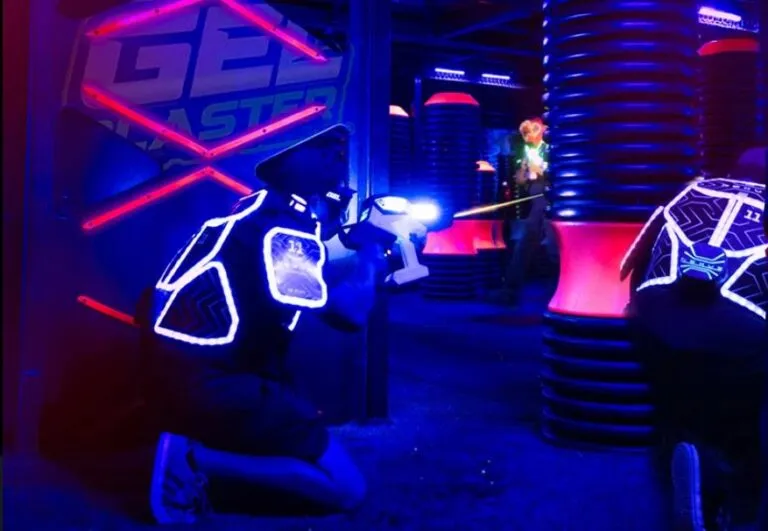
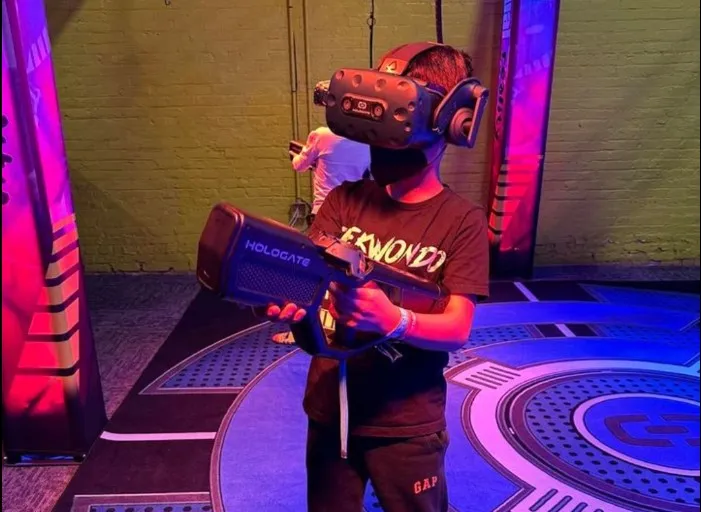
Pyrrhic Indoor Family Fun Center in Nampa, ID, offers a wide variety of indoor games designed to provide excitement for the entire family. Visitors can enjoy activities such as Nerf, Airsoft, Laser Tag, Gel Blaster Nexus, and Virtual Reality (VR) in a newly constructed 22,500-square-foot facility. This location marks the first indoor Airsoft arena in the region. The two-story venue ensures total excitement with casual, all-weather fun for families. Activities are suitable for participants aged 6 and above, with VR available for ages 10+.
Pyrrhic has long been recognized as Treasure Valley’s most memorable destination for birthday parties. With the addition of the indoor location in Nampa, they have expanded their offerings. Event rooms will soon be available for birthdays, reunions, group parties, team training events, bachelor(ette) parties, and more.
IndoorsUrban Air Trampoline and Adventure Indoor Park is located in Meridian, ID.
Urban Air Trampoline and Adventure Park in Meridian, Idaho is a perfect destination for both kids and adults. It features over 15 attractions including trampolines, warrior obstacle course, rope course, bumper cars, climbing walls and much more. This indoor amusement park features a safe and fun environment with unique attractions and various packages for birthday parties, corporate events and group outings. From toddlers to adrenaline seekers, everyone can experience the thrill at Urban Air Trampoline and Adventure Park.
Indoors
Laser tag is a fast‑paced, team‑oriented game that uses infrared (IR) technology to simulate combat without any physical projectiles. Players wear a lightweight vest or harness equipped with IR sensors and carry a handheld “phaser” that emits a coded infrared beam. When the beam strikes a sensor, the player’s score is reduced, a “hit” is registered, or a specific mission objective is completed. Unlike paintball or traditional air‑soft, laser tag leaves no mess, requires no protective gear beyond the vest, and can be played in a variety of environments—from dimly lit indoor arenas with elaborate mazes to sprawling outdoor fields dotted with natural obstacles.
The modern incarnation of laser tag traces its roots to the 1970s, when early prototypes used simple infrared emitters and receivers. Over the past four decades, advances in microelectronics, battery technology, and wireless networking have turned the hobby into a sophisticated, data‑rich experience. Today’s systems can track each player’s movements in real time, generate detailed post‑game analytics, and even integrate with mobile apps that allow participants to review replays, compare scores, and share highlights on social media.
One of laser tag’s greatest strengths is its flexibility. Game designers and venue operators can craft dozens of distinct scenarios that cater to different ages, skill levels, and thematic preferences. Some of the most popular formats include:
By swapping out lighting, sound effects, and prop placement, operators can reinvent the same physical space for multiple themes—science‑fiction, military, fantasy, or even educational storylines that teach history or environmental awareness.
Beyond sheer entertainment, laser tag offers a suite of tangible benefits that appeal to parents, educators, and corporate wellness programs alike.
A typical 15‑minute match can involve 30–40 minutes of high‑intensity movement, including sprinting, ducking, and dodging. The nonstop action raises heart rates into the aerobic zone, providing a cardio workout comparable to a brisk jog or a recreational basketball session.
Players must process visual and auditory cues, assess opponent positions, and adjust tactics on the fly. This rapid decision‑making exercises executive functions such as working memory, spatial reasoning, and situational awareness. Studies have shown that team‑based action games can improve attention span and problem‑solving abilities in children and adolescents.
Laser tag is inherently collaborative. Success depends on clear communication, role allocation (sniper, scout, support), and mutual trust. The shared experience of victory—or defeat—fosters camaraderie and teaches conflict‑resolution strategies in a low‑stakes environment.
The act of “letting off steam” through non‑violent combat can reduce cortisol levels and provide a mental reset. The immersive lighting, synchronized soundtrack, and focused gameplay create a flow state that helps participants disengage from everyday pressures.
Because the equipment is lightweight and the game relies on infrared rather than physical impact, players of various ages, fitness levels, and physical abilities can compete on equal footing. Adaptive vests and adjustable sensitivity settings make the experience accessible for individuals with mobility challenges.
Researchers in kinesiology, psychology, and human‑computer interaction have begun to examine laser tag as a valuable testbed for studying human performance under simulated combat conditions. Dr. Maya Patel, a sport scientist at the University of Colorado, notes that “laser tag provides a controllable, repeatable environment where we can measure physiological responses—heart rate variability, oxygen consumption—while participants engage in complex, team‑based decision making.” Her team has used the data to develop training protocols for first responders, demonstrating that the game can improve reaction times and teamwork under pressure.
From an industry perspective, analysts at market research firm Grandview Insights project that the global laser‑tag market will grow at a compound annual growth rate (CAGR) of 8 % through 2035, driven by rising demand for experiential entertainment and the integration of IoT technologies. Experts highlight three trends shaping the future:
Overall, the consensus among scientists and industry leaders is that laser tag sits at the intersection of recreation, education, and data analytics, offering a sandbox for both fun and research.
While laser tag is enjoyed by adults ranging from casual players to competitive league members, children constitute a significant portion of the participant base. Parents often introduce the activity to kids as a safe alternative to more aggressive sports, and schools sometimes incorporate laser‑tag sessions into physical‑education curricula.
Most venues offer “kids’ mode,” which reduces the sensitivity of the vest sensors, lengthens game intervals, and incorporates more forgiving scoring rules. Safety briefings are simplified, and staff often act as referees to ensure fair play. By tailoring the experience, laser tag becomes an inclusive activity that can accommodate children as young as five, while still challenging pre‑teens and teens.
Laser tag’s adaptable format makes it a natural fit for a wide range of celebrations and corporate events.
A laser‑tag birthday party transforms a simple gathering into an immersive adventure. Packages typically include a private arena slot, a game master to orchestrate themed missions, and customizable playlists. Parents appreciate the “mess‑free” nature—there are no paint splatters or broken equipment to clean up. Additionally, the game’s built‑in scoring system provides an easy way to award trophies, medals, or digital badges to the birthday child and guests.
High‑school or college graduations often seek activities that blend nostalgia with excitement. Laser tag offers a memorable backdrop for alumni reunions, where former classmates can reunite as teammates and relive the camaraderie of school sports. Many venues allow for custom branding—projectors can display the graduating class’s logo, and the final scoreboard can be printed on commemorative certificates.
For businesses, laser tag functions as an effective team‑building exercise. The game’s emphasis on communication, quick decision‑making, and shared objectives mirrors workplace dynamics. Companies can schedule debrief sessions after matches to discuss strategies, highlight leadership moments, and translate in‑game lessons to real‑world projects. Some providers also offer analytics reports that break down each department’s performance metrics—useful for HR professionals seeking measurable outcomes from experiential training.
The choice between indoor and outdoor laser‑tag venues depends on climate, group size, and the desired narrative experience.
Indoor facilities dominate urban areas, offering climate‑controlled environments that operate year‑round. These arenas often feature multi‑level platforms, fog machines, black‑light effects, and modular walls that can be rearranged for different map layouts. The confined space enhances tactical gameplay, as players must rely on close‑quarter maneuvering and rapid reflexes. Many indoor venues also provide party rooms, catering options, and on‑site equipment rental.
Outdoor laser‑tag takes advantage of natural terrain—forests, parks, and abandoned warehouses—to create expansive battlefields. The open environment encourages stealth, long‑range engagements, and the use of cover such as trees, rocks, or built‑in fortifications. Some venues incorporate night‑time “glow‑in‑the‑dark” sessions, where UV‑reactive gear and low‑light illumination produce a futuristic aesthetic. Weather considerations are paramount; most outdoor operators have contingency plans for rain or extreme temperatures, including portable shelters and heated gear.
A growing trend is the development of hybrid venues that blend indoor precision with outdoor freedom. For example, a large warehouse may feature a covered central arena surrounded by an outdoor trench system, allowing organizers to switch between environments mid‑event. This flexibility appeals to event planners looking to craft multi‑phase experiences—starting with a high‑energy indoor scramble before moving to a strategic outdoor “mission‑critical” phase.
When selecting a venue, organizers should evaluate the following criteria:
By weighing these factors, groups of any size—from a family of six to a multinational corporation’s 200‑person retreat—can find a laser‑tag setting that maximizes enjoyment and aligns with their objectives.
Laser tag has evolved from a novelty gadget into a versatile platform for recreation, education, and team development. Its blend of physical activity, strategic depth, and immersive storytelling makes it appealing to children, teenagers, adults, and professionals alike. Whether celebrated as a birthday adventure, a graduation rite of passage, or a corporate bonding session, the experience delivers measurable benefits while leaving participants eager for the next round of infrared combat. As technology continues to intertwine with gameplay, the future of laser tag promises even richer narratives, smarter analytics, and broader accessibility—ensuring that the laser‑filled battleground will remain a vibrant fixture in the world of active entertainment for years to come.

When playing laser tag, you and your friends can create teams and battle against each other in a thrilling game of skill. The aim of the game is to tag your opponents’ sensors while avoiding being tagged yourself. You can also team up with friends and work together to win the game. Laser tag is a great way to get active and have fun at the same time.
Laser tag is a great way to bring people together and create memories that will last a lifetime. Whether you’re looking for a fun activity for kids, a team-building exercise for corporate retreats, or just a way to have fun with friends and family, laser tag is a great option. With its safe beams and exciting playing options, it’s a perfect activity for all ages. So head to Boise, ID and get ready for a thrilling game of laser tag.
Read more: