El Monte
 Log in
Log in
Log in
Where the choice of arenas and fields is widest.
The number next to a name is how many venues we list. Typing a state code — TX, ON — filters the list too.
Can't find your city? Every venue is pinned on the map — the nearest one may be a short drive away.
Open the mapEvery venue in the state on one page, including towns not listed above.
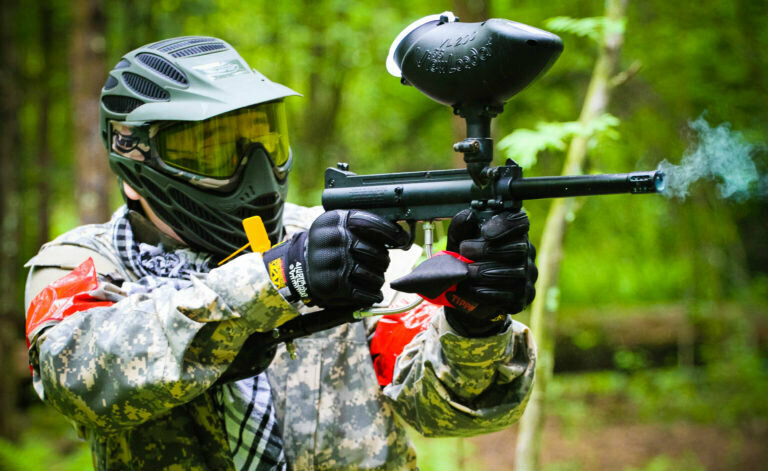
The crisp snap of a paintball marker, the vibrant streak of paint arcing through the air, the thud of impact, and the rush of adrenaline – these are the hallmarks of paintball, a sport that combines strategy, athleticism, and pure, unadulterated fun. Far more than just shooting paint at friends, paintball is a dynamic game with its own unique projectile, a strict code of conduct, and an endless array of imaginative scenarios.
At the core of the paintball experience is, naturally, the paintball itself. Often mistaken by the uninitiated as a solid, hard pellet, a paintball is, in fact, an ingeniously designed, biodegradable capsule, engineered to break on impact and leave a clear, vibrant mark.
Imagine a large, colorful vitamin capsule, and you’re not far off. The outer shell of a paintball is typically made from gelatin, a substance derived from animal collagen, similar to what you’d find in pharmaceutical capsules or even gummy candies. This makes the shell entirely biodegradable, dissolving naturally in the environment and posing no long-term ecological threat. The gelatin shell is designed to be brittle enough to break reliably upon hitting a target – be it a player or a bunker – yet robust enough to withstand the forces of being fired from a marker. Factors like temperature, humidity, and even the manufacturing process can influence a paintball’s brittleness, which experienced players often scrutinize for optimal performance.
Inside this gelatin shell is the “paint” – a non-toxic, water-soluble, and food-grade liquid fill, usually composed of vegetable oils, polyethylene glycol, and various food dyes. The colors are intentionally vibrant – bright yellows, oranges, blues, and reds – to ensure that hits are clearly visible, leaving an unmistakable splash on an opponent’s clothing or gear. The non-toxic nature means that if a paintball breaks in your mouth (unlikely given full-face masks, but theoretically possible), or if the paint gets on your skin or clothes, it poses no health risk and washes off easily with water.
The most common caliber for paintballs is .68 caliber, roughly the size of a marble. However, smaller .50 caliber paintballs are also gaining popularity, particularly for low-impact games, children’s parties, or fields catering to a wider audience, as they deliver less kinetic energy and therefore a gentler impact. Regardless of size, the paintball is the central mechanism for marking players, transforming a simple projectile into the arbiter of who’s in and who’s out.
Before diving into the thrilling world of paintball scenarios, understanding and strictly adhering to the general rules is paramount. These rules are not just guidelines; they are the bedrock of safety and fair play, ensuring everyone can enjoy the game without unnecessary risk or frustration.
1. The Absolute Priority: Eye Protection. This cannot be stressed enough. A full-face paintball mask, which covers the entire face and ears, is mandatory at all times on the playing field and in designated “hot zones” where markers might be discharged. Paintballs travel at high speeds (upwards of 200-300 feet per second), and an unprotected eye hit can cause permanent blindness. Never, ever remove your mask in a live-fire area.
2. Barrel Socks/Plugs: When not actively playing, or when in a safe zone (like the staging area, chrono station, or rest area), a barrel sock or plug must be securely placed over the end of your marker’s barrel. This prevents accidental discharge and ensures that if your marker does fire inadvertently, the paintball is contained.
3. Velocity Limits (Chronographing): All markers must be “chronoed” (checked with a chronograph) to ensure they are firing within the field’s designated velocity limits, typically between 250-300 FPS (feet per second). Firing above this limit is unsafe, as it increases the force of impact, potentially causing injury.
4. Minimum Engagement Distance: Many fields enforce a minimum engagement distance, often 10-20 feet. This means you cannot shoot an opponent if they are closer than this distance. At close range, impacts can be very painful. In such situations, players are often encouraged to call for a “surrender” or “give up,” where the opponent can choose to be out of the game without being shot.
5. No Blind Firing: You must be able to see where you are shooting. Sticking your marker around a bunker and firing blindly is prohibited, as it can be dangerous and lead to accidental close-range hits.
6. The “Hit” and Calling Yourself Out: A player is considered “hit” if a paintball breaks anywhere on their body, clothing, or equipment (including their marker), leaving a significant mark (usually defined as quarter-sized or larger). Paint splatters from another surface, or paintballs that bounce off without breaking, do not count as a hit. When hit, the player must immediately call themselves out loudly (e.g., “HIT!”, “OUT!”), raise their non-firing hand above their head, put their barrel sock on (if possible), and walk directly off the field to a designated dead zone or safe area, usually with their marker held above them to signal they are out.
7. No Wiping Paint: Attempting to wipe off a hit to stay in the game is considered cheating and is universally frowned upon. Referees are trained to spot wiped hits, and doing so will result in ejection from the game or even the field.
8. Boundaries and Referee Authority: Players must stay within the marked field boundaries. Going out of bounds, even accidentally, usually results in being called out. Referees are the ultimate authority on the field; their calls are final and must be respected immediately and without argument.
9. Respawn Rules: Depending on the scenario, players may or may not re-enter the game after being hit. In some games, a hit means you’re out for the duration. In others, you might “respawn” after a set time, or if tagged by a “medic” player.
These rules, while seemingly numerous, become second nature with experience. They are crucial for maintaining the integrity, safety, and thrilling competitive spirit of paintball.
Once the rules are understood and safety is ensured, the true variety and depth of paintball emerge through its myriad of scenarios. These game modes transform simple elimination into tactical challenges, elaborate narratives, and grand-scale adventures.
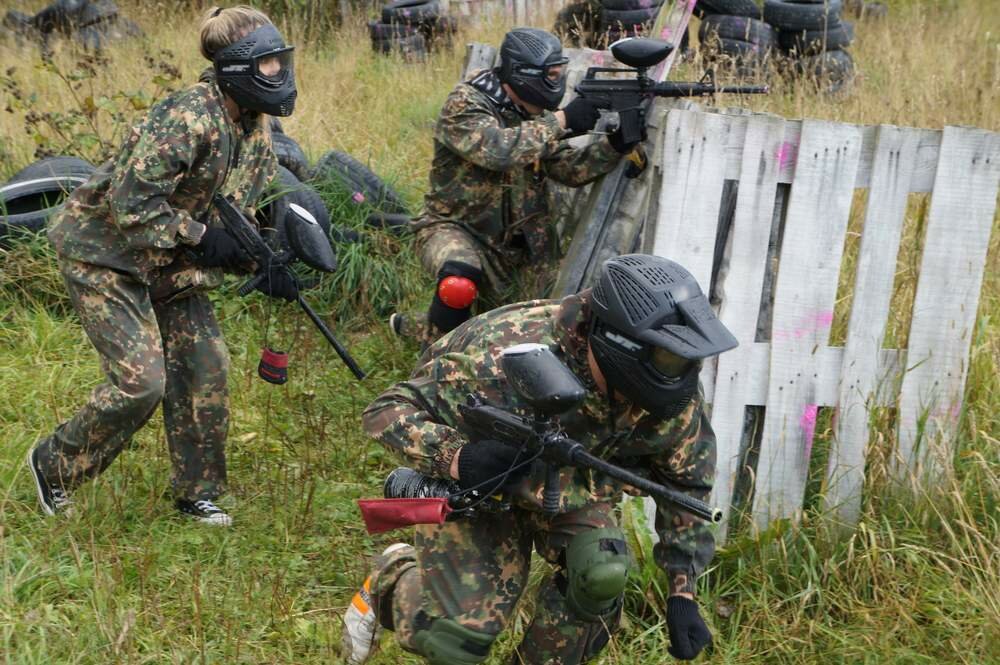
1. Elimination / Team Deathmatch: This is the most straightforward and often the default game mode, especially for new players. Two teams face off, and the objective is simple: eliminate every player on the opposing team. The last team standing wins. It’s a great way to learn the basics of movement, cover, and target acquisition.
2. Capture the Flag (CTF): A classic and widely popular scenario, CTF comes in a few variations: * Single Flag: Each team has a flag at their base. The objective is to capture the opponent’s flag and bring it back to your own base (which must still have your flag present). * Center Flag: A single flag is placed in the middle of the field. Teams compete to capture it and bring it back to their own starting base.
3. Attack & Defend: One team is designated as the attacker, and the other as the defender. The defending team starts in a fortified position (a fort, building, or specific bunkers) and must hold it for a set amount of time. The attacking team’s goal is to overrun the position or eliminate all defenders before time runs out. Often, successful attackers might then become defenders in the next round.
4. Domination / King of the Hill: This scenario focuses on territorial control. A specific central point or multiple points on the field are designated. Teams gain points by holding and controlling these areas. The team that maintains control for the longest cumulative time or captures the most points wins. This often leads to intense firefights around the objective areas.
5. Hostage Rescue / VIP Escort: One team is tasked with guarding one or more “hostages” (which can be real players who are “captured” or inanimate objects like mannequins). The other team’s objective is to “rescue” the hostages and escort them to a designated safe zone. The game often involves intricate planning and coordinated pushes.
6. Bomb Defusal: Inspired by video games, one team is tasked with planting a “bomb” (a prop, often with a timer) at a specific location on the field. The other team must prevent the bomb from being planted or “defuse” it before its timer runs out. This scenario effectively combines elements of Attack & Defend with a critical, timed objective.
7. Scenario Big Games / Milsim (Military Simulation): These are the granddaddies of paintball events, often spanning multiple days with hundreds or even thousands of players. They feature elaborate storylines, evolving missions, and detailed objectives given to different “generals” or team commanders. Players might have specific roles (medic, heavy gunner, scout), limited ammo, and engage in tasks ranging from capturing strategic locations to completing complex puzzles. Milsim events lean heavily into realism, often requiring specific uniforms, communicating via radios, and emphasizing tactical prowess over sheer firepower.
Many fields also introduce “house rules” or variations to these classic scenarios, sometimes incorporating “medic” rules (where marked players can be brought back into the game if tagged by a live “medic” player) or unique props that activate special abilities.
From the scientifically crafted gelatin capsule that is a paintball to the rigorous safety protocols that govern its use, and finally to the endless narrative possibilities offered by diverse scenarios, paintball is a rich and complex sport. It challenges players physically and mentally, fostering teamwork, quick decision-making, and strategic thinking, all while delivering an exhilarating rush that keeps participants coming back for more. Whether you’re a casual player or a dedicated enthusiast, understanding these fundamental aspects paves the way for a deeper appreciation and enjoyment of this dynamic sport.
Physical Fitness – A Full‑Body Workout in Disguise
Paintball may look like a casual weekend activity, but a typical match is a high‑intensity interval training (HIIT) session. Players sprint across fields, duck behind obstacles, crawl under nets, and pop up for quick bursts of fire. The unpredictable nature of the game forces you to use both aerobic endurance (running long distances between cover) and anaerobic power (explosive sprints to close a gap or escape a flanking opponent).
Mental Sharpening – Strategy, Decision‑Making, and Stress Management
Paintball is chess at 20 miles per hour. Each match is a living puzzle of terrain, teammate positioning, enemy movement, and limited ammunition. The mental benefits are three‑fold:

Team Building – Trust, Communication, and Leadership
Corporate retreats, military units, and youth groups have all embraced paintball as a conduit for teamwork. Why does it work?
Emotional Release & Playful Escape
There’s a primal joy in splattering a bright orange pellet onto an opponent. The act of “tagging” without causing real harm satisfies a deep‑seated desire for harmless competition. This release can:
Skill Transfer – From Paintball to Real‑World Applications
In short, paintball is a multi‑dimensional activity that strengthens the body, sharpens the mind, weaves social fabric, and offers a healthy outlet for competitive instincts.
The Traditional Core: Teens & Young Adults
Historically, paintball’s heart beat strongest among high‑school and college students. The combination of low‑cost entry (a basic marker and a pack of paintballs can be purchased for under $100) and the appeal of an “extreme” sport made it a staple of after‑school clubs and fraternity events. Even today, many university intramural leagues run weekly “speedball” tournaments, and the average age of competitive players still hovers around 22‑28.
The Corporate Crowd: Team‑Building Enthusiasts
A growing segment of the adult world discovers paintball through workplace programs. Companies ranging from tech startups to Fortune‑500 firms schedule quarterly “paintball days” to break down departmental walls. In these contexts, participants are often mid‑career professionals (30‑45) seeking a memorable way to develop soft skills.
Why they love it: The “high‑stakes, low‑consequence” environment mirrors corporate pressures, encouraging risk‑taking and accountability without jeopardizing the bottom line.
Military & Tactical Professionals
Active‑duty soldiers, veterans, and law‑enforcement officers regularly visit paintball fields for scenario‑based training. While they may use more specialized markers (sometimes airsoft or real‑fire replicas for realism), the core principles—cover, fire‑and‑movement, communication—remain identical.
Benefit: A realistic yet safe venue to rehearse tactics, test new equipment, and evaluate unit cohesion.
Families & Kids
Paintball isn’t just for the hardened. Many fields now offer “kid‑friendly” or “family” arenas with:
Parents rave about the way paintball gets their children off screens, teaches respect for rules, and encourages physical activity. Family leagues often host weekend “parent‑vs‑kids” tournaments that become local traditions.
Adventure‑Seekers & Social Players
The rise of “experience economies” has birthed a niche of paintball tourists. Picture a group of friends traveling to a desert oasis in Arizona for an all‑day “scenario paintball” where the narrative mimics a post‑apocalyptic scavenger hunt. These players are often 25‑40, affluent, and motivated by Instagram‑worthy moments—think smoke grenades, night‑vision gear, and neon‑lit obstacles.
The Inclusive Movement
Inclusivity matters. Many arenas now provide adaptive equipment for players with disabilities—lighter markers, wheelchair‑accessible fields, and custom‑made protective gear. Organizations such as Paintball for All partner with rehab centers to use paintball as a therapeutic tool for veterans with PTSD, demonstrating that the sport can be a bridge to healing.
The original paintball battlefield is an outdoor expanse peppered with natural cover: trees, berms, abandoned barns, and uneven terrain.
Outdoor fields usually cater to both scenario (long‑form, story‑driven) and objective‑based (capture the flag, king of the hill) games. They’re ideal for players who enjoy endurance, navigation, and a touch of mud.
Speedball is the “basketball” of paintball: fast‑paced, symmetrical fields with inflatable bunkers arranged in tight patterns. Most speedball arenas are indoor warehouses or large gymnasiums, featuring:
If you crave quick matches (5‑10 minutes per round), high scoring, and a competitive atmosphere, speedball is the place to be. Notable venues include Dirtball Paintball in Florida and World Paintball Sports in Texas.
Scenario paintball blends sport with role‑play. A typical event lasts 4‑8 hours, sometimes spanning an entire weekend. Themes range from historical battles (World War II, the American Civil War) to fantastical quests (zombie apocalypse, sci‑fi rescue).
Top destinations for epic scenarios:
Scenario fields often require pre‑registration and gear checks, but the payoff is an immersive adventure that feels more like a live‑action role‑playing game than a sport.
Cities have turned their skylines into paintball playgrounds. “Urban” paintball uses temporary structures—shipping containers, scaffolding, and inflatable walls—set up on rooftops or in abandoned warehouses. Night‑Glow is a popular sub‑genre: players wear glow‑in‑the‑dark vests and use phosphorescent paintballs, turning the field into a neon battlefield.
Urban games appeal to millennials and Gen‑Z players who crave a modern aesthetic, Instagram‑ready moments, and a compact field that fits within city limits.
Many paintball companies now offer mobile field setups. They transport inflatable bunkers, paintball markers, and safety gear directly to corporate campuses, schools, or private estates. This model is perfect for:
A prime example is “Paintball on Demand” in the Boston area, which can convert a parking lot into a 30 × 30 m speedball arena within a few hours.
For the globetrotter, paintball can be a unique cultural experience. Some destinations have become pilgrimage sites:
These exotic locales often require advanced booking, travel visas, and sometimes a basic understanding of local language—adding an extra layer of adventure to the sport.