El Monte
 Log in
Log in
Log in

Main Event Indoor Laser Tag arena is located in San Antonio, TX.
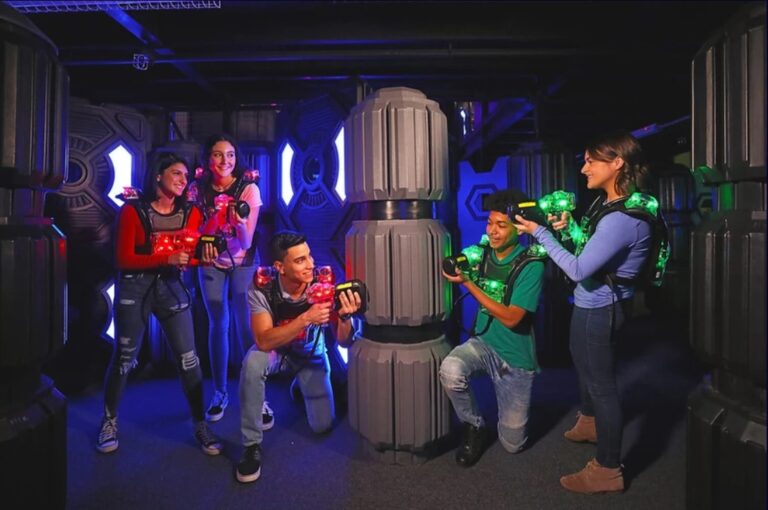
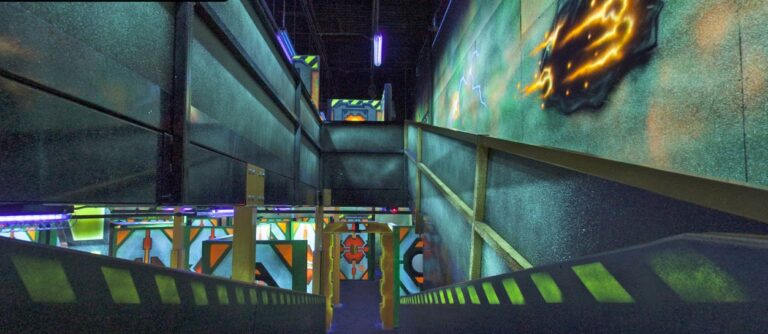
Main Event is a huge entertainment hub where you can spend your weekend or throw a birthday party. These laser-tag battles take place in a multi-story arena with fantasy-like decorations, neon lights, and laborious obstacles. Climb up the towers and rain fire on unsuspecting enemies.
There is also a large recreation area with snacks and drinks to chill after the game. There’s also bowling, pool, VR, mini-golf, a story room, and a ropes course – all available at one single place!
 Indoors
ARs Entertainment Hub San Antonio is a premier entertainment venue located in San Antonio, TX. This state-of-the-art facility offers a wide range of activities and experiences for people of all ages.
ARs Entertainment Hub San Antonio hosts special events and parties, making it an ideal venue for birthdays, corporate gatherings, and other celebrations. Their experienced staff can help plan and organize the event, ensuring a memorable and enjoyable experience for all attendees.
With its diverse range of activities and commitment to customer satisfaction, ARs Entertainment Hub San Antonio is a popular choice for entertainment in the area. Whether you’re looking to try out the latest VR games, challenge your friends in the arcade, or have a bouncing good time on the trampolines, ARs Entertainment Hub San Antonio has something for everyone.
IndoorsJacked-In VR Indoor Center is located in San Antonio, TX.
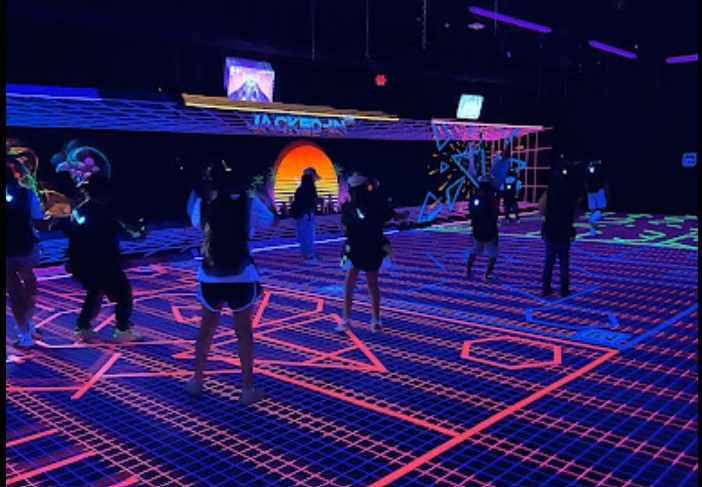
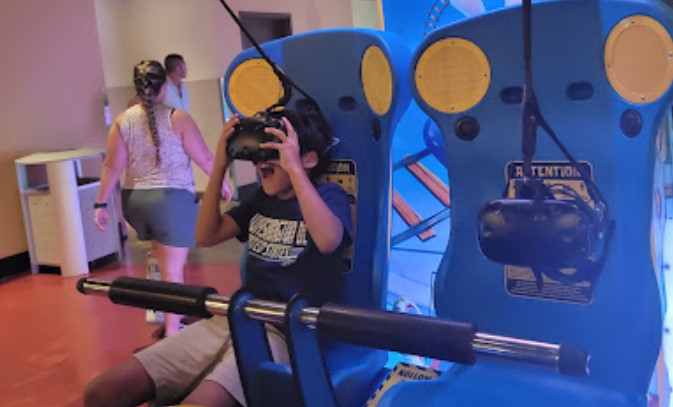
Jacked-In VR is virtual reality entertainment center located in San Antonio, TX. It offers a wide range of VR experiences, including games, simulations, and interactive experiences. Jacked-In VR has a variety of VR stations equipped with high-end VR headsets and controllers, allowing players to fully immerse themselves in the virtual worlds. The center offers multiplayer experiences, allowing friends and family to play together and compete against each other. Jacked-In VR also hosts events and tournaments for both casual and competitive gamers. Whether you’re a seasoned gamer or new to virtual reality, Jacked-In VR provides a fun and exciting experience for all ages.
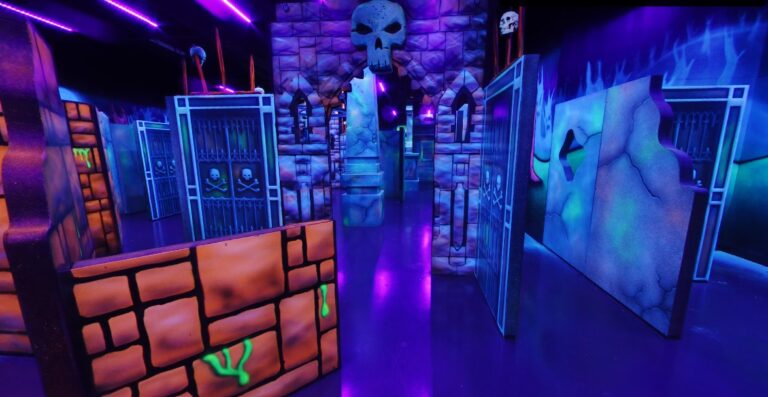
IndoorsMonster Mini Golf San Antonio in San Antonio, TX is a unique and exciting entertainment venue that offers a thrilling mini-golf experience for all ages. The course is designed with a monster-themed décor, featuring animatronic monsters and vibrant, glow-in-the-dark artwork.
In addition to mini-golf, Monster Mini Golf San Antonio offers other activities such as an arcade with a wide selection of video games and redemption games. The venue also has private party rooms available for birthdays, corporate events, and other special occasions. Guests can enjoy a dedicated space for their celebration, complete with food and beverage options.
Monster Mini Golf San Antonio is known for its friendly and welcoming staff, who are always ready to assist visitors and ensure they have a memorable experience. Whether you’re looking for a fun day out with friends or a unique venue for a special event, Monster Mini Golf San Antonio is the perfect choice.
IndoorsMain Event Indoor Laser Tag arena is located in San Antonio, TX.
Main Event is a huge entertainment hub where you can spend your weekend or throw a birthday party. These laser-tag battles take place in a multi-story arena with fantasy-like decorations, neon lights, and laborious obstacles. Climb up the towers and rain fire on unsuspecting enemies.
There is also a large recreation area with snacks and drinks to chill after the game. There’s also bowling, pool, VR, mini-golf, a story room, and a ropes course – all available at one single place!
IndoorsVRus Escape Reality Indoor Center is located in San Antonio, TX.
VRus Escape Reality is a virtual reality escape room located in San Antonio, TX. It offers immersive and interactive experiences where players are transported into different virtual worlds and challenged to solve puzzles, complete missions, and escape within a set time limit. The escape rooms are designed to provide a unique and thrilling adventure for individuals, groups, and corporate team-building events. VRus Escape Reality uses state-of-the-art VR technology to create realistic and engaging environments that allow players to explore and interact with their surroundings. Whether you’re a fan of puzzles, adventure, or simply want to experience the future of entertainment, VRus Escape Reality is a must-visit destination in San Antonio.
IndoorsZero Latency Indoor Arena is located in San Antonio, TX.
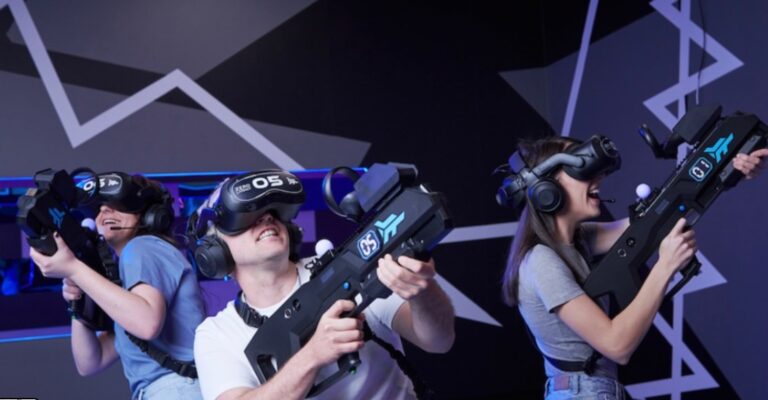
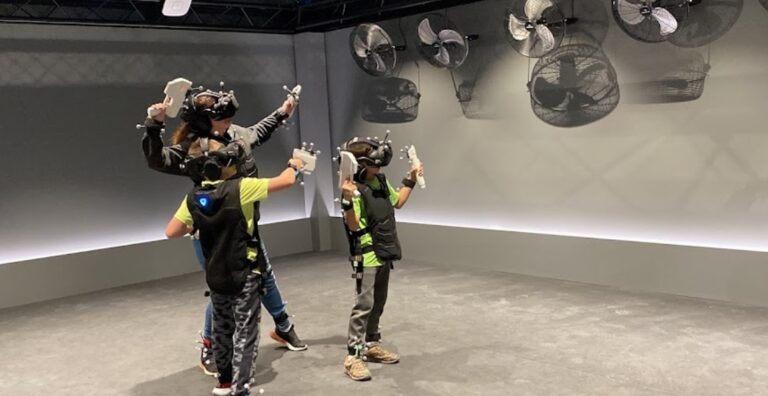
Experience a new level of virtual reality gaming at Zero Latency in San Antonio, TX. With cutting-edge technology, players can immerse themselves in a variety of games such as zombie survival and futuristic laser tag, all while wearing wireless VR headsets and carrying real-life props. Zero Latency offers a unique social gaming experience for groups of up to eight players, making it a perfect activity for birthdays, corporate outings, and team building events. Book a session today and see why Zero Latency has become a popular destination for VR enthusiasts.
IndoorsUrban Air Trampoline and Adventure Indoor Park is located in San Antonio, TX.
Urban Air Trampoline and Adventure Park in San Antonio, TX offers a thrilling experience with a variety of activities for all ages. The park boasts trampolines, obstacle courses, ropes courses, climbing walls, and virtual reality games. Guests can also enjoy dodgeball, and a sky rider coaster. There are designated areas for toddlers and a cafe for refreshments. Urban Air also hosts birthday parties, team building events, and fundraisers. Safety measures such as trampoline safety nets and padded flooring make Urban Air a fun and safe destination for families and friends.
IndoorsUrban Air Trampoline and Adventure Indoor Park is located in San Antonio, TX.
Urban Air Trampoline and Adventure Park in San Antonio, TX offers a thrilling experience with a variety of activities for all ages. The park boasts trampolines, obstacle courses, ropes courses, climbing walls, and virtual reality games. Guests can also enjoy dodgeball, and a sky rider coaster. There are designated areas for toddlers and a cafe for refreshments. Urban Air also hosts birthday parties, team building events, and fundraisers. Safety measures such as trampoline safety nets and padded flooring make Urban Air a fun and safe destination for families and friends.
IndoorsAndretti Indoor Karting & Games is located in San Antonio, TX.
Andretti Indoor Karting & Games in San Antonio, TX offers a thrilling experience with their high-speed go-karts, arcade games, and virtual reality experiences. The state-of-the-art facility features multiple tracks for racing, including a multilevel track with hairpin turns. Alongside go-karting, the center offers immersive experiences with their virtual reality offerings, such as VR Worlds and VR Racer. For those more inclined to traditional arcade games, there are over 120 games to choose from, including classics and modern games. Guests can also enjoy delicious food and drinks from the venue’s restaurant and bar. Overall, Andretti Indoor Karting & Games is a must-visit entertainment destination in San Antonio.
IndoorsSandbox VR Indoor Center is located in San Antonio, TX.
Sandbox VR, a leading provider of virtual reality experiences, is now open in San Antonio, TX. Located at the Shops at La Cantera, Sandbox VR offers a variety of immersive experiences for individuals and groups, including adventures through ancient Egypt and outer space, as well as competitive games and puzzle-solving challenges. With cutting-edge technology and dynamic storytelling, Sandbox VR is the perfect destination for gamers, adventure seekers, and anyone looking for a truly unforgettable experience. Book your session today and step into a whole new world of virtual reality.
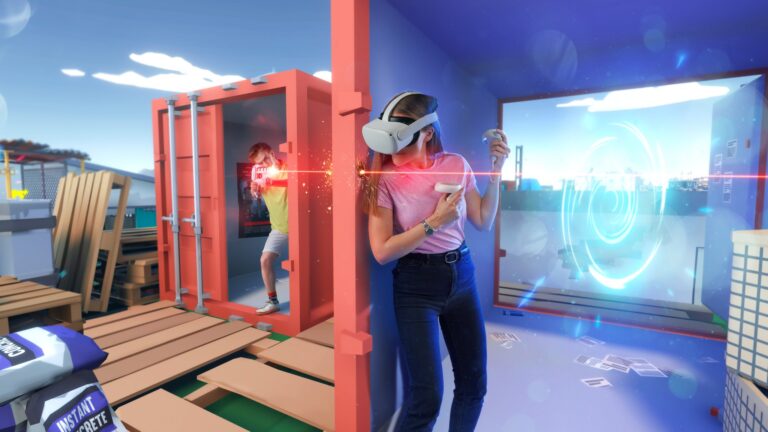
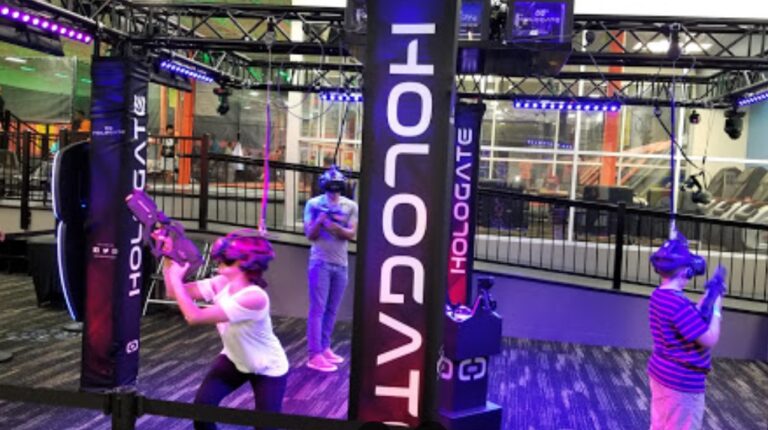
IndoorsA free‑roam virtual‑reality arena is a physical space that blends the immersive power of VR headsets with a real‑world environment large enough for users to move freely. Unlike seated or tethered experiences that confine players to a small play area, free‑roam arenas are equipped with wireless headsets, motion‑tracking cameras, and often a network of safety‑sensing pads that allow participants to walk, run, dodge, and even jump without tripping over cables or colliding with obstacles. The walls of the arena are usually padded or lined with soft foam, and the floor is covered with a low‑friction material that mimics the feel of a video‑game world while keeping participants safe.
The technology that powers these venues includes inside‑out tracking (where sensors on the headset map the surrounding space), external infrared cameras, and sometimes lidar scanners that continuously update a digital replica of the arena. This digital twin tells the headset where the player is, enabling precise alignment between the player’s physical movements and the virtual environment. The result is an experience that feels more like stepping into another world than watching it from a distance.
Free‑roam VR is not limited to a single genre. The same arena can host a sci‑fi shooter one hour, a medieval sword‑fight the next, or a collaborative puzzle adventure after that. Operators can swap out modular props, change lighting, and adjust the software to suit a wide variety of scenarios, making the arena a versatile platform for entertainment, education, and training.
The flexibility of a free‑roam arena gives rise to an ever‑expanding catalog of scenarios. Below are several of the most popular categories, each designed to exploit the full range of motion that the space provides.
Action‑Heavy Shooter Games
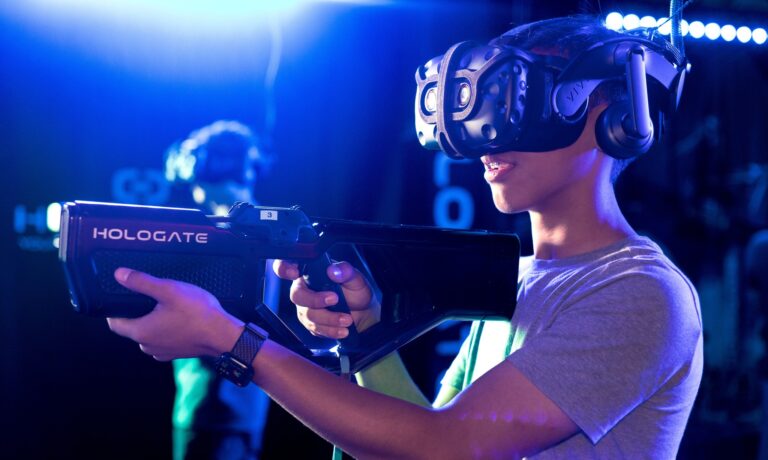
Players don headsets that render a sprawling futuristic battlefield. Using motion‑tracked guns, they sprint down corridors, duck behind cover, and engage enemies that react to their exact position. The physical act of ducking or leaning adds a visceral layer that traditional couch‑based shooters lack.
Adventure & Exploration
In these experiences, participants explore ancient ruins, alien planets, or underwater cities. The arena’s boundaries are concealed by the software, allowing users to wander as if they were truly walking through the environment. Hidden collectibles and environmental puzzles encourage players to move deliberately and examine every corner.
Fitness‑Focused Play
Some venues offer cardio‑oriented titles where each punch, squat, or jump translates into in‑game actions. The free‑roam environment intensifies workouts because users cannot cheat by staying in one spot; the game constantly pushes them to move across the arena.
Team‑Based Strategy
Co‑operative missions require groups to coordinate movements, assign roles, and solve challenges together. A classic example is a “heist” scenario where one player disables security while another disables a laser grid, all while staying aware of each other’s real‑world positions.
Educational Simulations
Science museums and schools use free‑roam VR to recreate historic events, scientific phenomena, or anatomical journeys. The ability to walk around a virtual atom or stand inside a reconstructed ancient city makes abstract concepts concrete.
Narrative Storytelling
Interactive theater productions place participants inside a story, allowing them to influence outcomes through physical actions. By merging live actors with digital avatars, creators can blur the line between performance and gameplay.
Each scenario is built on a foundation of precise tracking, low latency, and thoughtful level design. Developers must anticipate the player’s physical reach, ensuring that virtual obstacles do not become real‑world hazards.
The demographic profile of free‑roam VR users is remarkably diverse. While early adopters were predominantly teenage and adult gamers seeking a more immersive alternative to traditional consoles, the market has broadened to include families, corporate groups, and educational institutions.
Children and Adolescents
Kids are among the most enthusiastic participants, especially when the content is tailored to younger sensibilities. Vendors design age‑appropriate adventures that emphasize bright colors, whimsical characters, and non‑violent problem solving. Because the arenas are physically safe and staffed by trained attendants, parents feel comfortable bringing children as young as six into the experience. The tactile nature of free‑roam VR—running, jumping, and reaching—aligns closely with how children naturally explore the world, making the technology an intuitive extension of play.
Teens and Young Adults
For this group, free‑roam VR offers the thrill of competitive e‑sports in a physical format. Multiplayer death‑matches, battle‑royale‑style skirmishes, and fast‑paced rhythm games attract friends looking for a shared adrenaline rush. The social aspect is amplified by the fact that participants can see each other’s avatars projected onto the virtual world, fostering a sense of camaraderie not achievable on a single‑player headset.
Adults and Professionals
Corporate teams use the arena for team‑building exercises that require communication, trust, and coordinated movement. The physicality forces participants out of their comfort zones, revealing leadership styles and problem‑solving approaches in a low‑stakes environment. Additionally, hobbyists who enjoy high‑tech fitness, immersive storytelling, or experimental art installations gravitate toward free‑roam VR.
Seniors and Accessibility‑Focused Users
Modern arenas incorporate adjustable difficulty levels and assistive hardware (e.g., hand‑hold controllers, seated options) so that older adults can safely partake. Light‑intensity scenarios that combine gentle motion with cognitive challenges have proven popular in community centers focusing on brain health.
Overall, the “VR for kids” segment is a cornerstone of the market. Operators often schedule dedicated family hours, offer discounted birthday packages, and collaborate with schools to create curriculum‑aligned experiences. The ability to combine fun with learning makes free‑roam VR an attractive tool for educators and parents alike.
The adaptable nature of free‑roam arenas has turned them into go‑to venues for special events. Whether celebrating a child’s birthday, marking a graduation milestone, or rewarding a corporate team, the arena can be customized to fit the occasion.
Birthday Parties
Parents can book a themed session—pirate treasure hunt, dinosaur adventure, or space rescue—tailoring the storyline to the birthday child’s interests. The arena staff can decorate the physical space with balloons and banners that complement the virtual theme, creating a seamless blend of real and digital festivities. Party packages often include a brief tutorial, a 30‑minute game block, and a cooldown zone where participants can enjoy refreshments while sharing screenshots taken by the system.
Graduations
For school or university graduates, free‑roam VR can provide a memorable “final quest” that symbolizes the transition from student life to the next chapter. A collaborative puzzle that requires each graduate to contribute a unique skill mimics the teamwork they have practiced during their studies. The experience can be captured in an after‑movie that stitches together in‑game footage and real‑world reactions, offering a keepsake that outlasts traditional photo albums.
Corporate Parties and Team‑Building
Businesses leverage the arena for product launches, client entertainment, or internal morale boosters. A custom scenario can incorporate a company’s branding, turning employees into agents on a mission that mirrors the organization’s values—innovation, collaboration, or sustainability. After the gameplay, facilitators conduct debrief sessions where participants reflect on communication patterns, leadership decisions, and problem‑solving techniques observed during the session. This structured follow‑up translates the fun of free‑roam VR into actionable insights for the workplace.
In all cases, the arena’s flexibility allows event planners to schedule multiple game loops, integrate live music or DJ sets, and even incorporate food stations without disrupting the VR experience. The safety protocols (soft padding, staff monitoring, and clear exit routes) ensure that high‑energy celebrations remain accident‑free.
Researchers across several disciplines have taken note of free‑roam VR’s potential beyond entertainment. Their analyses often focus on the technology’s impact on human perception, motor learning, and social interaction.
Neuroscience and Cognitive Psychology
Scientists recognize that the embodied nature of free‑roam VR stimulates multisensory integration in ways that stationary VR cannot. The alignment of visual cues with proprioceptive feedback—what the body feels versus what the eyes see—offers a fertile ground for studying brain plasticity. Experiments have shown that participants who navigate virtual mazes by walking instead of using a joystick develop stronger spatial memory maps, suggesting applications for rehabilitation after stroke or traumatic brain injury.
Human‑Factors Engineering
Industry experts in ergonomics point out that free‑roam arenas provide a controlled environment for testing human performance under realistic stressors. By manipulating variables such as virtual lighting, auditory load, and obstacle density, engineers can assess how users maintain situational awareness, a skill critical for fields like aviation, firefighting, and military operations. The data collected from headset telemetry (head orientation, stride length, heart rate) allows for fine‑grained analysis that informs the design of safety equipment and procedural protocols.
Education Technology
Educators and ed‑tech specialists argue that free‑roam VR can close the gap between abstract concepts and tangible experience. A virtual field trip to a rainforest, for example, lets students physically turn their heads to observe flora and fauna that would otherwise be inaccessible. Because the experience requires movement, it also satisfies kinesthetic learning styles, which are often under‑served in conventional classroom settings.
Health and Wellness
Medical professionals are exploring the arena as a venue for low‑impact cardio workouts and mental‑health interventions. The immersive distraction provided by a game world can reduce perceived exertion, encouraging participants to sustain longer exercise sessions. Moreover, controlled exposure to calming virtual environments has been investigated as a treatment for anxiety, leveraging the arena’s ability to simulate safe, enclosed spaces.
Business Innovation
From a commercial perspective, analysts highlight the scalability of free‑roam VR. While initial capital expenditures for tracking hardware and safety infrastructure can be high, the modular nature of the arena allows operators to repurpose the same physical space for multiple revenue streams—entertainment, training, events, and research. This versatility reduces the overall risk and improves return on investment.
Collectively, the scientific and expert consensus underscores free‑roam VR as a convergence point for technology, psychology, and design. Its capacity to blend physical movement with digital immersion positions it as a powerful tool for both fun and functional applications.
Looking ahead, several trends are poised to shape the evolution of free‑roam VR arenas.
Improved Wireless Headsets – As battery density rises and compression algorithms become more efficient, next‑generation headsets will offer longer playtimes and higher resolution without sacrificing latency. This will deepen immersion and expand the length of experiences that can be offered in a single session.
AI‑Generated Content – Procedurally generated worlds, driven by artificial intelligence, will enable on‑the‑fly scenario creation. Event organizers could request a custom theme minutes before a birthday party, and the system would generate a unique map, puzzles, and narrative beats tailored to the guest list.
Hybrid Physical‑Digital Props – Advanced haptic gloves and smart objects that respond to virtual forces will make interactions feel more tangible. Imagine a physical sword that vibrates when it contacts a virtual enemy, or a console that lights up in sync with the game’s audio cues.
Cross‑Venue Connectivity – Cloud‑based networking will allow multiple arenas in different cities to link together, creating massive, distributed multiplayer experiences. A corporate team in New York could compete in a virtual race against a team in Tokyo while each group remains in their local arena.
Sustainability Measures – Operators are increasingly adopting eco‑friendly practices—recyclable flooring, renewable‑energy‑powered servers, and modular construction that reduces waste. As sustainability becomes a purchasing decision factor, venues that prioritize green operations will attract environmentally conscious clientele.
These developments suggest that free‑roam VR will continue to blur the line between play, learning, and professional training. By delivering physically engaging, socially rich experiences, the arena model offers a glimpse of a future where digital and real worlds coexist seamlessly.
Free‑roam VR arenas have emerged as dynamic spaces where technology, movement, and imagination intersect. From high‑octane shooters to gentle educational journeys, the venues accommodate a spectrum of scenarios that cater to gamers, families, students, and corporate teams alike. Children find a safe yet exhilarating playground, while adults discover new avenues for fitness, collaboration, and celebration. Scientific inquiry validates the medium’s impact on cognition, motor skills, and emotional wellbeing, while industry experts champion its scalability and adaptability.
As hardware becomes lighter, content generation more intelligent, and cross‑venue connectivity more robust, the reach of free‑roam VR will extend beyond entertainment hubs into classrooms, hospitals, and workplaces. In the meantime, the current generation of arenas already provides a compelling answer to the age‑old desire: to step inside a story and walk its world with one’s own feet. Whether it’s a birthday quest, a graduation challenge, or a corporate innovation sprint, free‑roam VR offers an unforgettable way to move, learn, and connect.


 8514 TX-151, San Antonio, TX 78245, United States